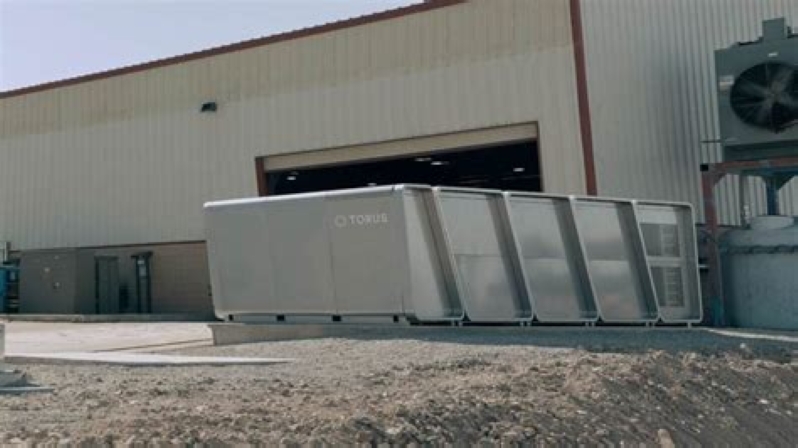
Utah-based energy-storage startup Torus has raised $500 million in a Series C funding round to accelerate the manufacturing and deployment of its new modular artificial intelligence (AI) data center product, known as Foundry.
The funding is expected to support the production of shipping-container-sized computing units that integrate battery energy storage with AI computing infrastructure. The approach is designed to bring computing capacity closer to existing electricity supplies. This has the potential to reduce the need for expensive grid upgrades and lengthy power infrastructure development.
The funding round was led by Magnetar, with participation from Iconiq Capital, Origin Ventures, and Trinity Capital.
Torus also said the proceeds will support manufacturing of Foundry, while AI infrastructure company Hydra Host is among the product’s customers.
The $500 million investment also comes as the United States experiences growing demand for AI computing capacity. This is as data center developers get increasingly challenged by electricity availability, grid connection delays, infrastructure costs and local opposition to large-scale developments.
What Is the Foundry Modular AI Data Center Technology by Torus?
Foundry is a distributed data center solution designed to combine energy storage and AI computing within compact, transportable units. Rather than relying exclusively on conventional, large-scale data center campuses, the technology is intended to deploy computing infrastructure at locations where electricity capacity is already available.
According to Torus CEO and co-founder Nate Walkingshaw, the units can be installed at commercial facilities and factories with excess electricity capacity. This could enable businesses to accommodate additional computing loads without necessarily requiring major upgrades to their existing electricity infrastructure.
The modular systems are designed primarily for AI inference workloads. This also involves running trained AI models to generate responses, predictions and other outputs. This differs from AI training, which generally requires substantial computing resources to develop and train models.
The Foundry units are expected to range between 1MW and 20MW in capacity. Walkingshaw also also indicated that deployment could take approximately four months, offering a potentially faster alternative to conventional data center development timelines.
The approach is particularly relevant in locations where grid connection constraints, electricity infrastructure costs and lengthy permitting processes have become obstacles to expanding data center capacity.
Why Is Torus Developing Modular AI Data Centers?
The development comes amid a rapid expansion of AI infrastructure investment across the United States. Technology companies and data center developers are competing to secure electricity supplies, computing equipment and suitable locations to accommodate increasing AI workloads.
Furthermore, securing sufficient electricity has emerged as one of the biggest constraints facing the industry. Conventional hyperscale data centers can require hundreds of megawatts or even gigawatts of electricity, necessitating substantial investments in substations, transmission infrastructure and other grid upgrades. For instance, this need has compelled companies such as Japan’s Jera to invest as much as US$3 billion in a large-scale natural gas-fired power plant to provide electricity for a U.S. data center project.
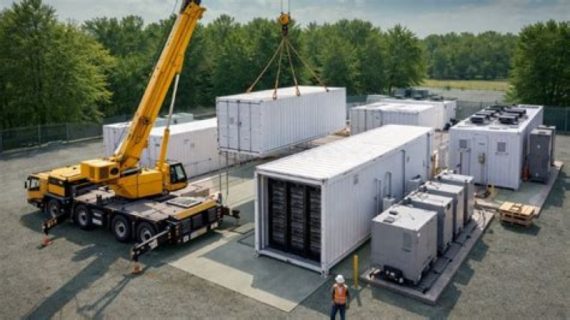
These developments can also face opposition from surrounding communities. They would be concerned about electricity bills, water consumption, noise, emissions and the impact of large industrial facilities.
Torus is positioning Foundry as an alternative that can make use of existing electricity capacity rather than relying entirely on new large-scale infrastructure developments.
The company’s distributed data center model could also allow computing capacity to be expanded incrementally. Businesses could initially install smaller units and increase their computing capacity as demand grows. They also have the option of increasing the units as additional electricity becomes available.
Importantly, the integration of battery storage is intended to help manage electricity demand and support the operation of the computing infrastructure. This builds on Torus’ existing business of developing energy storage and power management systems for commercial, industrial and utility customers.
Additionally, Torus has previously secured significant investment from Magnetar. In September 2025, the company announced a $200 million investment to accelerate the deployment of its modular power plants for utilities, data centers and industrial customers.
Torus’ Manufacturing Capacity and Expansion Plans
Torus is headquartered in Salt Lake City, Utah, and was founded in 2021 in Springville, Utah.
The company has been expanding its domestic manufacturing capabilities to support demand for energy storage and power infrastructure. One of its major investments is GigaOne, a 545,000-square-foot manufacturing facility in Salt Lake City.
The facility is intended to increase the production of Torus’ energy storage systems. This also includes technologies combining flywheel energy storage and batteries.
The company’s manufacturing expansion also provides an existing industrial foundation that could support its ambitions in modular AI infrastructure. However, Torus has not publicly detailed how much of the $500 million Series C funding will be allocated specifically to factory expansion, equipment procurement or Foundry production.
The company’s latest funding round also strengthens its relationship with Magnetar, which previously invested $200 million in Torus in 2025.
For the modular data center market, the investment signals growing interest in infrastructure models that combine power generation or storage capabilities with computing capacity.
What Does the $500 Million Investment Mean for the US Data Center Construction Industry?
Torus’ $500 million fundraising could signal a shift in how some AI computing infrastructure is developed and deployed in the United States.
Traditional data center construction typically involves acquiring large parcels of land and securing electricity connections. This is usually alongside building substations, installing cooling systems and constructing purpose-built buildings to accommodate server equipment.
Although these developments remain essential for hyperscale computing, modular data centers offer another route to increasing capacity.
By integrating computing equipment and energy storage into transportable units, Torus could potentially reduce some of the civil works and infrastructure requirements associated with conventional developments.
The approach could also be particularly attractive to industrial facilities and manufacturing plants. Businesses with underutilized electricity connections are also set to benefit.
Nevertheless, the success of Foundry will depend on Torus’ ability to manufacture the units at scale and secure additional customers. The Utah-based startup will also need to demonstrate that its modular data center model, Foundry can operate reliably and economically.
It also remains to be seen how widely the technology can be deployed given differences in electricity tariffs, grid connection regulations, cooling requirements and local permitting frameworks.
For construction and infrastructure stakeholders, the development introduces another potential growth segment in the data center market: factory-manufactured, power-integrated computing infrastructure.
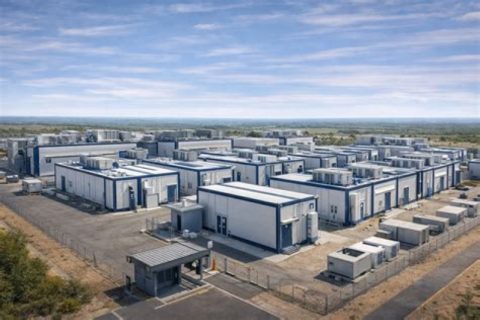
What Next for the Foundry Modular Data Center Project by Torus?
The immediate priority for Torus will be translating its $500 million funding into manufacturing capacity and commercial deployments of Foundry.
Torus has also identified Hydra Host as one of its customers for Foundry. This is an initial indication of commercial interest in the modular data center technology.
Further details regarding specific deployment locations, manufacturing schedules and project costs have not yet been made public. Torus has also not disclosed its construction partners and the number of units expected to be produced.
The coming months will therefore be important for Torus. They will determine how quickly the company can move from product launch and fundraising into large-scale commercial deployment.
If successful, Foundry could provide an alternative model for expanding AI computing infrastructure, particularly in areas where access to electricity is more readily available than new grid connections.
The project also highlights the increasing convergence of energy storage, power management and data center construction as the AI infrastructure market continues to expand.
Project Fact Sheet for the Foundry Modular AI Data Center Technology by Torus
Torus Headquarters: Salt Lake City, Utah
Company founded: 2021
Project type: Modular AI data center and energy storage infrastructure
Product: Foundry
Funding secured: $500 million
Funding round: Series C
Lead investor: Magnetar
Other participating investors: Iconiq Capital, Origin Ventures and Trinity Capital
Customer: Hydra Host
Computing capacity: 1MW-20MW per unit
Deployment timeline: Approximately four months, according to the CEO
Primary use: AI inference computing
Technology: Integrated battery storage and AI computing
Manufacturing location: Utah
Major existing manufacturing facility: GigaOne, Salt Lake City
Who is Involved in the Foundry Modular Data Center Project?
-
Torus Inc. – Project developer and technology provider.
-
Nate Walkingshaw – Co-founder and Chief Executive Officer, Torus.
-
Magnetar – Lead investor in the $500 million Series C funding round.
-
Iconiq Capital – Participating investor.
-
Origin Ventures – Participating investor.
-
Trinity Capital – Participating investor.
-
Hydra Host – Customer for Foundry modular data center technology.


Leave a Reply