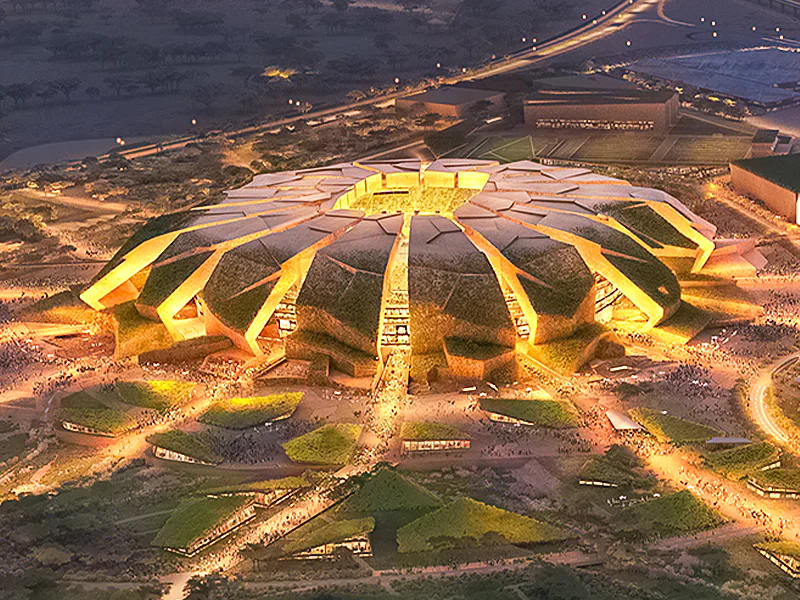
King Salman Stadium prequalification has officially opened following a notice issued by Saudi Ministry of Sport. The process advances a $2.7 billion flagship stadium project in Riyadh. It also supports preparations for the 2034 FIFA World Cup.
The prequalification targets firms capable of delivering complex design and build packages. Consequently, competition is expected to intensify among global contractors. The process ensures only technically capable firms proceed. The move aligns with Saudi Vision 2030 goals.
King Salman Stadium prequalification drives early project execution
King Salman Stadium prequalification covers a stadium spanning about 660,000 square metres. The venue will accommodate 92,000 spectators. Therefore, it ranks among the largest stadium developments globally. Furthermore, the stadium will feature premium hospitality infrastructure. This includes a 150-seat royal suite and 120 hospitality suites. It also incorporates 300 VIP seats and 2,200 dignitary seats.
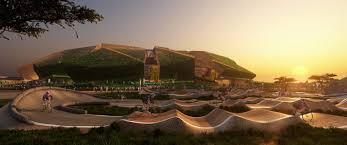
In addition, the wider development integrates extensive sports infrastructure. Facilities will cover over 360,000 square meters. These include training fields, fan zones, and indoor sports amenities. Moreover, the complex will include an Olympic-sized swimming pool and an athletics track. Outdoor courts for volleyball, basketball, and padel are also planned. Consequently, the project supports multi-sport use. Meanwhile, the design emphasizes both functionality and fan experience. Therefore, stakeholders aim to deliver a world-class venue. This approach aligns with global stadium benchmarks.
King Salman Stadium prequalification supports World Cup ambitions
King Salman Stadium prequalification plays a central role in Saudi Arabia’s World Cup delivery strategy. The stadium will host the tournament final. It will also serve as the national team headquarters. Additionally, Populous leads the architectural design. The firm brings extensive experience in major stadium developments. Therefore, the design reflects international standards.
Furthermore, the stadium will be located near King Abdulaziz Park. This location supports integration with Riyadh’s urban expansion. Consequently, accessibility and connectivity remain priorities. Moreover, construction is expected to complete by 2029. This timeline allows sufficient preparation for the 2034 tournament. Therefore, early works remain critical to maintaining schedule.
In addition, Saudi Arabia plans to build 11 new stadiums for the tournament. Eight will be located in Riyadh. Four will be developed in Jeddah. Meanwhile, additional venues will rise in Al-Khobar, Abha, and Neom. The strategy ensures nationwide infrastructure coverage. Consequently, multiple regions will benefit from investment. Furthermore, the country plans 134 training sites across the kingdom. These include 61 existing facilities and 73 new venues. Therefore, training infrastructure will expand significantly.
Additionally, 10 cities will host training bases. These include Medina, Tabuk, and AlUla. This distribution supports balanced regional development. Saudi Arabia secured hosting rights during the FIFA Congress 2024. The decision followed an online vote. Consequently, project timelines accelerated.
King Salman Stadium prequalification attracts global contractor interest
King Salman Stadium prequalification has already attracted interest from leading contractors. Many firms view the project as a strategic entry point. Therefore, bidding activity is expected to intensify. Additionally, contractors with stadium experience hold a competitive advantage. Their expertise aligns with project complexity. Consequently, qualification criteria emphasize proven delivery capability.
Moreover, the contract represents a gateway to future Saudi infrastructure projects. Therefore, international firms continue expanding regional presence. This trend strengthens market competition. Meanwhile, authorities aim to ensure efficient procurement processes. Prequalification reduces risks and improves contractor selection. Consequently, project execution will benefit.
Furthermore, early contractor involvement will accelerate site readiness. This supports seamless transition into main construction phases. Therefore, project timelines remain achievable. This project strengthens Saudi Arabia’s global sports positioning. It also accelerates infrastructure readiness for the 2034 tournament.
The launch of King Salman Stadium prequalification builds on earlier design momentum revealed by Populous, Populous Unveils Plans on Saudi Arabia’s Largest Stadium: The King Salman Stadium whose concepts outlined one of the largest stadiums ever planned in Saudi Arabia. Consequently, the ongoing prequalification phase now translates that vision into execution, positioning the Riyadh development as a cornerstone venue for the 2034 FIFA World Cup.
Project Fact Sheet
Project Name: King Salman International Stadium
Location: Riyadh, Saudi Arabia (near King Abdulaziz Park)
Estimated Cost: $2.7 billion
Project Type: Stadium and multi-sport complex
Capacity: 92,000 seats
Total Area: 660,000 sq m
Sports Facilities Area: 360,000+ sq m
Key Features:
- 150-seat royal suite
- 120 hospitality suites
- 300 VIP seats
- 2,200 dignitary seats
Facilities Included:
- Two training pitches and fan zones
- Indoor sports hall
- Olympic-sized swimming pool
- Athletics track
- Outdoor courts (volleyball, basketball, padel)
Client: Saudi Ministry of Sport
Strategic Framework: Saudi Vision 2030
Current Stage: Prequalification for design and build contract
Completion Target: 2029
Project Team
Client: Saudi Ministry of Sport
Lead Architect: Populous
National Sports Development Bodies:
Urban Development Authority: Royal Commission for Riyadh City
Event Coordination: FIFA
Project Management Consultant: To be appointed
Main Contractor: To be appointed
Specialist Contractors: To be determined
Key Stakeholders:
- Government infrastructure agencies
- National sports institutions
- International consultants and contractors
- Regulatory and environmental authorities

Leave a Reply