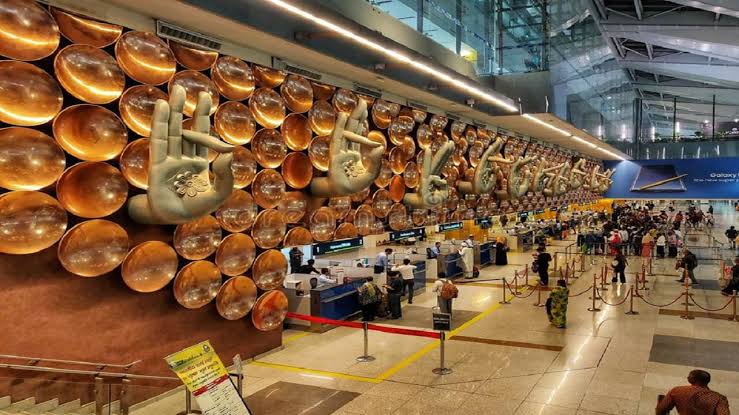
GMR airport expansion plans will inject up to $2 billion into major airport infrastructure in New Delhi and Hyderabad. The program will run for five to seven years. It will expand passenger capacity while modernizing critical airport infrastructure.
The investment reflects India’s rapidly expanding aviation market and growing pressure on airport infrastructure. India ranks as the world’s third-largest domestic aviation market. Passenger traffic could reach about 1.1 billion annually within 14 years.
GMR Airports will allocate about $1.43 billion to Rajiv Gandhi International Airport in Hyderabad. It will commit up to $580 million to New Delhi’s airport.
GMR airport expansion plans will reshape Hyderabad capacity
The Hyderabad expansion represents the larger share of the planned airport construction program. GMR expects the upgraded facility to handle about 80 million passengers annually.
That capacity would more than double the airport’s current annual volume of 34 million passengers. The expansion will therefore position Hyderabad for sustained aviation growth.
GMR will fund the investments through debt and equity raised by the respective airport ventures. The funding will not directly come from the GMR Airports holding company.
GMR Hyderabad International Airport Limited operates the Rajiv Gandhi International Airport. GMR Airports holds a controlling interest in the Hyderabad airport venture.
The airport already includes extensive passenger, airside and cargo infrastructure. GMR’s project portfolio lists a 3, 79,089-square-metre passenger terminal building. It also records 44 contact stands and 49 remote stands.
The expansion will consequently build on an established aviation infrastructure base. It also supports GMR’s wider airport-led development strategy around Hyderabad.
GMR airport expansion plans strengthen Delhi infrastructure
The New Delhi allocation will support further infrastructure development at Indira Gandhi International Airport. Delhi Airport already operates four runways and handles more than 79 million passengers annually.
GMR’s existing development program has already transformed the airport through major brownfield construction. Previous works included Terminal 3, additional runways and integrated cargo infrastructure.
The airport also operates advanced baggage systems and elevated taxiway infrastructure. These assets provide a foundation for future capacity improvements and operational upgrades.
Meanwhile, GMR has continued modernizing Delhi’s terminal infrastructure. The upgraded Terminal 2 introduced six new passenger boarding bridges and autonomous docking technology.
The latest investment therefore extends a longer construction and modernization cycle at India’s busiest aviation hub. It also strengthens GMR’s position against Adani Airports.
Adani Airports plans to invest more than $2 billion in airport cities across six Indian locations. Its broader aviation investment program could reach $15 billion over five years.
GMR, however, plans to remain focused on airport infrastructure and related businesses. These include aircraft maintenance, cargo, retail and real estate development.
India airport construction outlook expands beyond Delhi and Hyderabad
The $2 billion program could become the first stage of a wider GMR airport construction drive. The company recently took over Nagpur airport operations in June 2026.
GMR says investment plans for Nagpur remain under discussion. The company also intends to pursue airport opportunities that India’s government plans to offer.
Its current portfolio covers six airports in India, alongside international operations and projects. GMR also participates in the development of a new airport in Crete, Greece.
GMR Airports holds 74% of Delhi International Airport Limited. Airports Authority of India holds the remaining 26% stake.
At Hyderabad, GMR’s airport venture operates alongside Airports Authority of India and the Government of Telangana.
The company also owns a strategic relationship with Groupe ADP. The partnership supports GMR’s international airport development and operating capabilities.
For India’s construction sector, the program signals sustained demand for airport terminals, airside facilities and supporting infrastructure. It also highlights how rising passenger volumes are driving long-term capital investment.
The broader expansion drive comes as India accelerates airport infrastructure investment to meet rising passenger demand. GMR’s planned $2 billion program in Delhi and Hyderabad complements other major airport developments, including the Cochin International Airport Terminal 2 project, where a construction contract has been awarded. This wider pipeline highlights growing demand for new terminals and modern aviation facilities across India.

Project Fact Sheet
Name: GMR airport expansion program
Location: New Delhi and Hyderabad, India
Total investment: Up to $2 billion
Investment period: Five to seven years
Hyderabad allocation: About $1.43 billion
New Delhi allocation: Up to $580 million
Hyderabad airport: Rajiv Gandhi International Airport
Delhi airport: Indira Gandhi International Airport
Hyderabad current passenger volume: About 34 million annually
Hyderabad targeted capacity: About 80 million passengers annually
Delhi current passenger capacity: More than 79 million passengers annually
Funding structure: Debt and equity
Hyderabad airport operator: GMR Hyderabad International Airport Limited
Delhi airport operator: Delhi International Airport Limited
Future expansion consideration: Nagpur Airport
Strategic focus: Airport infrastructure and related aviation businesses
Project Team
Airport platform: GMR Airports Limited
Delhi airport operator: Delhi International Airport Limited
Hyderabad airport operator: GMR Hyderabad International Airport Limited
Delhi equity partner: Airports Authority of India
Hyderabad equity partners: Airports Authority of India; Government of Telangana
Strategic airport partner: Groupe ADP
Airport operations partner: Fraport AG
Project development focus: GMR Airports Limited
Airport land development: GMR Airports Limited

Leave a Reply