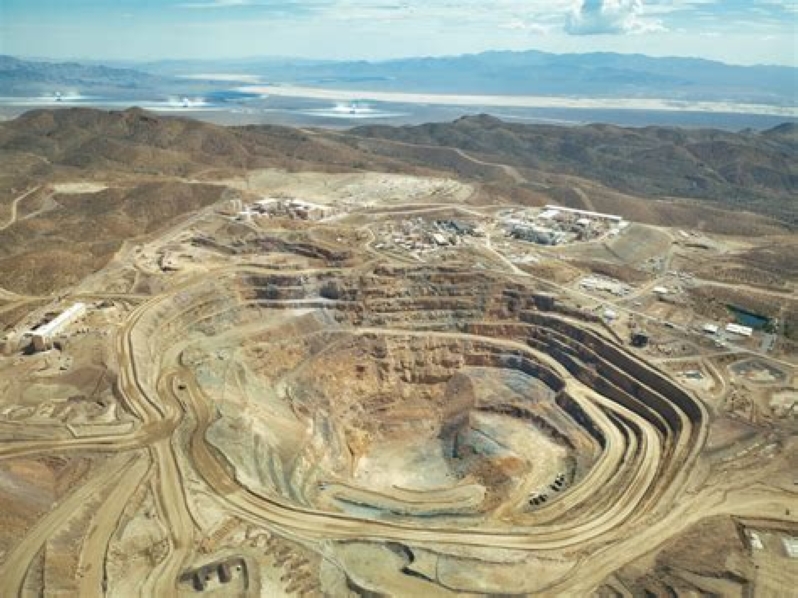
Gabon is seeking $2 billion to revive the long-stalled Mabounie (Maboumine) niobium and rare earths mining project, in a development that could position the Central African country as a new supplier of critical minerals while expanding its domestic mineral processing industry.
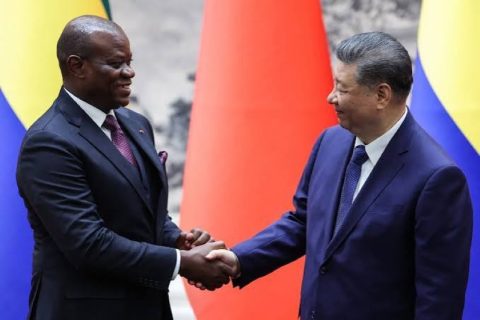
The proposed development involves UAE-backed New Energy Metals (NEM), through its subsidiary Dusk Gabon, and Chinese engineering group China ENFI Engineering Corporation (ENFI). The partners presented a technical study for the project to Gabonese President Brice Clotaire Oligui Nguema during his state visit to China in November 2026.
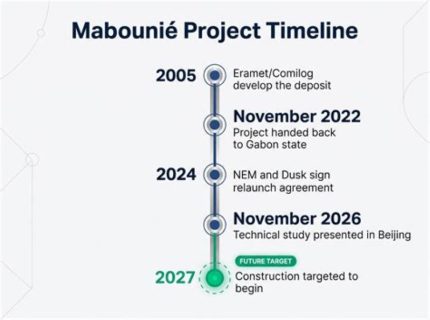
Construction is targeted to begin in 2027, subject to the project’s advancement. The proposed investment is also expected to create more than 2,500 direct jobs. It will also incorporate mineral processing facilities within Gabon.
Located approximately 200 kilometers southeast of Libreville, the Mabounie deposit has been explored for years but has yet to reach commercial production. Its revival would represent a significant step in Gabon’s ambitions to move beyond the export of unprocessed mineral resources. The revival of Mabounie Niobium and Rare Earths Mining Project could also develop greater value-adding industrial capacity locally.
Mabounie Project to Incorporate Local Mineral Processing Facilities
A major component of the revival of the Mabounie Niobium and Rare Earths Mining Project is the establishment of processing facilities in Gabon. This will eliminate the need to export the extracted minerals for processing elsewhere.
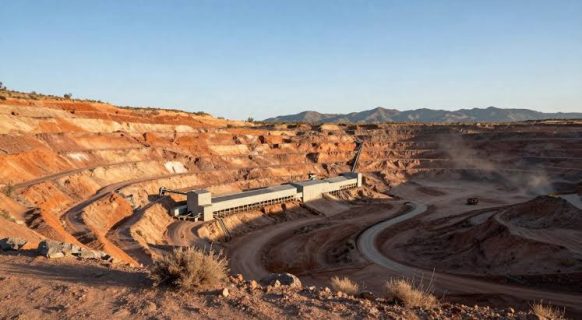
The development concept involves extracting niobium and rare earth-bearing ores before undertaking subsequent processing and separation operations. These activities are also expected to support the production of marketable mineral products and strengthen Gabon’s position in international critical mineral supply chains.
The proposed development is planned to comprise six to seven processing plants producing up to nine finished products. However, detailed plant capacities, product specifications and the final configuration of the facilities have not yet been comprehensively disclosed.
The Gabonese government has also indicated that preparatory earthworks have been assigned to a local company. This will potentially create opportunities for domestic contractors and suppliers ahead of the main construction program.
New Energy Metals and ENFI Lead the Mabounie Niobium and Rare Earths Mining Project Revival
The latest revival initiative brings together New Energy Metals, its subsidiary Dusk Gabon, and Chinese engineering group ENFI.
New Energy Metals is the UAE-backed company associated with the renewed development of the deposit. Dusk Gabon, on the other hand, is the project vehicle involved in advancing the development in partnership with the Gabonese government.
ENFI’s involvement also introduces Chinese engineering expertise and potential influence into the proposed revival of the Mabounie Niobium and Rare Earths Mining Project. However, the exact engineering, procurement and construction responsibilities have not yet been disclosed by involved parties.
The latest technical study was presented to President Oligui Nguema during his November 2026 visit to China. Gabon’s China visit sought to strengthen investment and industrial cooperation with Chinese companies.
The renewed interest in Mabounie Niobium and Rare Earths Mining Project also follows an agreement reached in 2024 between the Gabonese government and the project developers. The agreement sought to restart development work and update earlier technical studies.
History of the Mabounie Niobium and Rare Earths Mining Project
The Mabounie deposit has a lengthy development history. Previous efforts to commercialize its mineral resources failed to progress into full-scale production.
French mining group Eramet and its Gabonese subsidiary Comilog previously worked on developing the deposit in collaboration with the Gabonese government.
The companies undertook extensive geological and metallurgical studies to establish how niobium, rare earth elements and other valuable minerals could be recovered from the deposit. This also included the development of a demonstration plant to test the proposed mineral recovery processes.
However, the project remained without commercial production. In November 2022, Eramet and Comilog signed an agreement transferring their interests and associated project assets back to the Gabonese government.
The Gabonese government subsequently sought new investors and development partners to revive the project. In 2024, a new agreement involving New Energy Metals and Dusk Gabon established the basis for renewed development studies.
The latest $2 billion proposal is another attempt to transform the Mabounie deposit into a commercially operating mining and mineral processing complex. The revival interest also comes as British-Australian mining company, Rio Tinto is looking to restart the $473 million mineral sands project in KwaZulu-Natal, South Africa.
Strategic Importance of the Mabounie Rare Earths Project to Gabon’s Mining Industry
The proposed development comes as Gabon seeks to diversify its economy. The central African country aims to increase the contribution of mineral processing and manufacturing to national industrial output.
Gabon is already an established producer of manganese, but the Mabounie development would expand its mining portfolio into niobium and rare earth elements. These minerals are increasingly important to advanced manufacturing and energy technologies.
Niobium is primarily used in the production of high-strength, low-alloy steel, making it important for construction, pipelines, automotive manufacturing and other industrial applications. It is also used in specialized superalloys.
Rare earth elements, meanwhile, are essential inputs in permanent magnets and electric vehicle motors. They are also used in wind turbines, electronics and other advanced technologies.
The project’s proposed local processing facilities are also particularly significant. Rather than limiting Gabon’s participation to extracting and exporting mineral concentrates, the country aims to capture more value through processing and the production of finished mineral products. This is as other countries such as Vietnam also plan to establish rare earths metal processing facility within their countries in a bid to form a non-Chinese rare earth value chain.
However, the project’s eventual contribution to Gabon’s economy will depend on whether its technical studies, financing arrangements and proposed industrial facilities translate into actual construction and commercial operations.
What Next for the $2 Billion Mabounie Niobium and Rare Earths Mining Project?
The immediate priority for the project developers will be advancing the technical and financial preparations required to move the development towards construction.
Although the partners have presented a technical study and indicated a 2027 construction target, important details remain outstanding.
These include the project’s final financing structure and the exact investment commitments of the participating companies. Construction contracting arrangements and the full scope of the proposed processing facilities are also outstanding.
The metallurgical requirements will also be important. Mabounie’s previous development history involved extensive work to establish viable methods for separating and recovering niobium and rare earth elements. Scaling these processes to commercial production will be a significant consideration for the new development.
Infrastructure will also represent another important requirement. Especially important are power supply, water, transport connections, processing inputs and facilities for handling mining and processing residues.
The proposed $2 billion investment and expected creation of more than 2,500 direct jobs also make Mabounie a significant mining development for Gabon.
If successfully developed, Mabounie Niobium and Rare Earths Mining Project could become an important addition to Africa’s critical minerals industry.
Mabounie (Maboumine) Niobium and Rare Earths Project Fact Sheet
Location: Moyen-Ogooue Province, Gabon, approximately 50 km from Lambarene
Project type: Greenfield mining and mineral processing development
Estimated investment: US$2 billion
Project developer: New Energy Metals (NEM)
Project subsidiary: Dusk Gabon
Engineering partner: China ENFI Engineering Corporation
Mineral resources: Niobium, rare earth elements, tantalum, phosphate
Proposed facilities: Six to seven processing plants
Expected products: Up to nine finished mineral products
Expected employment: More than 2,500 direct jobs
Proposed construction start: 2027
Previous project owner/developer: Eramet and Comilog
Current development status: Technical study presented
Who is involved in the project?
- New Energy Metals (NEM) – Project investor and development partner
- Dusk Gabon – Project development subsidiary
- China ENFI Engineering Corporation (ENFI) – Engineering partner
- Government of Gabon
- Ministry of Mines and Geological Resources, Gabon
- Eramet – Former project developer
- Comilog – Former development partner and Eramet subsidiary

Leave a Reply