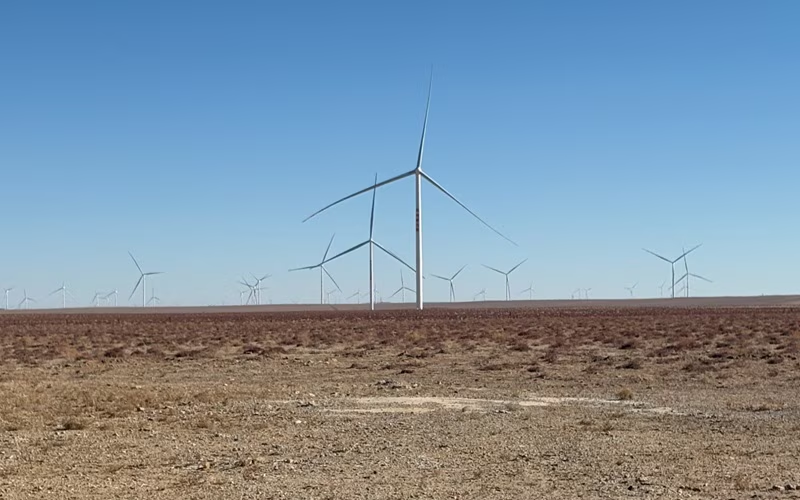
Huawei, in partnership with China Unicom and Inner Mongolia Energy Group, has deployed a Huawei smart wind farm solution powered by 5G-Advanced (5G-A) and artificial intelligence across 21 wind farms in Inner Mongolia, China. The project sets a benchmark for integrating intelligent telecommunications technologies with renewable energy generation and operations.
The deployment is designed to cover more than 1,500 wind turbines. It will improve inspection efficiency, reduce operating costs and support the digital transformation of large-scale wind power facilities. Following implementation, the solution has reduced operation and maintenance (O&M) time by 10%, lowered O&M costs by 21% and decreased turbine downtime rates by 15%. In addition, it is expected to generate approximately 1.76 million kWh of additional green electricity annually.
Project scope and technology deployment
The smart wind farm solution combines 5G-Advanced (5G-A) connectivity with artificial intelligence, edge computing and high-definition drone inspection technologies. China Unicom’s Inner Mongolia branch worked with Huawei to deploy the system in collaboration with Inner Mongolia Energy Group.
The development addresses several operational challenges associated with conventional wind farm maintenance. These include poor network coverage inside wind turbine towers, limited uplink bandwidth and the high cost of installing fibre-optic infrastructure across remote sites.
Traditionally, technicians have had to climb wind turbine towers, which can reach approximately 100 metres in height, to inspect turbine blades. This approach requires considerable time and exposes maintenance personnel to challenging working conditions. Furthermore, manual inspections can delay the identification of blade defects.
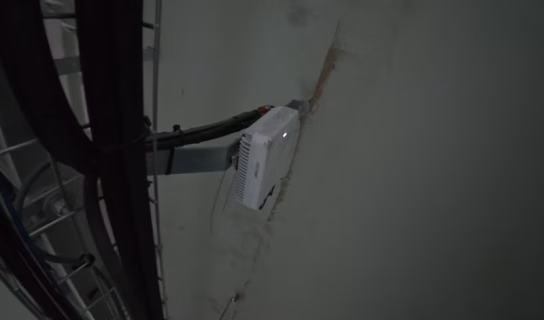
The new solution uses 5G-A GigaUplink networks to provide reliable communication between wind turbines, inspection equipment and central monitoring systems. Inside turbine towers, 5G-A pico Remote Radio Units (pRRUs) improve signal coverage and eliminate communication dead zones.
Meanwhile, 5G-A macro base stations provide stable uplink speeds of at least 40 Mbps per turbine, with network latency below 20 milliseconds. These capabilities support the transmission of real-time 4K high-definition footage captured by inspection drones.
Consequently, technicians can inspect turbine blades remotely without having to climb the towers. AI algorithms analyse the captured images, identify defects and mark affected areas for further assessment. This improves inspection accuracy while reducing the time required to complete maintenance activities.
Smart inspection and operational improvements
The implementation has delivered measurable improvements in wind farm operations. According to the project announcement, maintenance time has decreased by 10%, while O&M expenditure has fallen by 21%. In addition, turbine downtime rates have dropped by 15%.
The solution is also expected to increase annual green electricity generation by approximately 1.76 million kWh. This improvement will result from reduced equipment downtime and more efficient maintenance activities.
Furthermore, the project uses edge computing to process and store inspection data closer to the wind farms. User Plane Functions (UPFs) are deployed closer to the network edge to reduce data transmission delays. This arrangement supports faster AI analysis and helps maintain compliance with data security requirements.
The combination of 5G-A connectivity and edge computing also provides the communication infrastructure required for future integration of wind power, solar generation and energy storage systems.
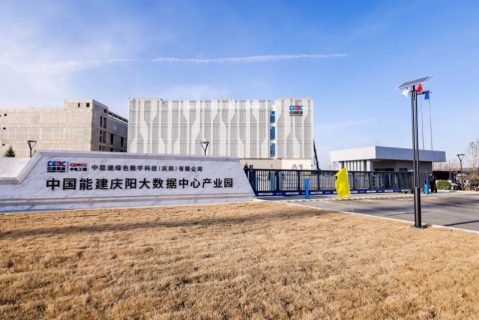
Inner Mongolia Energy Group’s renewable energy operations
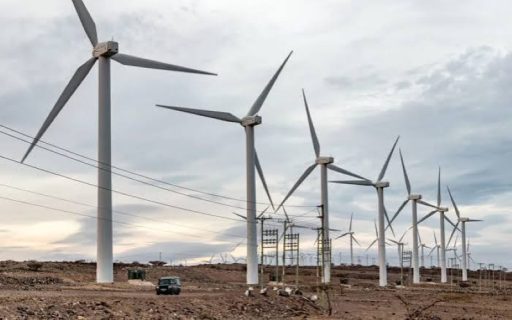
Inner Mongolia Energy Group is a major power generator in the Inner Mongolia Autonomous Region. The company generates more than 36 billion kWh of green electricity annually and has been deploying 10MW wind turbines in batches.
The group is also expanding its integrated renewable energy operations. These include wind power, solar generation and energy storage. Therefore, reliable communication networks and intelligent monitoring systems are becoming increasingly important for coordinating its energy assets. This is as other renewable energy projects in China continue to feed the grid with clean energy, including the HG14 offshore solar project which is also the country’s and the world’s first gigawatt-scale fixed-pile offshore solar power plant.
The 5G-A plus AI deployment provides a technological foundation for connecting wind turbines, photovoltaic installations, energy storage facilities and booster stations. It also supports the collection and analysis of operational data across different energy facilities.
Moreover, the project provides a model that can be replicated across other wind farms and industrial facilities. China Unicom and Huawei intend to extend the application of 5G-A and AI technologies to additional sectors, including mining and chemicals.
The collaboration demonstrates how telecommunications infrastructure can support renewable energy development beyond conventional network connectivity. By combining high-speed communication, automated inspection and intelligent data processing, the partners aim to improve the efficiency and reliability of large-scale energy operations.
Huawei smart wind farm: Project significance
The Inner Mongolia smart wind farm deployment represents an important development in the digitalisation of renewable energy infrastructure. It addresses operational challenges associated with remote wind farms while improving worker safety and maintenance efficiency.
In addition, the deployment demonstrates the potential of 5G-Advanced networks to support industrial applications that require reliable connectivity, high uplink capacity and low latency.
The expected coverage of more than 1,500 wind turbines across 21 wind farms provides an opportunity to expand intelligent inspection practices across the region. Consequently, the project could support the wider adoption of automated maintenance technologies in China’s renewable energy sector.
As China continues to expand its renewable energy capacity, integrating telecommunications and artificial intelligence into power generation infrastructure will remain important for improving operational performance and supporting national carbon reduction objectives.
Huawei smart wind farm: Project Fact Sheet
Project: 5G-A plus AI Smart Wind Farm Cluster
Location: Inner Mongolia Autonomous Region, China
Project type: Smart renewable energy and telecommunications infrastructure
Participating companies: China Unicom, Huawei Technologies and Inner Mongolia Energy Group
Telecommunications provider: China Unicom Inner Mongolia Branch
Technology partner: Huawei Technologies Co., Ltd.
Energy operator: Inner Mongolia Energy Group
Deployment coverage: 21 wind farms
Expected turbine coverage: More than 1,500 wind turbines
Network technology: 5G-Advanced (5G-A) GigaUplink
Additional technologies: Artificial intelligence, edge computing and 4K drone inspection
O&M time reduction: 10%
O&M cost reduction: 21%
Turbine downtime reduction: 15%
Expected additional electricity generation: 1.76 million kWh annually
Principal Companies / Project Team
China Unicom: Telecommunications infrastructure provider and project implementation partner.
China Unicom Inner Mongolia Branch: Responsible for deploying the 5G-A network infrastructure.
Huawei Technologies Co., Ltd.: Technology partner providing 5G-A connectivity, AI and edge computing solutions.
Inner Mongolia Energy Group: Renewable energy operator and participating energy partner.

Leave a Reply