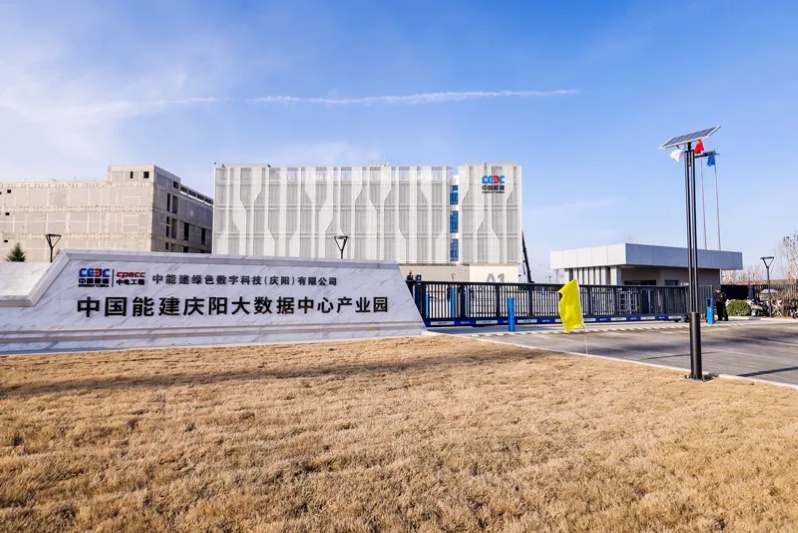
The rapidly expanding artificial intelligence (AI) data center construction industry in China is facing fresh uncertainty following the sudden resignation of Nvidia co-founder and Chief Executive Officer Jensen Huang. The leadership shake-up came amid a controversy involving alleged foreign intelligence links and renewed scrutiny of the Nvidia’s business in China. It is now raising questions about the future availability of advanced AI processors for billions of dollars’ worth of Chinese computing infrastructure projects.
A Reuters investigation published on November 13, 2026, identified more than US$3.2 billion in Chinese AI computing projects specifying restricted Nvidia processors. The investigation examined more than 150 procurement notices, investment plans, construction contracts and corporate disclosures. This highlights the extent to which Chinese developers continue to plan their computing infrastructure around American semiconductor technology despite Washington’s export restrictions.
The findings present a significant challenge for China’s AI infrastructure ambitions. Although the country is accelerating the development of large-scale computing facilities, access to the advanced processors needed to operate them remains a major uncertainty. If the supply of Nvidia processors becomes more difficult to secure, developers in China will be exposed to equipment shortages and higher procurement costs. They could also face construction delays or expensive changes to their computing infrastructure.
For an industry investing heavily in land, buildings, electricity infrastructure, cooling systems and high-density computing equipment, the implications extend well beyond the semiconductor market.
Nvidia’s Leadership Crisis Raises New Questions Over China’s AI Infrastructure
On November 12, 2026, Nvidia announced that Jensen Huang had resigned as its president and chief executive officer with immediate effect. The company’s board appointed Chief Financial Officer Colette Kress as interim CEO while beginning the search for a permanent successor. Harvey C. Jones was also appointed as the company’s first-ever board chair.
Jensen’s departure followed reports of extramarital relationships, including one involving a Chinese businesswoman, Alice Huang whom US authorities suspected of having links to Chinese intelligence. The allegations have however not been established as fact. US authorities have also not publicly demonstrated that the businesswoman engaged in espionage. Nvidia’s board has also faced questions concerning corporate security and its dealings with China.
The controversy has also intensified an already contentious debate in Washington. Many are debating whether advanced American AI processors should be supplied to Chinese companies. Huang had been a prominent advocate for maintaining access to the Chinese market. He argued that allowing American semiconductor companies to compete in China would benefit the US technology industry.
His departure could therefore weaken one of the most prominent corporate voices advocating a less restrictive approach to advanced chip exports to China.
For Chinese data center developers, the uncertainty is particularly significant because several projects have already specified Nvidia’s H100, H200 and H800 processors in their equipment plans.
More Than US$3.2 Billion in Chinese AI Data Center Projects at Stake
The scale of China’s exposure became clearer following the Reuters investigation. The report identified projects and equipment agreements worth more than 23 billion yuan (approximately US$3.2 billion).
Among the developments identified was a proposed 6.2 billion-yuan (US$873 million) AI data center in Xianyou County, Fujian Province. The project specifies Nvidia H100 processors and is seeking commercial partners to support its development.
In northwestern Shaanxi Province, a 3 billion-yuan data center has specified Nvidia H100 and H200 processors. A subsidiary of state-owned engineering group Sinomach reportedly secured a contract connected to the development.
Another 2.26 billion-yuan project in northeastern Jilin Province is planning to combine Nvidia H100 processors with domestically developed chips. Its developer expects bank loans to finance approximately 80% of the investment.
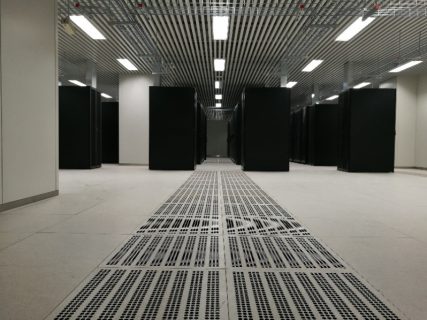
Meanwhile, an Inner Mongolia development valued at 1.5 billion yuan proposes installing 625 Nvidia H200 servers. Chinese industry reporting indicated that construction had begun on two buildings in its first phase.
In Gansu Province, a local company awarded a 1.16 billion-yuan construction contract in July for a data center planning to install approximately 3,072 Nvidia processors. The contract was awarded to a consortium led by a subsidiary of Shaanxi Construction Engineering. However, available procurement documents do not establish whether the processors have been delivered.
These developments demonstrate that the potential exposure is not limited to chip procurement. The projects involve substantial investments in physical facilities, electrical systems, mechanical infrastructure and other supporting construction works.
Importantly, the US$3.2 billion figure represents the combined reported value of the identified projects and equipment agreements, not the value of Nvidia chips alone. Nor does the investigation establish that every planned processor purchase has been completed or that export laws have been violated.
Envision’s Galaxy AI Data Center Illustrates China’s Infrastructure Ambitions
One development that illustrates the scale of China’s AI infrastructure ambitions is Envision Group’s Galaxy AI Data Center Campus in Ulanqab, Inner Mongolia.
The renewable energy and technology company’s project is targeting completion by the end of 2028. The data center campus will also have an eventual planned capacity of 3GW. Envision’s AI Data Center business general manager, Ricky Zheng, disclosed the timeline in an October 30, 2026, interview with Bloomberg. He also indicated that the company had already secured offtake agreements extending into 2029 or 2030. This shows the strong demand for AI computing capacity in China.
The campus began commercial operations in August 2026. This milestone marked an important step in Envision’s expansion from renewable energy and battery manufacturing into large-scale AI computing infrastructure.
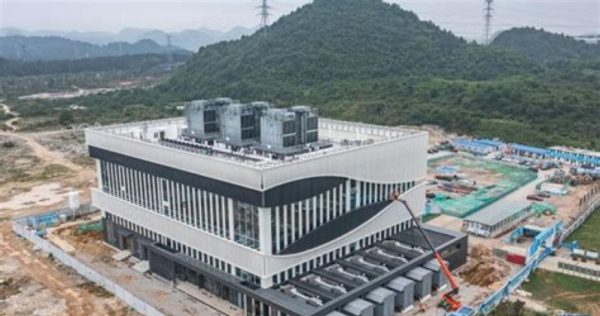
The development is also particularly significant because it combines data center construction with renewable electricity generation, energy storage and advanced power management. Envision has indicated that more than 80% of the campus’s planned electricity requirements will be supplied through direct connections to renewable energy sources.
In another development announced on November 2, 2026, Envision revealed the commercial deployment of an integrated 800-volt direct-current (800V DC) power system at the Galaxy campus. The system combines solid-state transformers, battery energy storage and AI-driven controls. These are designed to deliver electricity from medium-voltage grid input to computing racks.
The technology is also designed to reduce power conversion stages and improve power efficiency. They are also intended to reduce equipment footprints and support the high-density computing racks required by advanced AI workloads.
The development highlights how China’s AI infrastructure expansion is increasingly concerned with more than simply constructing large buildings. Developers are also investing in the electrical and energy systems needed to operate increasingly powerful computing equipment.
Could China’s Domestic Chip Industry Fill the Nvidia Gap?
The latest developments could accelerate China’s efforts to reduce its reliance on American semiconductor technology.
Chinese developers are already exploring combinations of domestic processors and foreign hardware. The Jilin computing center identified in the Reuters investigation, for example, plans to use both Nvidia H100 processors and Chinese-developed alternatives.
This approach could become increasingly important if Washington introduces additional restrictions or tightens enforcement of existing export controls.
Domestic semiconductor manufacturers, including Huawei, have also been developing alternatives for China’s AI computing market. However, replacing Nvidia’s established hardware and software ecosystem is not simply a matter of installing different processors.
AI data centers are designed around particular computing architectures, networking requirements, cooling systems, power densities and software environments. Changing processor platforms can therefore require adjustments to server configurations, networking equipment, software compatibility and facility operations.
For projects already under construction, such changes could introduce additional procurement and commissioning challenges. They could also increase project costs. Developers may also need to reconsider their equipment specifications and delivery schedules.
Nevertheless, the pressure to develop domestic alternatives could create opportunities for Chinese semiconductor manufacturers, server suppliers and data center engineering companies.
What Next for the AI Data Center Construction Boom in China?
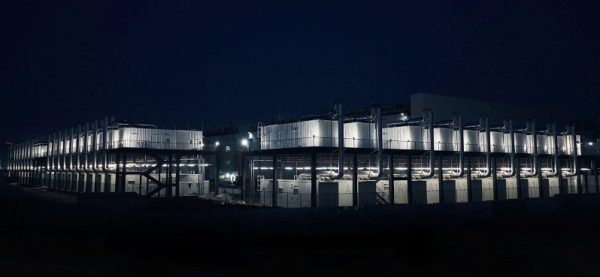
The Nvidia crisis also comes at a time when China’s AI infrastructure industry is expanding beyond conventional data center development. The East Asia country is looking toward gigawatt-scale AI data center campuses requiring substantial investments in power generation, transmission, battery storage and cooling infrastructure.
The Galaxy AI campus demonstrates this transition. This is with Envision integrating renewable energy and advanced power distribution technologies into its data center development strategy. Other projects identified by Reuters demonstrate that developers across multiple Chinese provinces are also committing significant resources to AI computing facilities.
What Happens to the China Data Center Construction Industry if the US Tightens Grip on Chip Exports?
The immediate challenge is whether the hardware required to equip these developments will remain accessible under the evolving US-China technology relationship.
If restrictions tighten, projects dependent on Nvidia processors could experience equipment procurement difficulties and higher costs. They could also face commissioning delays or redesigns around domestic alternatives. The consequences could extend to contractors, equipment suppliers, electrical infrastructure developers and investors financing these facilities.
However, a prolonged disruption would not necessarily bring the AI data center construction in China boom to a halt. Instead, it could accelerate the development of a more domestically integrated supply chain. This also has the potential to create additional demand for Chinese semiconductor manufacturers and infrastructure suppliers.
For the construction industry, the bigger question is whether the rapid expansion of AI infrastructure can remain commercially viable when access to the computing hardware needed to operate these facilities becomes increasingly uncertain.
Furthermore, China has demonstrated that it can mobilize substantial resources for the construction of large-scale AI data centers. Envision’s Galaxy campus is one example of the country’s ambition to integrate computing capacity with renewable energy and advanced electrical infrastructure.
But building the facilities is only part of the equation. Developers must also secure the processors, power systems and technology partnerships required to turn physical infrastructure into operational AI computing capacity.
The Nvidia crisis presents a critical test for China’s AI infrastructure strategy. Can China sustain its data center construction boom while reducing its dependence on the American technology that helped drive it?

Leave a Reply