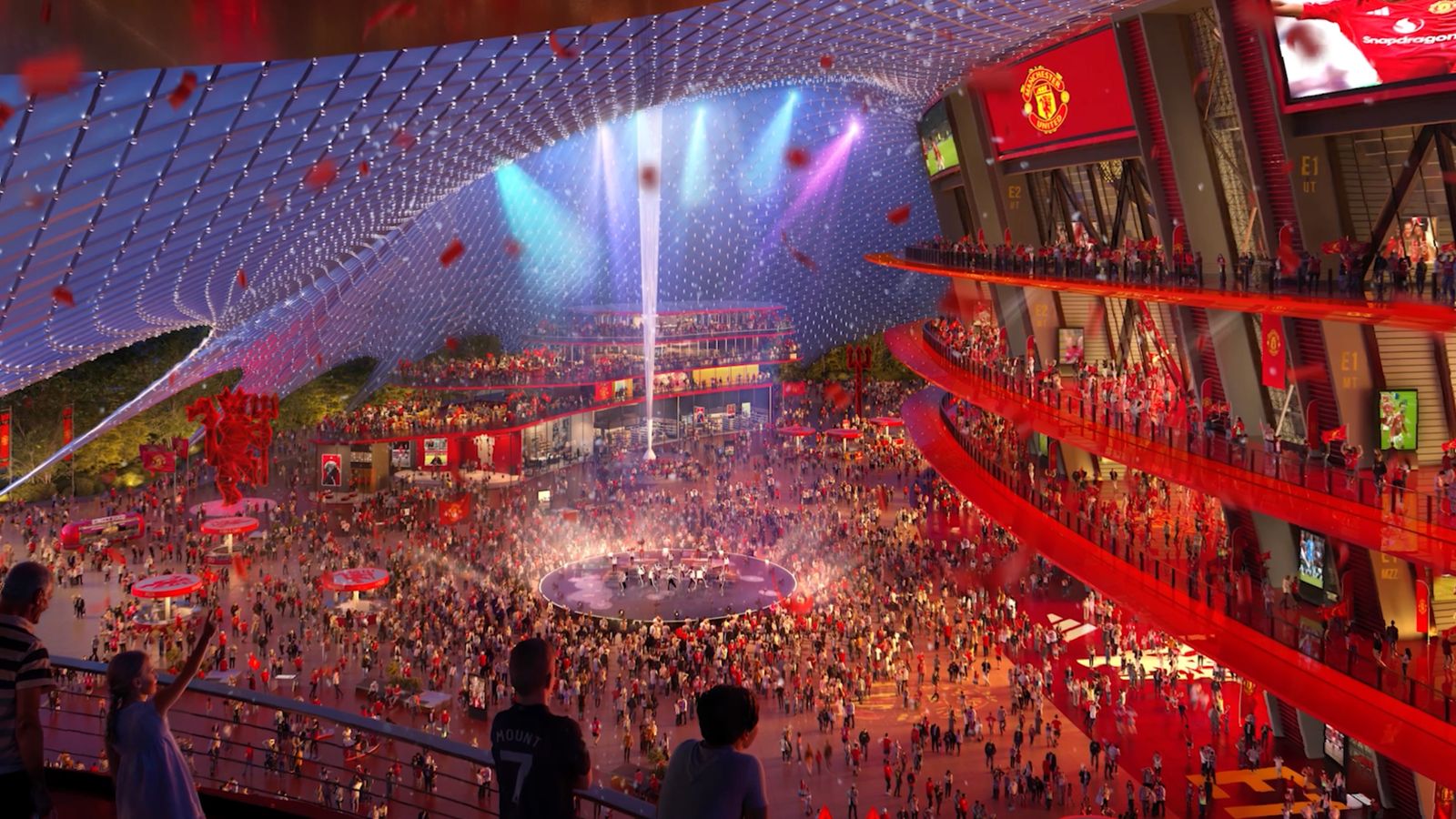
New Old Trafford Stadium project has reached another major milestone after developers confirmed the preferred location for the proposed 100,000-seat venue. The scheme will occupy a newly assembled 25-acre site around 350 meters northwest of Old Trafford. The land acquisition removes one of the project’s biggest development hurdles and allows planning, design, and consultation to accelerate. Once completed, the stadium will become the largest in the United Kingdom and anchor a wider regeneration programme across the Trafford Wharfside district.
The proposed stadium carries an estimated investment of £2 billion. Developers expect construction to last about five years after approvals. The project also aims to create a modern sports venue while supporting long-term urban renewal, transport improvements, housing, and commercial development across western Manchester.
New Old Trafford Stadium Project secures strategic construction site
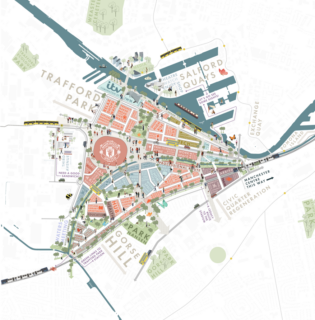
Project planners selected a triangular site bordered by Europa Way, Wharfside Way, and John Gilbert Way. The location replaces an earlier option that depended on acquiring the Freightliner rail terminal. Consequently, the revised site reduces land acquisition risks and simplifies project delivery.
The assembled land covers about 25 acres. It provides enough space for the stadium, surrounding public realm, transport connections, and future mixed-use developments. Developers also confirmed they will continue securing the remaining parcels needed for the wider regeneration programme. However, they do not expect major obstacles.
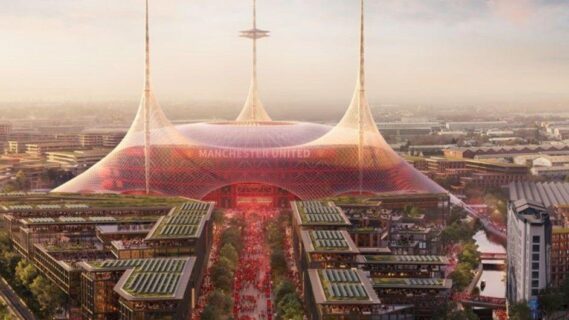
Architects from Foster + Partners continue refining the stadium design. Their concept features a vast umbrella-style roof that harvests solar energy and rainwater. Three landmark masts will rise above the structure, making the venue visible across much of Greater Manchester. The design also creates a large public plaza that exceeds the size of London’s Trafalgar Square.
The club intends to keep playing at the existing Old Trafford throughout construction. Therefore, matchday operations can continue without requiring a temporary relocation. Officials have not reached a final decision on the future use of the current stadium after the new venue opens.
New Old Trafford Stadium Project drives wider Trafford regeneration
Beyond football, the project forms the centrepiece of the Trafford Wharfside regeneration initiative. The wider masterplan seeks to transform former industrial land into a mixed-use district with new homes, employment centres, green spaces, and improved transport infrastructure.
Current estimates suggest the regeneration programme could support tens of thousands of new jobs and thousands of homes while contributing around £7.3 billion annually to the UK economy. Public authorities also expect the scheme to strengthen investment across Greater Manchester.
Public consultation on the masterplan has now begun. Developers will gather feedback from residents, supporters, businesses, and community groups before submitting detailed planning applications. Meanwhile, project leaders continue working with local authorities on infrastructure improvements supporting future construction activities.
New Old Trafford Stadium Project enters design and consultation phase
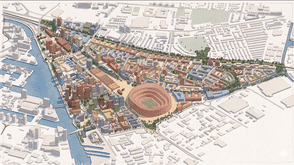
Attention now shifts toward detailed engineering, planning approvals, and stakeholder engagement. Project leaders believe the secured land provides greater certainty for scheduling and procurement activities. Consequently, design development can advance while consultation shapes the final stadium layout.
The completed venue will accommodate 100,000 spectators, overtaking Wembley Stadium as Britain’s largest sports arena. It will also rank among Europe’s biggest football stadiums and strengthen Manchester’s position as a destination for international sporting and entertainment events.
The project also reflects a broader wave of stadium investment across English football. Similar redevelopment programmes are progressing elsewhere, including the King Power Stadium Expansion Project, where Leicester City plans to increase capacity to 40,000 seats while adding a hotel, indoor arena, residential buildings, and commercial facilities as part of a mixed-use regeneration scheme.
Also read: New Old Trafford Stadium Project, Manchester United Secures Land for £2 Billion 100,000-Seat Stadium
Project fact sheet
Project name: New Old Trafford Stadium
Location: Trafford Wharfside, Greater Manchester, England
Specific site: Triangle between Europa Way, Wharfside Way, and John Gilbert Way
Estimated cost: £2 billion
Project type: Football stadium and urban regeneration
Capacity: 100,000 spectators
Site size: Approximately 25 acres
Construction period: Approximately five years after approvals
Current stage: Land acquisition substantially completed; design refinement and public consultation underway
Construction status: Pre-construction
Existing stadium distance: Around 350 metres northwest of Old Trafford
Key sustainability features: Solar energy harvesting roof, rainwater collection system, large public plaza
Economic impact: Supports wider Trafford regeneration with significant employment, housing, and investment potential
Primary objective: Deliver the UK’s largest stadium while catalyzing long-term urban regeneration
Project team
Owner: Manchester United Football Club
Sponsor: INEOS leadership under Sir Jim Ratcliffe
Development lead: Collette Roche
Chief executive: Omar Berrada
Lead architect and master planner: Foster + Partners
Lead architect: Lord Norman Foster
Local authority partner: Trafford Council
Regional authority: Greater Manchester Combined Authority
Regeneration partners: Trafford Wharfside regeneration stakeholders
Government engagement: UK Government regeneration programme
Planning authority: Trafford Council Planning Authority
Public consultation partners: Local communities, supporters, businesses, and statutory stakeholders


Leave a Reply