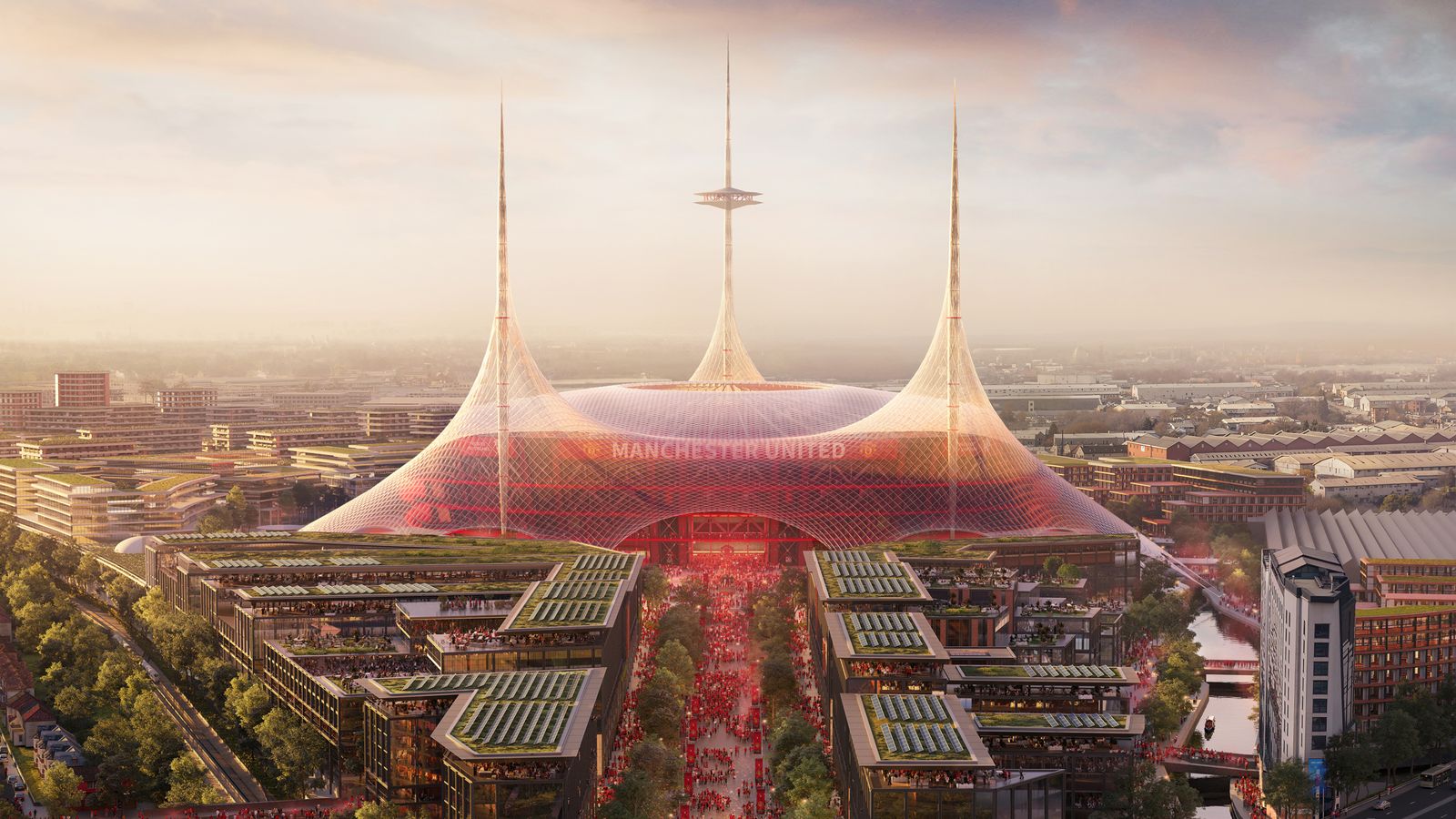
New Old Trafford stadium plans have moved into a critical delivery phase after Manchester United secured the land needed for the proposed 100,000-seat venue in Trafford, Greater Manchester. The club reached agreements with freight operator Freightliner and other landowners, clearing a major obstacle to one of Europe’s largest planned stadium developments.
The project carries an estimated cost of £2 billion, and forms part of a wider regeneration vision around the existing Old Trafford area. The proposed stadium would become the largest football venue in the United Kingdom if completed.
New Old Trafford stadium enters land assembly phase
Manchester United announced that the land agreements will allow the project team to continue detailed planning work. The secured land sits within the wider redevelopment zone identified for the future stadium and surrounding mixed-use district. According to the club, the agreements represent a significant milestone because they remove a major constraint that could have delayed construction planning.
Sky Sports reported that the club secured land from Freightliner and other parties connected to the proposed development area. As a result, the project can progress toward design refinement, infrastructure planning, and statutory approvals. The club has not yet announced a final construction start date, although preparatory work continues.

New Old Trafford stadium aims to anchor wider regeneration
The stadium proposal extends beyond football infrastructure and targets broader economic renewal across Trafford. Club officials have previously outlined ambitions for new public spaces, transport improvements, commercial developments, and residential opportunities around the stadium district. Therefore, the project could become one of the largest urban regeneration schemes currently planned in the United Kingdom.
Supporters of the scheme argue that a modern 100,000-seat stadium would increase visitor spending, create jobs, and strengthen Manchester’s position as a global sports destination. In addition, the larger capacity would significantly exceed the current Old Trafford stadium’s capacity of roughly 74,000 seats.
Industry observers also note that the project arrives during a period of major investment in sports infrastructure across Europe. Consequently, the development could attract substantial private investment and long-term commercial partnerships.
The proposed New Old Trafford Stadium reflects a growing trend among leading English football clubs to expand and modernize their match day infrastructure. Similar ambitions are emerging elsewhere in the Premier League, with Arsenal also evaluating plans to increase the capacity of the Emirates Stadium beyond 70,000 seats through a major redevelopment program aimed at boosting revenues and accommodating rising supporter demand.
Together, these projects highlight how clubs are increasingly using stadium construction and expansion projects as long-term growth strategies while enhancing fan experiences and supporting wider urban regeneration initiatives. For more on Arsenal’s plans, see our earlier coverage of the Emirates Stadium expansion.
Design, funding, and approvals remain key next steps
Manchester United continues to develop the stadium’s design and financing structure while engaging with local authorities. The club has not released final architectural plans, although previous discussions suggested a landmark venue capable of hosting major international events. Furthermore, the project will require planning approvals, transport assessments, and extensive stakeholder consultation before construction begins.
Local leaders have generally welcomed efforts to regenerate the Old Trafford area, while community groups continue to seek clarity on housing, transport, and public access arrangements. Therefore, the next phase will focus on balancing commercial ambitions with local development priorities.
The land agreements nevertheless mark a decisive step forward. By securing the required development sites, Manchester United has strengthened the foundation for a stadium project that could reshape both the club’s future and the wider Trafford landscape.
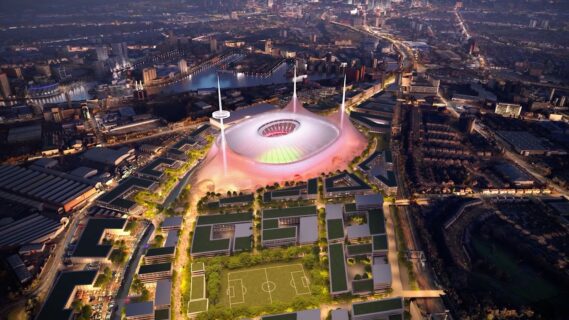
Project Fact Sheet
Project name: New Old Trafford Stadium
Location: Old Trafford regeneration zone, Trafford, Greater Manchester, England, United Kingdom
Project cost: £2 billion
Stadium capacity: 100,000 spectators
Project type: Football stadium construction and mixed-use regeneration development
Development footprint: Part of a wider 370-acre regeneration program
Current status: Majority of required land secured following acquisition of a 25-acre site
Land acquired: Approximately 25 acres located 350 meters northwest of Old Trafford
Project objective: Develop the United Kingdom’s largest football stadium and regenerate the surrounding district
Expected construction duration: Approximately five years after commencement
Planning status: Design development and stakeholder consultations ongoing
Economic impact: Expected to support major job creation and regional economic growth
Supporting developments: Housing, commercial space, transport infrastructure and public realm improvements
Stadium ranking: Planned to become the largest sporting venue in the United Kingdom
Ownership: Manchester United Football Club
Funding model: Privately financed development
Completion date: Yet to be confirmed
Key milestone achieved: Majority of land required for construction secured
Project Team
Project developer: Manchester United Football Club
Stadium development leadership: Collette Roche, Chief Operating Officer and lead for stadium development activities
Lead architect: Norman Foster
Architectural consultant: Foster + Partners
Land transaction stakeholder: Indurent
Property owner associated with acquired site: Blackstone
Local authority stakeholder: Trafford Council
Regional stakeholder: Greater Manchester Combined Authority
Regeneration partners: Public and private sector organizations participating in the Old Trafford regeneration program
Contractors: To be appointed following completion of planning and procurement processes
Engineering consultants: To be announced
Financial partners and investors: Under discussion as part of project financing arrangements
Community stakeholders: Local residents, businesses, supporters’ groups and transport agencies involved in consultation activities

Leave a Reply