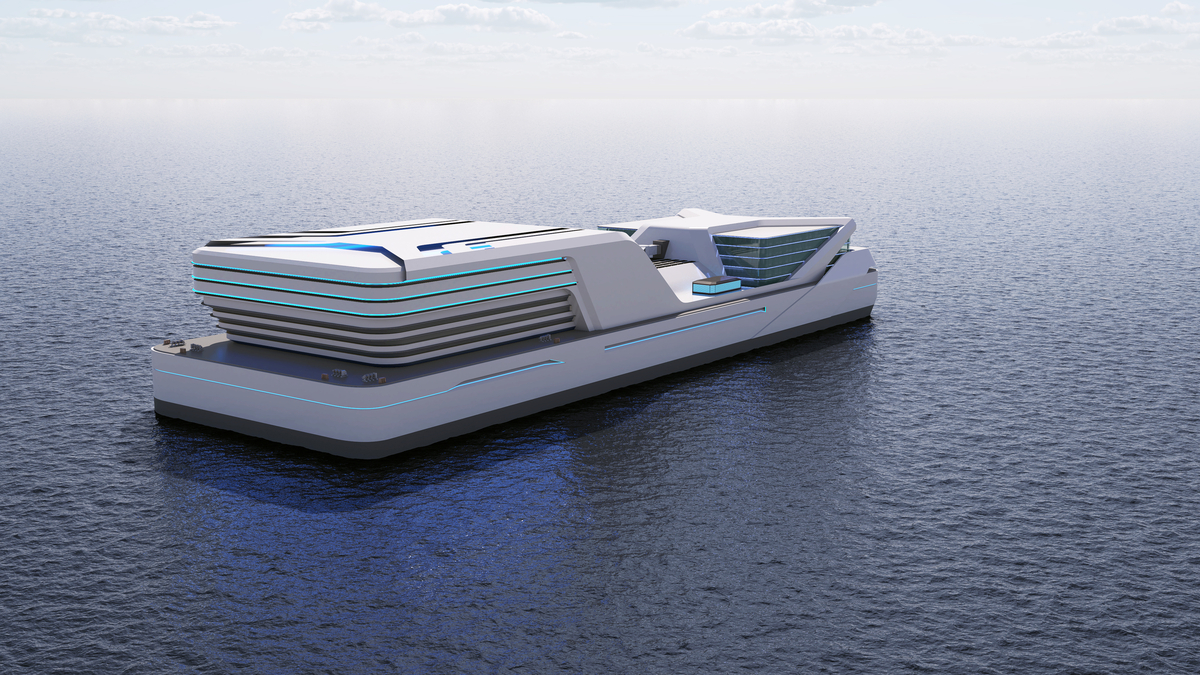
Samsung Floating Data Center is moving toward commercial deployment in 2028, creating a new construction model for AI infrastructure. The $360 million project combines offshore engineering with hyperscale digital infrastructure to deliver a standardized 50MW floating facility. Unlike conventional developments, the project uses marine construction techniques, seawater cooling, and onboard power systems to overcome land shortages and grid constraints. As global demand for artificial intelligence computing accelerates, the project could establish a new market for offshore data center construction.
Growing AI adoption continues to increase demand for high-capacity data centers across major technology markets. However, developers increasingly face limited land availability, lengthy permitting processes, and constrained electricity networks. Therefore, offshore construction has emerged as a practical alternative. By relocating critical digital infrastructure to the sea, the project aims to improve scalability while reducing pressure on urban resources.
Samsung Floating Data Center advances offshore construction for AI infrastructure
The Samsung Floating Data Center features a standardized 50MW offshore platform designed specifically for AI computing. The facility integrates server halls, electrical systems, marine equipment, and onboard energy generation into a single floating structure. Consequently, operators can deploy computing capacity without relying entirely on land-based infrastructure.
The platform will use surrounding seawater as its primary cooling medium. This approach reduces cooling energy requirements while improving operational efficiency. In addition, onboard power generation and subsea power connections provide flexible energy options depending on deployment conditions.
Developers also intend to apply proven shipbuilding techniques throughout construction. Hull fabrication, structural assembly, equipment installation, and systems integration can progress simultaneously. As a result, construction schedules could become shorter than those of conventional hyperscale data centers.
The modular design also allows future expansion through additional floating units. Instead of acquiring new land, operators could increase computing capacity by deploying multiple platforms within suitable offshore locations.
Furthermore, the floating configuration enables installation near submarine communication cables and renewable energy projects. This flexibility could reduce network latency while supporting cleaner energy integration.
Samsung Floating Data Center gains certification before 2028 deployment
The project has reached several important milestones during 2026. Earlier this year, the design received Approval in Principle from the American Bureau of Shipping and Lloyd’s Register. These certifications confirm that the concept satisfies recognized marine engineering and safety standards for offshore construction.
More recently, Samsung Heavy Industries announced plans to commercialize the floating data center during the second half of 2028. The company continues refining engineering, operational, and commercial strategies before construction begins.
Commercial partnerships have also expanded. Capital Clean Energy Carriers joined the initiative to support commercialization and future deployment activities. Meanwhile, Supermicro is collaborating on validating AI server performance under demanding offshore operating conditions.
The project additionally incorporates LNG-based solid oxide fuel cells as one potential power source. Where suitable infrastructure exists, operators may also connect the facility to shore through subsea transmission cables. These options improve operational flexibility while strengthening energy resilience.
Nevertheless, engineers must still address long-term corrosion protection, vibration control, humidity management, maintenance logistics, and marine environmental conditions. Successfully resolving these challenges will strengthen confidence in offshore digital infrastructure.
Industry analysts believe floating facilities could help ease electricity shortages affecting major AI markets. They also expect the concept to shorten project delivery where land acquisition delays threaten conventional developments.
Also read: $60 Billion Project Matador Stalls After CEO Exits the Trump-Branded AI Data Center Megaproject
Offshore digital infrastructure creates new construction opportunities
The Samsung Floating Data Center represents more than a single infrastructure project. Instead, it signals the emergence of a new construction sector that combines shipbuilding, offshore engineering, renewable energy integration, and digital infrastructure.
Demand for AI computing continues growing across cloud services, autonomous technologies, advanced manufacturing, and scientific research. Consequently, governments and technology companies require faster methods of delivering high-capacity computing facilities.
Floating platforms provide an attractive alternative because they reduce dependence on scarce urban land while taking advantage of abundant seawater for cooling. They also create opportunities for marine contractors, offshore fabricators, electrical engineers, equipment suppliers, and specialist data center builders.
If commercialization proceeds as scheduled, the first deployment in 2028 could demonstrate the viability of floating AI infrastructure at scale. That achievement would encourage additional investment in offshore digital construction across Asia, Europe, the Middle East, and North America.
The Samsung Floating Data Center also reflects the growing convergence of advanced computing infrastructure and research-driven developments. A similar trend is evident in the proposed Berkeley Space Center, which will bring together artificial intelligence, aerospace innovation, and next-generation research facilities in California.
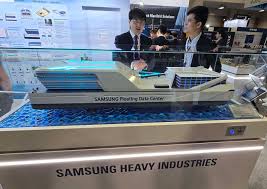
Project fact sheet
Project name: Samsung Floating Data Center
Estimated project value: $360 million (industry estimate for a commercial 50MW facility)
Focus: Offshore AI data center construction
Capacity: 50MW
Target commercial launch: Second half of 2028
Development model: Floating modular data center
Primary cooling system: Seawater cooling
Power supply: LNG-based solid oxide fuel cells and optional subsea grid connection
Construction method: Modular shipbuilding and offshore platform fabrication
Primary objective: Deliver scalable AI computing infrastructure while overcoming land and grid constraints
Current status: Design certified and commercialization preparations underway
Expected beneficiaries: Hyperscale cloud providers, AI companies, governments, and digital infrastructure operators
Project team
Project developer: Samsung Heavy Industries
Marine classification partner: American Bureau of Shipping (ABS)
Marine classification and certification partner: Lloyd’s Register
Commercial deployment partner: Capital Clean Energy Carriers
AI server technology partner: Supermicro
Advisory and technical support: Lloyd’s Register Advisory
Engineering scope: Offshore platform design, structural fabrication, marine systems integration, onboard power generation, cooling systems, and AI-ready data center infrastructure
Target clients: Global hyperscale cloud operators, AI infrastructure providers, enterprise data center developers, and government digital infrastructure programmes


Leave a Reply