
Melbourne Airport Rail Stage 1 construction has reached another milestone after authorities released early designs for new stations and rail bridge infrastructure across Melbourne’s west. The $4.1 billion project aims to transform the Sunshine transport corridor while preparing the network for a future airport rail connection. Additionally, the development will separate regional, freight, and metropolitan services to improve reliability and passenger capacity across one of Victoria’s busiest rail corridors.
The Victorian Government revealed updated concepts for the rebuilt Tottenham and Albion stations as part of the broader rail modernization program. Moreover, the project includes major track upgrades between West Footscray and Albion. Authorities expect the development to support up to 1,000 trains daily once completed. Construction teams also plan to improve accessibility, passenger circulation, and safety throughout the corridor.
Transport officials described the initiative as a foundation for future rail expansion toward Melbourne Airport and the Melton growth corridor. Consequently, the scheme continues attracting public and industry attention because of its long-term transport and urban development value. The project also supports Victoria’s wider strategy to reduce congestion and strengthen public transport connectivity.
Melbourne Airport Rail Stage 1 construction advances station and rail bridge upgrades
The early designs show Tottenham Station relocating approximately 20 meters north of its current position. Engineers plan to align the station with the upgraded Sunbury Line infrastructure. Furthermore, passengers will access platforms through a wider and safer pedestrian underpass connecting both sides of the corridor.
Designers also incorporated improved lighting, modern shelters, CCTV systems, and accessible concourses into the new Albion Station proposal. The rebuilt station will sit slightly east of the existing structure. Therefore, commuters should experience easier movement and improved safety throughout the precinct.
The broader construction package includes six kilometers of rail upgrades designed to untangle freight and passenger operations. As a result, transport planners expect smoother train movements and fewer operational conflicts across the network. Officials believe the corridor improvements will eventually unlock additional rail capacity for Melbourne’s expanding western suburbs.
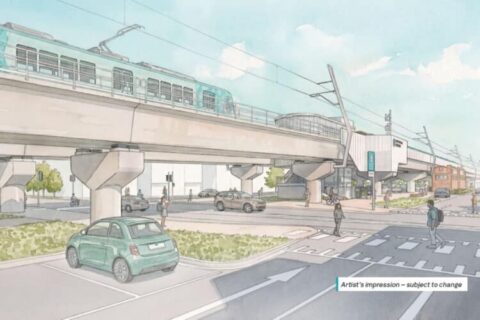
Meanwhile, rail bridge components remain central to the project’s engineering strategy. Similar Australian rail projects increasingly rely on elevated bridge systems to remove bottlenecks and improve service reliability. Modern rail bridges also reduce disruptions at level crossings while supporting safer pedestrian movement beneath transport corridors.
Authorities confirmed construction preparation activities are already underway. Additionally, procurement and detailed engineering work continue across several project sections. The Allan Government expects the upgraded stations to open by 2030, subject to construction progress and approvals.
Melbourne Airport Rail Stage 1 construction strengthens long-term transport capacity
The rail project represents one of Victoria’s largest transport investments currently under delivery. Importantly, it forms part of broader efforts to modernize infrastructure while supporting population growth in Melbourne’s outer suburbs. The development also complements future airport connectivity ambitions supported by state and federal funding commitments.
Industry analysts note that large-scale rail bridge and station upgrades continue reshaping transport construction across Australia. Recent projects increasingly focus on elevated infrastructure, accessibility improvements, and integrated urban planning outcomes. Consequently, governments are prioritizing designs that accommodate future passenger demand while minimizing long-term operational disruptions.
Community engagement also remains a critical element of the project. Authorities continue consulting residents and stakeholders regarding station accessibility, urban integration, and surrounding public spaces. Furthermore, planners expect the upgraded transport hub to stimulate additional economic activity across Melbourne’s western corridor.
Construction experts believe the project could improve freight efficiency while reducing road congestion over time. By separating freight and passenger operations, the upgraded corridor should support more reliable scheduling across Victoria’s growing rail network. Additionally, the infrastructure could support future electrification projects and expanded regional services.
Although the future airport rail extension still requires further delivery stages, the current works establish critical enabling infrastructure. Therefore, transport planners view the development as a long-term investment in Melbourne’s transport resilience and urban growth strategy.
The Melbourne Airport Rail Stage 1 story aligns with broader rail infrastructure developments across Australia, including the Cross River Rail project in Brisbane, Queensland, Australia. Like the Melbourne airport corridor upgrades, Brisbane’s Cross River Rail development focuses on easing network congestion, expanding rail capacity, and improving long-term commuter connectivity through new stations, underground tunnels, and major transport construction works. The Brisbane project also includes 10.2 kilometers of new rail infrastructure and 5.9 kilometers of twin tunnels beneath the Brisbane River and CBD, reinforcing Australia’s growing investment in transformative rail modernization projects.
Project Fact Sheet
Project name: Melbourne Airport Rail Stage 1
Value: $4.1 billion
Location: Melbourne western corridor, Victoria, Australia
Main infrastructure: New stations, rail bridge systems, corridor upgrades
Key stations: Tottenham Station and Albion Station
Rail upgrade length: Approximately 6 kilometers
Main purpose: Separate freight, metro, and regional train services
Expected rail capacity: Up to 1,000 trains daily
Planned completion: 2030
Future integration: Melbourne Airport Rail and Melton Line electrification
Key accessibility features: Wider underpasses, lifts, CCTV, improved concourses, lighting, and shelters
Construction scope: Track realignment, station reconstruction, rail bridge infrastructure, accessibility upgrades
Economic impact: Improved commuter efficiency and regional connectivity
Public transport benefits: Reduced congestion and increased service reliability
Current project stage: Early designs and engineering development released
Project Team
Project owner: Victorian Government
Lead transport authority: Victoria’s Big Build
Delivery authority: Level Crossing Removal Project and transport infrastructure agencies
Government leadership: Allan Government
Federal support partner: Australian Government
Infrastructure coordination: Transport Infrastructure Victoria
Rail corridor stakeholders: Metro rail, freight operators, and regional rail authorities
Engineering and design teams: Multidisciplinary rail and bridge engineering consultants
Construction partners: To be confirmed through staged procurement packages
Community engagement stakeholders: Local councils, residents, and transport user groups
Safety and accessibility advisors: Rail operations and public infrastructure specialists
Environmental and planning oversight: Victorian planning and transport agencies




Leave a Reply