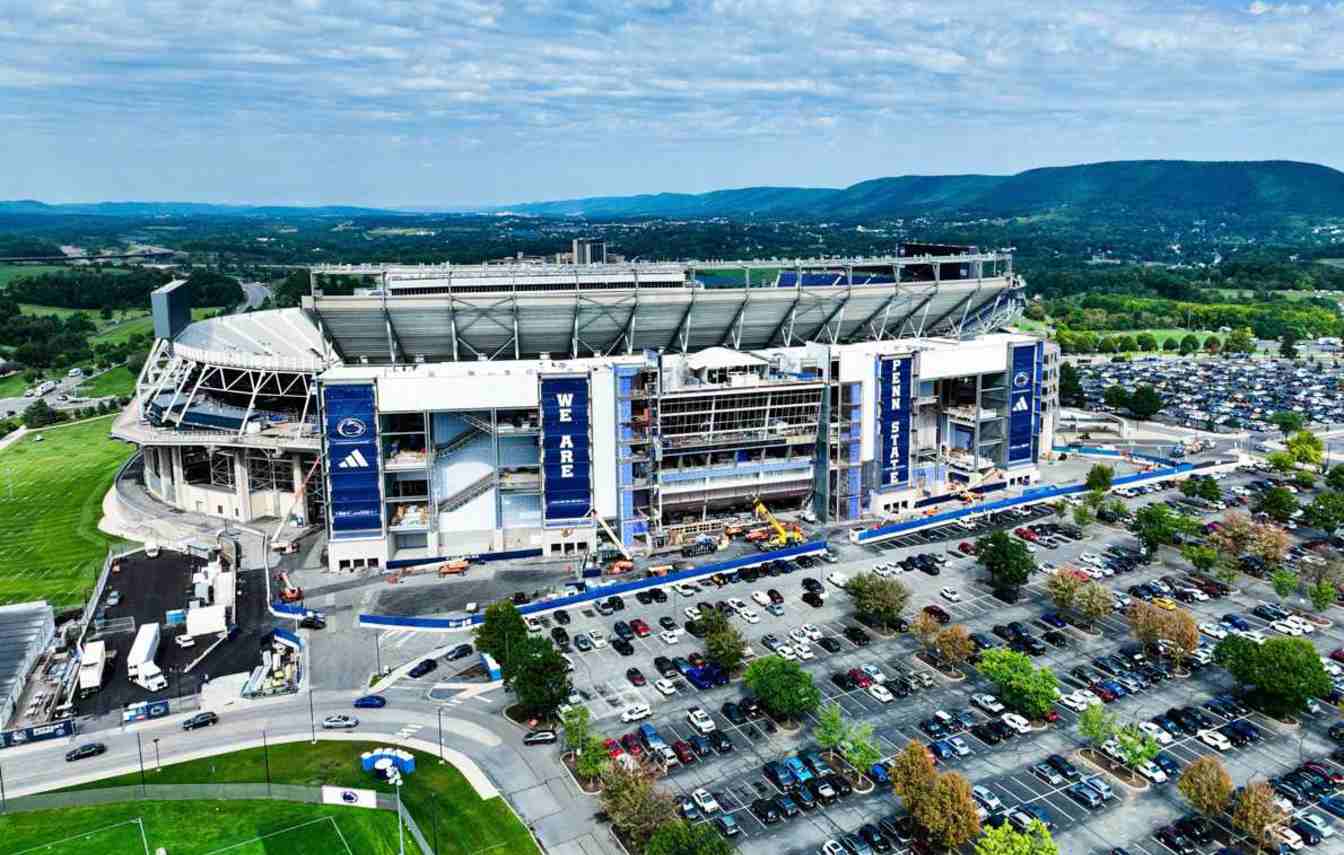
The Beaver Stadium renovation project in University Park, Pennsylvania, is entering its final construction phase. The $700 million redevelopment will transform the historic venue’s west stand before the 2027 college football season. Penn State University plans to demolish and reconstruct the remaining lower section of the west seating bowl.
The work will replace traditional bench seating with individual chairback seats and improved spectator facilities. Meanwhile, the wider redevelopment will modernize circulation, accessibility, hospitality spaces and stadium infrastructure. The project will preserve Beaver Stadium’s position among America’s largest college football venues. Construction is expected to conclude in August 2027, ahead of the next football season.
The final phase follows two years of extensive construction across the stadium’s western section. Penn State will undertake the remaining lower-bowl reconstruction after its 2026 regular-season home fixtures conclude. The university’s announcement identifies the west lower bowl as the next major construction area. Furthermore, the redevelopment will improve seating comfort without significantly changing the stadium’s traditional configuration.
Beaver Stadium renovation project advances into final reconstruction phase
The final construction phase will begin with the demolition of the existing west lower-bowl seating. According to Penn State’s November 18 update, crews will replace the existing benches with individual chairback seats. The new seating will increase tread depth from 24 inches to 34 inches. Consequently, spectators will gain approximately 10 inches of additional legroom.
Construction teams will undertake the demolition progressively, moving from the northern end towards the southern section. The current support structure will also undergo removal before workers establish the replacement structure. According to the published construction schedule, demolition will extend through January and early February 2027.
Seat installation will follow the structural works, with initial sections expected by mid-April. Penn State targets May 2027 for completion of the lower-bowl seating installation. However, additional construction will continue behind the seating area and around the stadium exterior.
The final phase also includes an expanded west main concourse measuring approximately 85,000 square feet. This facility will provide additional restrooms, drink rails and standing areas for spectators. Additionally, a continuous 360-degree main concourse will improve movement around the stadium.
Beaver Stadium renovation project introduces expanded spectator facilities
The wider redevelopment will deliver substantial improvements to the stadium’s western infrastructure. These include additional entrances, upgraded concessions and improved restroom facilities. Furthermore, the project will introduce escalators, elevators and pedestrian ramps. These installations will improve vertical circulation between seating levels.
Penn State also plans improved digital infrastructure throughout the renovated venue. The upgrades include 135 new wireless access points and increased Wi-Fi capacity. Meanwhile, the stadium will receive modern lighting, an upgraded north video board and new ribbon boards.
The redevelopment will introduce several premium hospitality facilities alongside conventional spectator seating. These include the 20,000-square-foot Schuyler Family Club and the 35,000-square-foot Marzano Club. The western section will also accommodate executive suites and loge boxes.
However, approximately 75% of the renovated west-side seating will remain non-premium. These seats will occupy the lower and upper levels, maintaining substantial conventional seating availability. The improvements will therefore combine commercial hospitality facilities with broader spectator accessibility.
The project has also reached significant structural milestones during 2026. In June, construction teams installed the final steel beam atop the 195-foot western structure. This milestone marked the completion of the structure’s maximum planned height. Furthermore, the redevelopment has involved more than 6,200 tons of steel and approximately 12,000 cubic yards of concrete.
The university reports that construction has surpassed 750,000 labour hours. At peak activity, approximately 450 workers operated onsite daily. The project has also generated employment opportunities through its extensive construction supply chain.
Beaver Stadium renovation project maintains $700 million investment
The Beaver Stadium redevelopment carries an approved investment ceiling of $700 million. Penn State Intercollegiate Athletics will finance the project without using tuition or educational budget funds. Instead, the funding strategy incorporates fundraising, sponsorships, concessions, naming opportunities and ticket revenues.
The university previously identified more than $200 million as its philanthropic fundraising target. Additionally, premium hospitality facilities will create opportunities for additional stadium-generated revenue. The renovation also addresses longstanding maintenance requirements while extending the existing stadium’s operational life.
Penn State expects the completed venue to accommodate more than 100,000 spectators. StadiumDB reports that the redevelopment will retain capacity above 106,000. Therefore, the project prioritizes modernization without sacrificing the stadium’s large-scale event capacity.
Completion remains targeted for August 2027, ahead of the next football season. The final construction phase will deliver the remaining seating improvements and complete the western spectator facilities. Consequently, Beaver Stadium will enter its next operational chapter with modernized infrastructure and expanded hospitality offerings.
The redevelopment also reflects Philadelphia’s wider investment in major sports infrastructure. In Pennsylvania, another significant venue development involves the Philadelphia 76ers’ planned NBA arena at the South Philadelphia Sports Complex. The proposed facility will replace the earlier Center City arena proposal, which developers abandoned following an agreement with Comcast. The new arena will serve the 76ers, Philadelphia Flyers and the city’s incoming WNBA franchise. Its construction is expected to begin in 2027, with opening targeted for 2030. The development forms part of wider efforts to strengthen Philadelphia’s sports and entertainment infrastructure.

Leave a Reply