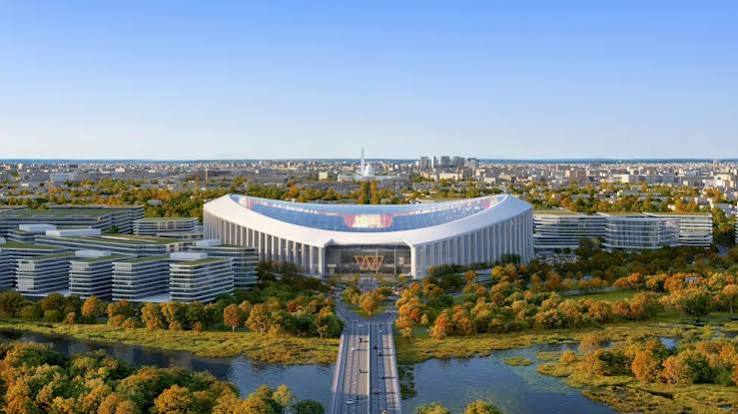
National Ballpark Renovation could deliver a $380 million transformation of Nationals Park in Washington, DC. The proposed construction program would modernize the stadium’s infrastructure, spectator facilities and commercial spaces. Moreover, the investment aims to strengthen the venue’s competitiveness within Major League Baseball (MLB).
The Washington Nationals want to improve spectator experiences while attracting major sporting and entertainment events. The proposal comes as the District of Columbia considers substantial investments in its professional sports infrastructure. Nationals Park opened in 2008 and now requires significant improvements to maintain its operational standards.
Consequently, the baseball club is seeking public financing to address ageing facilities and changing spectator expectations. The proposed improvements include upgraded concourses, concessions, premium seating and player facilities. However, the project still requires legislative approval and a development and financing agreement. The District’s Council held a public hearing on November 13, 2026, to examine the financing proposal.
National Ballpark Renovation targets stadium modernization
The proposed Washington National Ballpark Renovation extends beyond routine maintenance. Instead, it focuses on improving the stadium’s long-term functionality and commercial potential.
Jason Sinnarajah, president of business operations for the Washington Nationals, presented the modernization requirements. He told the Council that the stadium needs improvements to remain competitive with newer MLB venues.
The proposed construction program would address several important areas:
- Spectator concourses requiring improvements to circulation, accessibility and overall visitor experience.
- Concession facilities requiring modernization to improve food and beverage services.
- Premium seating areas requiring upgrades to accommodate changing hospitality expectations.
- New seating areas offering additional amenities and entertainment experiences.
- Player and coaching facilities requiring improvements to support professional sporting operations.
- Ageing building infrastructure requiring replacements and upgrades to maintain operational efficiency.
Additionally, the improvements could strengthen Nationals Park’s ability to host major international sporting events. The club hopes to attract another MLB All-Star Game and the NHL Winter Classic.
These ambitions would position the stadium as a broader entertainment destination. Furthermore, improved hospitality facilities could help attract visitors beyond regular baseball fixtures.
The modernization proposal also follows a facility condition assessment initiative. A 2026 procurement document sought specialist consultants to examine the stadium’s physical condition.
The assessment covers architectural components, structural elements, concrete, seating and playing-field infrastructure. It also examines mechanical, electrical, plumbing and heating, ventilation and air-conditioning systems.
Furthermore, the assessment includes security systems, fire protection, food-service facilities and retail infrastructure. Audiovisual equipment, information technology, elevators and escalators also feature within its scope.
The exercise will identify deficiencies and prioritize capital improvements. It will also establish estimated replacement costs and implementation timelines.
The proposed Washington renovation reflects a wider wave of investment in American sports infrastructure, where stadium modernization increasingly involves complex public financing and infrastructure negotiations. A similar debate surrounds the $6.6 billion Chicago Bears stadium project, where Illinois lawmakers are considering an $855 million public infrastructure package covering roads, utilities, sewer systems and transportation improvements. However, neighbouring municipalities are demanding representation in decisions affecting their communities, highlighting the financial and governance challenges facing major sports construction developments.
National Ballpark Renovation financing and construction outlook
The District of Columbia is considering bond financing to support the proposed improvements. The financing proposal falls under Bill 26-844, known as the Nationals Park Financing Act of 2026.
The legislation seeks authorization for bonds worth up to $410 million. However, the actual renovation program carries a projected cost of $380 million.
Jonathan Kane, Director of Special Projects and Finance at the Office of the Deputy Mayor for Planning and Economic Development, explained the difference. He told lawmakers that the additional amount would cover bond issuance and associated financing costs.
The proposed financing would draw on the District’s Ballpark Preservation and Improvement Fund. The fund receives designated revenue from ballpark-related sales taxes, rent and other sources.
Consequently, the District intends to use dedicated stadium-related revenues to support the borrowing. The financing would help meet its responsibilities under the ballpark lease.
Meanwhile, the proposed investment carries wider economic implications for the surrounding Capitol Riverfront neighborhood.
Emeka Moneme, president and CEO of the Navy Yard Business Improvement District, supported the investment. He highlighted the stadium’s contribution to neighborhood development and commercial activity.
According to Moneme, Nationals Park attracts approximately 2.3 million visits annually. He also cited an estimated $75 million in annual tax revenue.
Additionally, development around the stadium has exceeded two million square feet since its opening. Household numbers in the surrounding neighborhood have also quadrupled.
However, Moneme urged the District to maintain neighborhood activity during construction. He also recommended advancing South Capitol Street improvements and completing the missing river walk connection.
The proposed renovation therefore presents an opportunity to strengthen the wider district. Nevertheless, surrounding infrastructure improvements would require separate government attention.
The Nationals and District officials are negotiating a Development and Financing Agreement. They expect to finalize the agreement by the end of 2026.
Council Chairman Phil Mendelson indicated that lawmakers could consider the financing legislation on December 1, 2026. The public hearing record closed on November 16, 2026.
The Washington National Ballpark Renovation therefore remains subject to legislative and financing decisions. The final construction schedule, procurement arrangements and contractor appointments have not been announced.
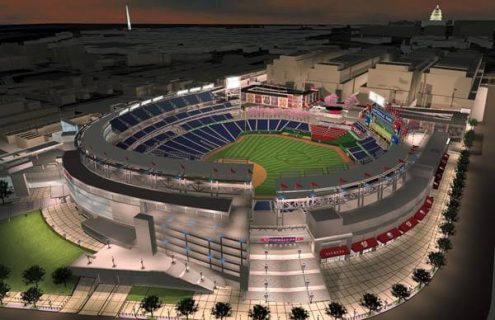
Project Fact Sheet
Name: Washington National Ballpark Renovation (Nationals Park Modernization).
Location: 1500 South Capitol Street SE, Washington, DC 20003, United States.
Owner: District of Columbia Government.
Facility: Nationals Park.
Facility operator and administrator: Events DC.
Sports franchise: Washington Nationals Baseball Club.
Estimated project cost: $380 million.
Proposed bond authorization: Up to $410 million, including financing-related costs.
Original stadium opening: 2008.
Expected completion: Not officially announced.
Project Team
Owner: District of Columbia Government.
Executive sponsor: Muriel Bowser, Mayor of Washington, DC.
Facility administrator and operator: Events DC.
Sports franchise and principal stadium tenant: Washington Nationals Baseball Club.
Business operations representative: Jason Sinnarajah, President of Business Operations, Washington Nationals.
Financial oversight: District of Columbia Office of the Chief Financial Officer.

Leave a Reply