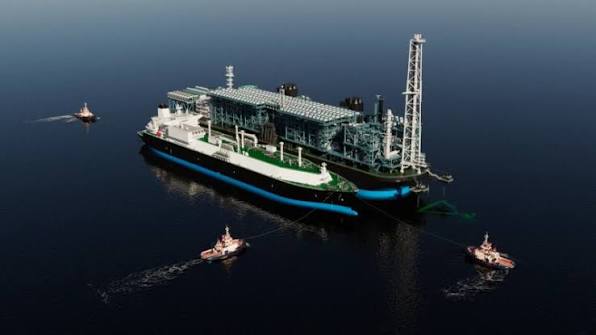
ST LNG deepwater port project has secured federal license approval, advancing plans for an $8.2 billion offshore liquefied natural gas export facility near Matagorda, Texas. The decision clears a major regulatory hurdle before construction, which developers expect to begin in 2027.
The facility aims to strengthen US LNG export infrastructure while expanding access to international gas markets. According to the US Department of Transportation, the project could increase national LNG export capacity by 7% to 9%. The development also targets thousands of construction jobs and additional long-term employment across the Gulf Coast energy sector.
ST LNG Deepwater Port Project Advances Through Federal Approval
The Maritime Administration (MARAD), under the US Department of Transportation, approved the deepwater port license application on October 28, 2026. Transportation Secretary Sean Duffy announced the decision, marking a significant milestone for the proposed offshore energy infrastructure.
The project involves four liquefaction systems, each designed to process 2.1 million tonnes of LNG annually. Together, these units would provide a planned export capacity of 8.4 million tonnes per annum. The facility would load liquefied natural gas onto specialized carriers for overseas transportation.
Moreover, the proposed terminal would sit approximately 10.4 nautical miles offshore Matagorda, Texas. The location falls within the Brazos Outer Continental Shelf Lease Block 476, where water depths range between 65 and 72 feet.
The approval follows a federal environmental review involving the US Coast Guard and other cooperating agencies. MARAD published the project’s Final Environmental Impact Statement in July 2026. The review examined potential environmental effects and alternatives, including the option of not proceeding.
According to the Department of Transportation, MARAD completed the environmental review process in 410 days. The department said this represented a 70% reduction against historical review timelines. However, the license approval does not mean construction has already started. The developer still needs to advance project delivery, engineering and construction preparations.
ST LNG Deepwater Port Project Sets Out Offshore Construction Scope
The planned facility will incorporate 20 platforms, four floating LNG storage units and four mooring systems. It will also require approximately 7.7 miles of pipeline to support the offshore export operation. These components will connect liquefaction, storage and vessel-loading functions within an integrated marine energy facility.
Additionally, the project will use existing natural gas infrastructure to supply its feed gas. The proposed sources include the Tres Palacios Natural Gas Storage and Trading Hub and Williams Markham Gas Processing Plant. Gas will reach the project through an existing Transco pipeline located approximately 5.6 miles northeast of the port.
This arrangement links offshore export infrastructure with established gas transportation and processing networks. Consequently, the project will depend on coordinated delivery across marine facilities, pipelines and liquefaction systems. Developers must also coordinate offshore installation activities, equipment integration and commissioning before commercial operations begin.
The offshore location could help shift vessel movements away from more congested onshore areas. Federal officials expect this arrangement to reduce vessel collision risks and improve maritime safety. Nevertheless, construction and operation will require continued attention to environmental protection, offshore safety and navigation.
The project adds to Texas’ expanding LNG export infrastructure, alongside the Golden Pass export terminal in Jefferson County. Both developments highlight the investment in liquefaction capacity, marine facilities and supporting infrastructure needed to strengthen US natural gas exports. The Golden Pass Export Terminal construction project in Texas provides further context on the construction of major LNG export facilities along the Gulf Coast.
ST LNG Deepwater Port Project Targets 2029 Operations
Construction is expected to begin in 2027, with the terminal targeting commercial operations in 2029. The schedule places engineering, procurement, offshore construction and systems commissioning within a relatively short delivery window. Achieving that target will require close coordination among the project developer, equipment suppliers, marine contractors and regulatory authorities.
The project could support approximately 2,000 construction jobs and up to 855 permanent positions. Its planned capacity also represents a substantial addition to the United States’ LNG export infrastructure.
Furthermore, the terminal could strengthen the Gulf Coast’s role in supplying international gas markets. However, the forecast benefits depend on successful construction, commissioning and sustained operation. The announced license approval represents a major regulatory milestone, rather than confirmation that the facility has entered construction.
The next phase will focus on turning the approved development into an operational export terminal. Project execution must bring together offshore platforms, storage units, liquefaction systems, pipelines and vessel-loading infrastructure. If the developer meets its proposed schedule, the facility could begin operations in 2029.
Project Fact Sheet
Name: ST LNG Deepwater Port Development Project.
Cost: $8.2 billion.
Type: Offshore liquefied natural gas export terminal.
Location: Approximately 10.4 nautical miles offshore Matagorda, Texas, United States.
Offshore site: Brazos Outer Continental Shelf Lease Block 476.
Water depth: Approximately 65–72 feet.
Planned capacity: 8.4 million tonnes of LNG annually.
Liquefaction infrastructure: Four systems, each rated at 2.1 million tonnes per annum.
Offshore facilities: 20 platforms, four floating LNG storage units and four mooring systems.
Pipeline infrastructure: Approximately 7.7 miles of pipeline associated with the offshore terminal.
Feed-gas sources: Tres Palacios Natural Gas Storage and Trading Hub and Williams Markham Gas Processing Plant.
Existing pipeline connection: Transco pipeline approximately 5.6 miles northeast of the proposed port.
Federal approval: Deepwater port license approved on October 28, 2026.
Expected construction start: 2027.
Target operational date: 2029.
Estimated construction employment: Approximately 2,000 jobs.
Estimated permanent employment: Up to 855 jobs.
Expected national impact: Potential 7%–9% increase in US LNG export capacity.
Regulatory reference: MARAD-2025-0096.
Project Team
Developer and applicant: ST LNG, LLC
Federal licensing authority: Maritime Administration (MARAD)
Federal oversight agency: US Department of Transportation
Transportation Secretary: Sean P. Duffy
Environmental review partner: US Coast Guard
Natural gas infrastructure provider: Williams
Pipeline infrastructure: Transco
Additional cooperating agencies:
- Bureau of Safety and Environmental Enforcement
- US Environmental Protection Agency
- National Marine Fisheries Service
- US Army Corps of Engineers and US Department of Energy




Leave a Reply