
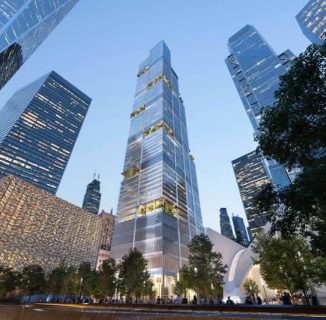
American Express is developing its new global headquarters at 2 World Trade Center in Lower Manhattan, a 55-story tower designed to provide approximately 2 million square feet of office space. The project reached its groundbreaking milestone on July 9, 2026, and is targeting completion in 2031.
Silverstein Properties is developing the tower, with Foster + Partners leading the architectural design and Turner Construction serving as the core-and-shell contractor. American Express plans to relocate its global headquarters from 200 Vesey Street to the new building, which is designed to accommodate up to 10,000 employees.
The planned tower will feature flexible office space, landscaped terraces, outdoor areas and all-electric building systems. Its design aims to provide a modern workplace for American Express employees while adding substantial office capacity to Lower Manhattan.
The development will complete the final commercial office tower planned for the World Trade Center campus, following years of delays and revisions to earlier proposals. Once completed, the building will strengthen Lower Manhattan’s commercial office market and establish a permanent new home for American Express at the redeveloped World Trade Center site.
American Express’ new global headquarters at 2 World Trade Center is part of a broader wave of corporate headquarters development reshaping major U.S. business districts. A similar investment is underway in Tennessee, where Oracle is developing its new headquarters in Nashville. Both projects highlight how major corporations are investing in purpose-built workplaces to support their long-term operations, although they differ in location, design and development approach.
The two headquarters projects also share the same design firm, Foster + Partners, led by architect Norman Foster. The London-based firm is designing American Express’ 2 World Trade Center headquarters in New York and Oracle’s planned headquarters campus on Nashville’s East Bank, bringing a common architectural practice to two major corporate developments in different U.S. cities.
Sustainability
According to the company, the tower will incorporate fully electric, energy-efficient systems and advanced smart-building technology, and will pursue Leadership in Energy and Environmental Design (LEED) certification. Plans call for more than an acre of landscaped outdoor terraces and gardens.
Chief Executive Officer Stephen J. Squeri described the development as a long-term investment in the company and Lower Manhattan. New York Gov. Kathy Hochul said the project would create thousands of union construction jobs and strengthen the state’s economy.
Port Authority Chairman Kevin O’Toole said advancing the tower marks a milestone in completing the World Trade Center campus. New York City Mayor Zohran Kwame Mamdani said the development represents an investment in union labor and working New Yorkers.
American Express said the headquarters project is not expected to have a material impact on its financial results.
Additionally, the project adds to a broader wave of large-scale headquarters investments, including the $2.5 billion renovation of the Federal Reserve’s Washington campus, underscoring continued institutional commitment to long-term office infrastructure.

Factsheet: American Express New Global Headquarters at 2 World Trade Center
Location: 200 Greenwich Street, Lower Manhattan, New York City
Owner & Sole Occupant: American Express
Groundbreaking: July 9, 2026
Completion Target: 2031
Development Overview
Building Height: 55 stories
Total Area: Nearly 2 million square feet
Employee Capacity: Up to 10,000
Current Headquarters: 200 Vesey Street (occupied since 1986)
Site & Ownership Structure
Land Owner: Port Authority of New York and New Jersey
Land Arrangement: Long-term ground lease
Campus Context: Final commercial office tower at the World Trade Center site
Development Team
Developer: Silverstein Properties
Design Architect: Foster + Partners
Legal Advisor to American Express: Fried Frank
Economic Impact (AKRF Analysis, Feb. 9, 2026)
Estimated NYC Economic Impact: $5.9 billion
Estimated New York State Impact: $6.3 billion
Construction Jobs: 3,200+ direct and indirect jobs

Building & Sustainability Features
Fully electric, energy-efficient systems
Advanced smart-building technology
Pursuing LEED certification
More than one acre of landscaped outdoor terraces and gardens


Leave a Reply