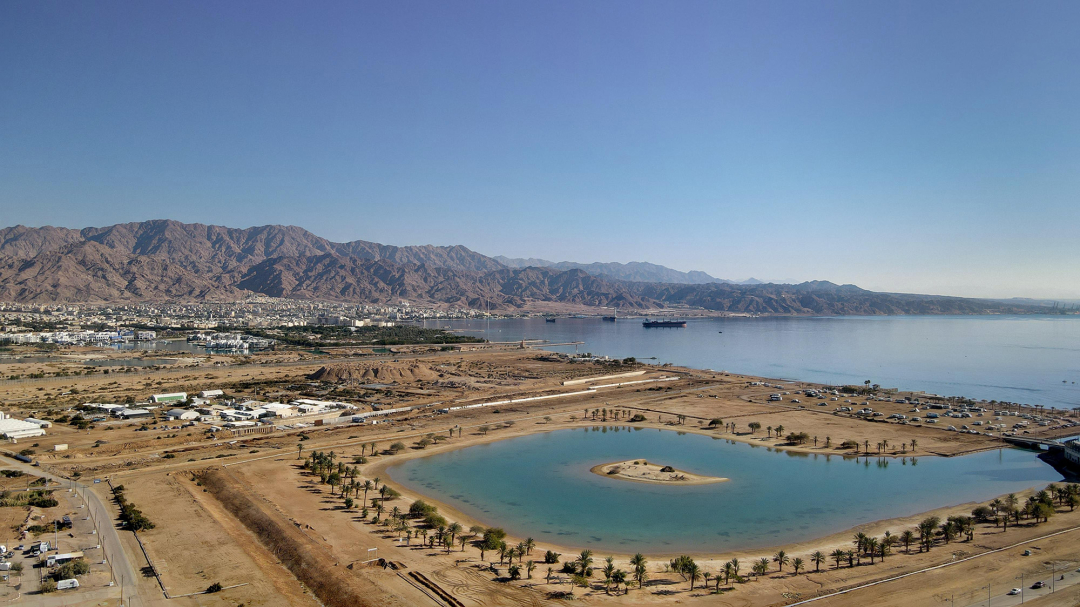
Construction has started on Jordan’s Aqaba-Amman Water Desalination and Conveyance Project, a $6.7 billion scheme to pump desalinated Red Sea water more than 400 kilometers north and 1,100 meters uphill to Amman. The price is now more than double the $2 billion to $3 billion estimated in late 2024, and first water is targeted for the end of 2030.
Prince Faisal bin Al Hussein laid the foundation stone in Aqaba on November 18, 2026, deputizing for King Abdullah II. A day later, at the Jordan-EU Investment Conference on the Dead Sea, the government signed a $6.6 billion (JD4.68 billion) agreement with lead developer Meridiam to move the National Water Carrier, as it is known locally, into construction. Officials say it will cover about 40% of Jordan’s drinking water needs.
Why Has the Price Climbed?
Earlier figures were far lower. In 2022, the Ministry of Water and Irrigation spoke of a capital cost of $2.5 billion, and regional trade press still put the build at $2 billion to $3 billion in November 2024.
Part of the gap is how the cost is counted. In April 2026, the Prime Minister’s office put the capital cost at around $4.3 billion and the total, including financing charges, at about $5.8 billion. Neither the government nor Meridiam has published a breakdown reconciling those numbers with the $6.6 billion agreement or the $6.7 billion total investment Meridiam now cites.
More than 20 lenders have joined the financing. The Green Climate Fund approved $295 million in loans and grants, its largest commitment to any single country, while the EU said it is mobilizing €1.6 billion. The US International Development Finance Corporation approved a $1.8 billion support package, and the European Bank for Reconstruction and Development, International Finance Corporation, European Investment Bank and Asian Infrastructure Investment Bank are also backing the scheme. Jordan is contributing $722 million.
Pumping Water Uphill
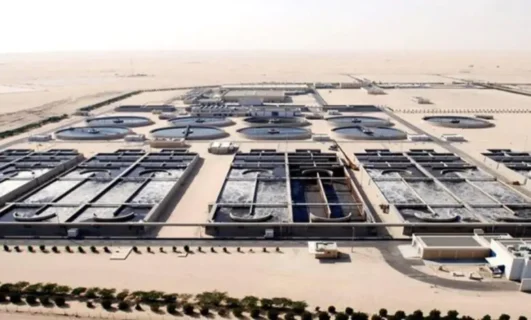
The reverse osmosis plant on the Gulf of Aqaba is designed for 851,000 cubic meters a day, enough to fill about 340 Olympic swimming pools daily. Annual output of 300 million cubic meters will be split between Amman, which takes 250 million, and Aqaba, which takes 50 million.
From the coast, the water climbs to as much as 1,100 meters above sea level, a vertical rise taller than the Burj Khalifa. Government statements give the conveyance line as roughly 417 kilometers, while lender documents describe a pipeline of up to 438 kilometers with several pumping stations along the route.
Lifting that much water takes a great deal of power. A dedicated 280 MW solar plant at Al Quweira will supply part of the load, but the estimates differ: Meridiam says solar will meet about 80% of the desalination plant’s needs, while the Green Climate Fund and Jordanian officials put it at roughly 30% of the whole project’s energy demand.
Who Is Building It?
The National Carrier Project Company, owned 90% by Meridiam and 10% by SUEZ, holds a 30-year build, operate and transfer concession. Ownership passes to the government 26 years after operations begin.
SUEZ is the technical and operating partner, and it will design and build the desalination plant jointly with Orascom Construction. Their roles were confirmed in Orascom Construction’s groundbreaking announcement. VINCI Construction Grands Projets is the other construction partner, and Jordan’s Social Security Investment Fund is also part of the consortium.
Green Climate Fund Executive Director Mafalda Duarte has said Jordanians currently have about 61 cubic meters of water per person a year, and that the carrier would roughly double that.
Delivering more water only helps if the networks receiving it hold on to it. CRO reported in 2023 on the $250 million World Bank deal for Jordan’s Water Sector Efficiency Project, which targets leaking distribution networks in a country where nearly half of supplied water has historically been lost. With French development agency AFD on board, the program has since grown to about $300 million, but the World Bank downgraded its implementation progress in July 2025 over slow procurement. The water ministry launched advisory services for the program in 2026.
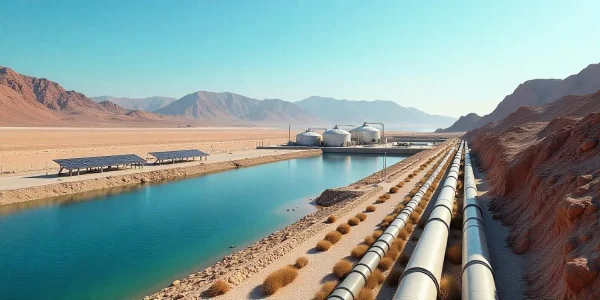
Project Overview
- Project Name: Aqaba-Amman Water Desalination and Conveyance Project (National Water Carrier)
- Client: Ministry of Water and Irrigation, Jordan
- Developer: National Carrier Project Company (Meridiam 90%, SUEZ 10%)
- Location: Gulf of Aqaba to Amman, Jordan
- Project Type: Seawater reverse osmosis desalination and water conveyance
- Project Value: $6.7 billion total investment (Meridiam); $6.6 billion (JD4.68 billion) agreement signed November 19, 2026
- Capacity: 851,000 cubic meters a day; 300 million cubic meters a year
- Conveyance: About 417 to 438 km pipeline, depending on source
- Elevation Lift: Up to 1,100 meters above sea level
- Power Strategy: 280 MW dedicated solar plant at Al Quweira
- Procurement Model: 30-year build, operate and transfer concession
- Status: Groundbreaking held November 18, 2026
- Target Completion: Water delivery by the end of 2030
- Impact: About 40% of Jordan’s drinking water needs

Leave a Reply