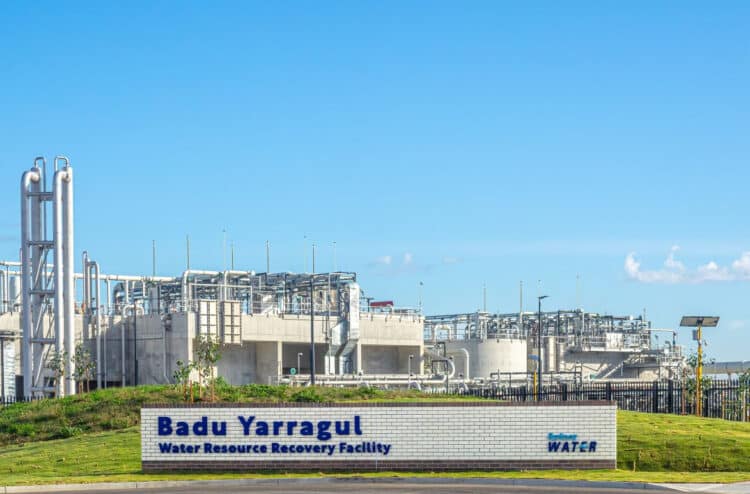
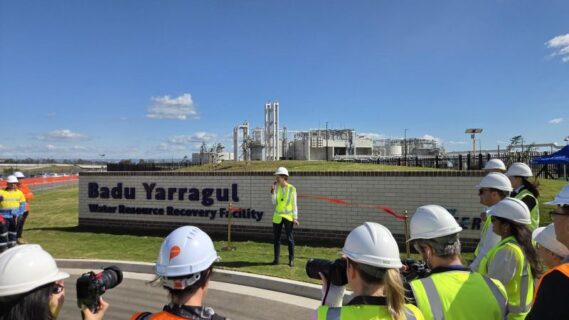
Sydney Water has opened the A$1.2 billion Badu Yarragul Water Resource Recovery Facility at Kemps Creek, a wastewater recycling plant with capacity to connect more than 140,000 new homes and businesses across Western Sydney. The facility, which treats up to 35 million liters a day on opening, will support the Aerotropolis, Bradfield City and the surrounding region.
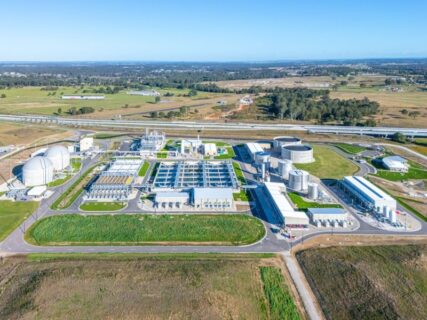
The NSW Government unveiled the facility on Wednesday, and Sydney Water says future upgrades will double capacity to 70 million liters a day and support a footprint of more than 280,000 new connections. At opening capacity, the plant treats the equivalent of about 14 Olympic swimming pools of wastewater each day. Furthermore, a four megawatt solar farm is designed to generate half of the facility’s energy needs.
Meanwhile, Western Australia is confronting the same energy question on a larger scale. Approval conditions set in 2023 for the Alkimos Seawater Desalination Plant in Western Australia require net zero scope one and two emissions, and the project, now valued at A$2.8 billion, has completed more than six kilometers of marine tunneling and is moving into fit-out ahead of operations in 2028, according to Water Corporation.
Badu Yarragul Water Resource Recovery Facility Treats Wastewater to Advanced Standards
The Badu Yarragul Water Resource Recovery Facility uses membrane bioreactor and reverse osmosis technology, and the NSW Government describes it as one of the most advanced wastewater recycling facilities in the Southern Hemisphere. In addition, the treatment process yields biosolids that can be reused in agriculture and forestry.
Sydney Water says the treated water is suitable for non-drinking uses, including homes, industrial and business use, agriculture and the greening of public spaces. The name Badu Yarragul means freshwater cleaning and reflects the facility’s location on Wet Country.
Capacity is the headline measure. The Badu Yarragul Water Resource Recovery Facility serves more than 140,000 new connections at opening, and the planned upgrade to 70 million liters a day would double that footprint to more than 280,000 connections.
Sustainability measures extend beyond energy. Internal roads at the Badu Yarragul Water Resource Recovery Facility combine recycled coffee cups with a low carbon binder, while pipe bedding is made from recycled glass.
Badu Yarragul Water Resource Recovery Facility Was Delivered by a John Holland Led Consortium
Sydney Water awarded the contract to construct and operate the project, then known as the Upper South Creek Advanced Water Recycling Centre, to a consortium of John Holland, Trility, GHD and Jacobs, according to the Sydney Water project page. The Infrastructure Sustainability Council lists Tract as an additional stakeholder.
Construction on Stage One began in August 2023. Moreover, the associated pipeline network included a treated water line carrying water to the Nepean River and a brine line connecting to Sydney Water’s existing network at Lansdowne.
Sydney Water directed the consortium to achieve at least a Gold rating under the Infrastructure Sustainability Council scheme while aspiring to Platinum. Sydney Water also targets net zero emissions for its own operations by 2030 and for its supply chain by 2040.
Stantec served as technical advisor on procurement, and TBH delivered integrated project controls. Sydney Water Managing Director Darren Cleary credited the collaboration with the delivery partner and said the facility “truly sets a new benchmark for what modern water infrastructure can achieve.”
Badu Yarragul Water Resource Recovery Facility Raises Questions Over Data Center Water Supply
Sydney Water has confirmed that recycled water from the Badu Yarragul Water Resource Recovery Facility could serve data centers, a prospect that has drawn scrutiny. The facility’s environmental impact statement and its operating permit from the state environment regulator do not mention data centers explicitly, although they refer to industrial and business use, according to ABC reporting.
Water researcher Stuart Khan said data center demand was not accounted for in the Greater Sydney Water Strategy, which was created in 2022. He noted that the strategy identified up to 140 gigaliters a year of potential recycled supply over the next couple of decades.
Cleary told the ABC that data center customers would have to pay their way and that infrastructure built for them could not affect services to the broader customer base. He added that Sydney Water is investing A$14 billion in capital over the next five years.
The NSW Department of Planning, Housing and Infrastructure says its state significant development pipeline contains 18 data center projects valued at A$61.22 billion. Separately, Sydney Water has confirmed that a planned wastewater treatment plant at Camellia-Rosehill, due to open by 2032, would also supply recycled water to data centers.
Project Overview
- Project Name: Badu Yarragul Water Resource Recovery Facility, previously the Upper South Creek Advanced Water Recycling Centre
- Owner: Sydney Water
- Location: Kemps Creek, Western Sydney, New South Wales, Australia
- Project Type: Wastewater recycling facility
- Project Value: A$1.2 billion
- Capacity: 35 million liters per day on opening, with a planned upgrade to 70 million liters per day
- Treatment Process: Membrane bioreactor and reverse osmosis
- Service Footprint: More than 140,000 new homes and businesses, rising to more than 280,000 connections after the upgrade
- Delivery Model: Consortium contracted to construct and operate, comprising John Holland, Trility, GHD and Jacobs
- Construction Start: August 2023 (Stage One)
- Status: Unveiled by the NSW Government on October 7, 2026
- Power Strategy: Four megawatt solar farm designed to generate half of the facility’s energy needs
- Sustainability Targets: Minimum Gold rating under the Infrastructure Sustainability Council scheme, aspiring to Platinum
- Outputs: Treated recycled water for non-drinking uses and biosolids for agriculture and forestry
- Strategic Impact: Supports growth across the Aerotropolis, Bradfield City and the surrounding region
Project Team
Owner and Government
- Owner: Sydney Water
- State Government: NSW Government
Delivery Consortium
- Lead Contractor: John Holland
- Consortium Partner: Trility
- Consortium Partner: GHD
- Consortium Partner: Jacobs
- Consortium Stakeholder: Tract
- Pipeline Contractor, Kemps Creek Dual Pressure Mains: Quickway Constructions
Consultants and Advisors
- Technical Advisor: Stantec
- Integrated Project Controls: TBH
- Sustainability Rating Body: Infrastructure Sustainability Council
Related Project: Alkimos Seawater Desalination Plant
- Owner and Operator: Water Corporation
- State Government: Government of Western Australia
- Trunk Main Alliance Partners: Georgiou Group and DM Civil

Leave a Reply