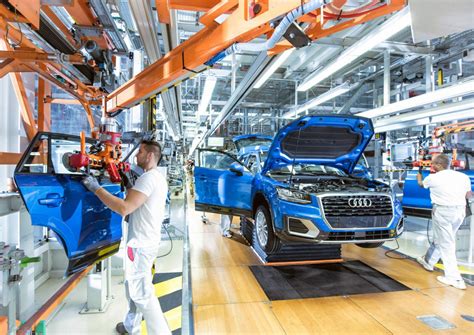
Audi is investing $4 billion to build its first US manufacturing plant in Georgia, marking a major expansion of the German luxury automaker’s North American production network.
Audi is also seeking to reduce its exposure to import tariffs and strengthen its competitiveness in the American market.
The facility, planned for the Middle Georgia Megasite in Peach County, is expected to create 4,500 jobs. Audi’s facility in Georgia plans to manufacture up to 200,000 vehicles annually.
Announced by Audi CEO Gernot Dollner alongside US President Donald Trump, the project will focus on premium sport utility vehicles (SUVs) tailored to North American customers.
The investment also represents a significant shift in Audi’s US manufacturing strategy. Audi has historically relied on vehicles imported from overseas production facilities to supply American buyers.
Construction timeline for the first new Audi manufacturing plant in Georgia, US
Site preparation for the new Audi manufacturing facility is expected to begin in 2027.
According to Georgia Governor Brian Kemp’s office, construction is scheduled to start in 2028.
Full production is targeted for 2031. Audi plans to start of production in the early 2030s.
Audi’s new manufacturing plant will be located at the Middle Georgia Megasite, an industrial development site in Peach County. The site has been prepared to accommodate large-scale manufacturing investments.
The location also offers access to established automotive suppliers and regional transport infrastructure. It is also home to a workforce that can be trained to meet the requirements of premium vehicle manufacturing.
The project is being advanced through collaboration between Audi, the State of Georgia, the Development Authority of Peach County and the Mid-Georgia Gateway Joint Development Authority, which represents Peach, Houston and Macon-Bibb counties. The regional partnership has also been developing and marketing the site to attract a major automotive manufacturer.
Audi plant to manufacture premium SUVs for the North American market
The Georgia facility is expected to manufacture Audi’s larger premium SUVs, with the Q7, Q8 and Q9 identified initially.
Local production will allow the company to tailor its vehicle portfolio to the American customer. This is while reducing its dependence on imported finished vehicles.
Audi says the new plant will be designed around flexible production processes, manufacturing efficiency and advanced technologies. Building the facility from the ground up will also give the company an opportunity to establish a local supplier network and adapt manufacturing operations to changing market requirements.
The investment also forms part of Audi’s growth strategy. The German automotive manufacturer seeks to establish North America as a third major pillar of its global production network alongside Europe and China.
Additionally, the company intends to maintain Europe’s role in its industrial and engineering operations while expanding its manufacturing footprint closer to American customers.
Georgia’s automotive supply chain and workforce to support the project
The site has access to Norfolk Southern’s rail network, while the Port of Savannah and Port of Brunswick can be reached by rail in less than five hours, according to the Georgia governor’s office.
Hartsfield-Jackson Atlanta International Airport is approximately a 90-minute drive away. The airport provides additional connectivity for business travel and logistics.
Workforce development will also be another component of the project. Georgia Quick Start is expected to work with Audi to develop customised training programs. It will be supported by the Technical College System of Georgia and other education partners. The programs are also intended to prepare employees for the technical and operational requirements of the new manufacturing facility.
Additionally, the planned 4,500 jobs will extend the project’s economic impact beyond the factory itself. Suppliers, logistics providers, maintenance contractors, training institutions and other service businesses could also benefit as the manufacturing operation and its supporting industrial ecosystem develop. This will mimic the benefits of other automobile manufacturers in Georgia, including Rivian who is advancing construction of a $5 billion EV Plant in Stanton Springs North near Social Circle.
US tariffs and Volkswagen’s North American expansion strategy
Audi’s investment comes as its parent company, Volkswagen Group, faces pressure from US import tariffs, intensifying competition and weaker sales in China.
Audi has relied on imported vehicles to serve the American market, leaving it particularly exposed to tariffs on cars manufactured outside the United States.
For context, Volkswagen’s Audi, Bentley and Lamborghini brands recorded a combined 7% decline in US deliveries during the first half of 2026 compared with the same period in 2025.
Volkswagen is also undertaking a major restructuring amid competitive pressures and declining sales in China.
The new SUV manufacturing factory in Georgia, US could help Audi reduce exposure to trade barriers and currency fluctuations. This is while improving its ability to compete with manufacturers that already produce vehicles in the United States.
President Donald Trump has also credited his administration’s tariff policies with encouraging the investment. However, the extent to which tariffs alone influenced Audi’s decision remains open to debate.
For Volkswagen, the project reflects an effort to increase its presence in North America. Volkswagen’s market share in the US is relatively small. Establishing a dedicated US production base for Audi could provide a foundation for future growth in one of the world’s most important premium automotive markets.

A major addition to Georgia’s automotive manufacturing sector
Audi’s planned $4 billion investment also strengthens Georgia’s position as a destination for large-scale automotive manufacturing. The state has attracted automotive and electric-vehicle-related investments, supported by industrial sites, transport connections and workforce development programmes.
The new facility will take several years to progress from site preparation to full production. The 2031 target leaves time for construction, equipment installation, supplier development and employee training. Delivering the planned production capacity will also depend on the timely completion of those activities and Audi’s assessment of future market demand.
Once operational, the factory is expected to provide Audi with a more direct manufacturing presence in the United States. This is while creating thousands of jobs and new opportunities for regional suppliers.
The project’s longer-term significance will depend on how effectively it integrates into Volkswagen Group’s global production network. It will also depend on how successfully Audi expands its position in the North American market.
Project fact sheet for the first Audi manufacturing plant in Georgia, US
Project owner: Audi AG
Parent company: Volkswagen Group
Facility location: Middle Georgia Megasite, Peach County, Georgia
Project cost: US$4 billion
Project type: Greenfield automotive manufacturing facility
Planned production capacity: Up to 200,000 vehicles annually.
Planned Audi products: Premium SUVs, including the Audi Q7, Q8 and Q9.
Expected employment: 4,500 jobs
Site preparation: To begin in 2027
Construction start: 2028
Target for full production: 2031
Key infrastructure: Norfolk Southern rail access, connections to the Ports of Savannah and Brunswick, and access to Atlanta’s international airport.
Workforce development: Georgia Quick Start and the Technical College System of Georgia are expected to support customised training.
Project status: Announced; early development
Who is involved in the development of Audi’s first manufacturing plant in the US?
Project owner and automotive manufacturer: Audi AG
Parent company: Volkswagen Group
State government partner: State of Georgia, Office of Governor Brian Kemp
Local development authority: Development Authority of Peach County
Regional development partner: Mid-Georgia Gateway Joint Development Authority
Workforce training partner: Georgia Quick Start
Technical education partner: Technical College System of Georgia
Rail infrastructure provider: Norfolk Southern
State economic development partner: Georgia
Department of Economic Development
Other public-sector partners: Georgia Ports Authority, Georgia Department of Transportation, Georgia Power and relevant regional and state agencies



Leave a Reply