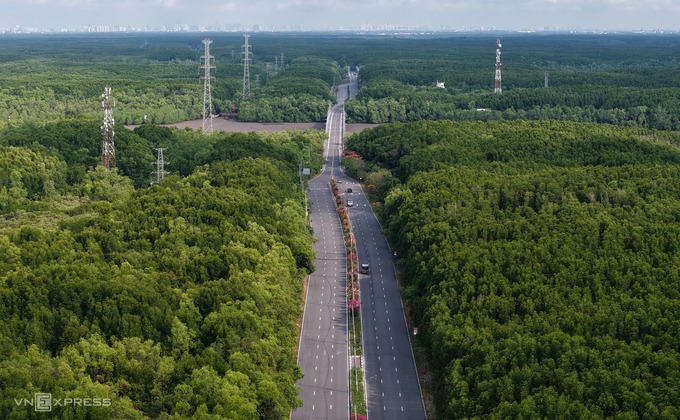
Can Gio Metro project construction now faces a key land-use decision in Ho Chi Minh City, Vietnam. City authorities have asked the municipal People’s Council to approve conversion of 4.57 hectares of protective mangrove forest.
The land forms part of the route for the Ben Thanh-Can Gio railway. The proposal covers forest in An Thoi Dong and Can Gio communes. It also places environmental safeguards alongside a major transport infrastructure development.
The affected forest includes about 1.4 hectares of natural mangrove. Another 3.17 hectares comprises planted mangrove. The route crosses the buffer zone of the Can Gio Mangrove Biosphere Reserve. However, the railway does not enter the reserve’s core zone.
The city submitted the forest conversion proposal on September 21, 2026. Authorities classified the railway as an urgent transport project supporting economic and social development. They also said the project aligns with approved city planning frameworks.
Can Gio Metro Project pushes a 54km high-speed railway
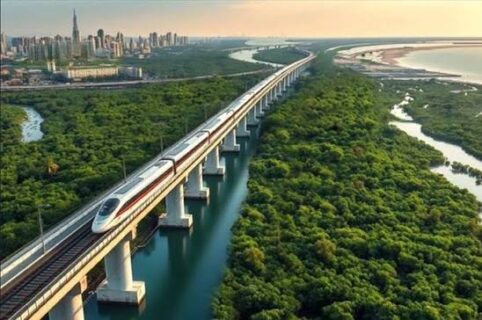
Can Gio Metro Project spans approximately 54 kilometers between Ben Thanh and Can Gio. The double-track railway will use standard 1,435mm gauge and full electrification. Its design allows trains to reach speeds of up to 350 kilometers per hour.
The first phase will include Ben Thanh and Can Gio stations. Meanwhile, planners will consider four additional stations during a later phase. Those stations include Tan Thuan, Tan My, Nha Be and Binh Khanh.
The project will also include a 39-hectare depot in Can Gio. Six trains will operate simultaneously, while another train will remain available as a reserve. Together, the fleet will contain 56 carriages.
The planned service will operate daily from 6am until 11pm. Trains will run at 20-minute intervals under the current operating plan. The end-to-end journey will take about 20.3 minutes.
The project also connects with VinSpeed’s wider railway technology program in Vietnam. Its partnership with Siemens Mobility covers high-speed trains and railway systems. The collaboration also supports VinSpeed’s broader expansion of modern rail infrastructure. This follows the company’s Vietnam high-speed rail projects and its $1.15 billion Siemens Mobility technology deal.
Can Gio Metro Project advances with environmental commitments
Can Gio Metro Project carries an estimated investment of VND102.43 trillion, equivalent to $3.94 billion. The investment excludes site-clearance costs, which the city budget will cover. An updated feasibility study placed site clearance at VND9.83 trillion, or approximately $378 million.
The city approved VinSpeed as the project’s investor on December 5, 2025. The company then broke ground two weeks later and targets completion in 2028.
The current forest proposal covers 4.5745 hectares of protective forest. It includes forest parcels within designated areas across An Thoi Dong and Can Gio. The city says the project meets legal conditions for converting natural forest.
However, the development carries a replacement-forest obligation. VinSpeed has committed to planting replacement forest according to applicable requirements. The project’s environmental impact assessment has also received approval.
The railway forms part of wider infrastructure planning for southern Ho Chi Minh City. Its construction will improve high-speed connections between the city center and Can Gio. It will also terminate beside a planned coastal land-reclamation township.
Project Fact Sheet
Name: Ben Thanh-Can Gio Railway Project
Type: High-speed electrified railway
Location: Ho Chi Minh City, Vietnam
Route: Ben Thanh to Can Gio
Main-line length: Approximately 54 kilometres
Track configuration: Double track
Track gauge: 1,435mm standard gauge
Maximum design speed: 350 kilometres per hour
Total investment: VND102.43 trillion, approximately $3.94 billion
Site-clearance estimate: VND9.83 trillion, approximately $378 million
Site-clearance funding: Ho Chi Minh City budget
Initial stations: Ben Thanh and Can Gio
Potential later stations: Tan Thuan, Tan My, Nha Be and Binh Khanh
Depot: 39 hectares in Can Gio
Operating trains: Six
Reserve train: One
Total rolling stock: 56 carriages
Planned operating hours: 6am to 11pm daily
Planned train interval: 20 minutes
Construction start: December 2025
Target completion: 2028
Forest conversion requested: 4.5745 hectares
Natural mangrove affected: Approximately 1.4 hectares
Planted mangrove affected: Approximately 3.17 hectares
Forest classification: Protective forest
Environmental assessment: Approved
Replacement planting: Committed by VinSpeed
Biosphere reserve: Route crosses buffer zone but avoids the core zone
Project Team
Investor: VinSpeed
Parent company: Vingroup
Approving authority: Ho Chi Minh City People’s Committee
Legislative approval body: Ho Chi Minh City People’s Council
Environmental oversight: Ho Chi Minh City authorities
Forest management authorities: Relevant Ho Chi Minh City forestry authorities
Project route jurisdictions: Ben Thanh, Khanh Hoi, Xom Chieu, Tan Thuan, Tan My, Nha Be, Binh Khanh, An Thoi Dong and Can Gio communes/wards
Environmental compliance: VinSpeed, under the approved environmental impact assessment
Replacement forestry obligation: VinSpeed


Leave a Reply