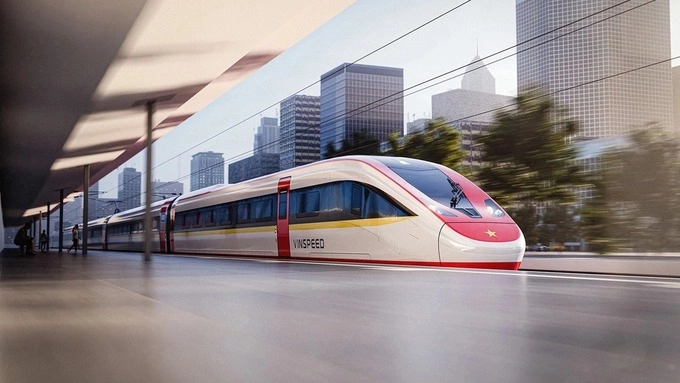
Vietnam high-speed rail projects have reached a major construction milestone after VinSpeed signed a $1.15 billion turnkey contract with Siemens Mobility. The agreement covers two planned high-speed railway lines linking Hanoi with Quang Ninh and Ben Thanh with Can Gio. It also expands a technology partnership between the Vietnamese rail developer and the German railway specialist.
The contract strengthens the delivery framework for both railway schemes as VinSpeed advances its infrastructure development plans. VinSpeed will handle project development, track construction and civil works. Meanwhile, Siemens Mobility will provide trains, railway technology and technical expertise.
The agreement builds on a strategic partnership signed in December 2025. That earlier agreement established Siemens Mobility as VinSpeed’s technology partner for high-speed rail development in Vietnam.
Vietnam high-speed rail projects gain construction technology
The new contract covers Siemens Mobility’s supply of 10 Velaro Novo high-speed trainsets for the two lines. The trains can reach speeds of up to 350 kilometers per hour.
Siemens Mobility will also supply communications and electrification systems for the railway projects. Its earlier framework additionally covered signaling and system integration. The technology package includes ETCS Level 2 signaling and automatic train operation capabilities.
The partnership also includes technology transfer and research into maintenance solutions. Therefore, the agreement extends beyond train procurement into long-term railway capability development.
The technology transfer could support VinSpeed’s efforts to develop domestic high-speed rail expertise. The company has identified railway construction and rolling-stock manufacturing among its business interests.
VinSpeed’s railway expansion also extends to Ho Chi Minh City’s Can Gio Metro project. The $3.94 billion railway will connect Ben Thanh with Can Gio over approximately 54 kilometres.
The project includes Siemens-linked railway technology and targets operations in 2028. Its route also requires the proposed conversion of 4.57 hectares of protective mangrove forest. This development adds another major project to VinSpeed’s growing Vietnamese rail portfolio.
Also read: $67bn Vietnam North-South Railway: The 1,541km High-Speed Rail Construction Timelines Rescheduled
Vietnam high-speed rail projects move toward delivery
The Hanoi-Quang Ninh railway will stretch approximately 120 kilometers. It will connect Hanoi with Ha Long and support faster movement between northern economic centers.
Vingroup began construction on the Hanoi-Quang Ninh line in April 2026. The project covers 120.2 kilometers across Hanoi, Bac Ninh, Hai Phong and Quang Ninh.
The line will use double tracks and standard 1,435-millimetre gauge. It will also feature full electrification and a maximum design speed of 350 kilometers per hour. However, trains will operate at up to 120 kilometers per hour within Hanoi.
The project targets completion by the end of 2028. Once operational, the journey between Hanoi and Quang Ninh could take about 23 minutes.
The Ben Thanh-Can Gio line will extend about 54 kilometers in southern Vietnam. The route will connect central Ho Chi Minh City with the Can Gio area.
Together, the two lines represent a significant expansion of Vietnam’s high-speed railway infrastructure. Their development also creates a platform for Siemens technology within the country’s emerging rail network.
The combined railway development carries a reported investment of VND202 trillion. Commercial operations for the two lines are targeted for 2028.
For VinSpeed, the latest contract therefore links physical construction with advanced railway systems. For Siemens Mobility, it establishes a technology role across two major Vietnamese rail developments.

Also read: Ho Chi Minh Metro Extension: $2.5 Billion UK Financing Targets Vietnam’s Infrastructure Boom
Project Fact Sheet
Project: Hanoi-Quang Ninh and Ben Thanh-Can Gio high-speed rail lines
Type: High-speed railway infrastructure
Contract value: Up to $1.15 billion
Overall reported project investment: VND202 trillion
Hanoi-Quang Ninh length: Approximately 120 kilometers
Ben Thanh-Can Gio length: Approximately 54 kilometers
Hanoi-Quang Ninh construction status: Construction began in April 2026
Hanoi-Quang Ninh:
- Route: Hanoi, Bac Ninh, Hai Phong and Quang Ninh
- Gauge: 1,435-millimetre standard gauge
- Configuration: Double-track railway
Electrification: Full-route electrification
Maximum design speed: 350 kilometers per hour
Hanoi operating speed: Up to 120 kilometers per hour
Target commercial operation: 2028
Hanoi-Quang Ninh target completion: End of 2028
Hanoi-Quang Ninh journey time: Approximately 23 minutes
Rolling stock: 10 Siemens Velaro Novo high-speed trains
Railway systems: Signaling, communications and electrification
Advanced signaling: ETCS Level 2 with automatic train operation
Technology transfer: Included under the VinSpeed-Siemens partnership
Project Team
Project developer: VinSpeed High-Speed Railway Investment and Development Joint Stock Company
Parent group: Vingroup
Technology partner: Siemens Mobility GmbH
Rolling-stock supplier: Siemens Mobility
Railway systems supplier: Siemens Mobility
Track construction: VinSpeed
Civil works: VinSpeed
Project development: VinSpeed
Signaling systems: Siemens Mobility
Communications systems: Siemens Mobility
Electrification systems: Siemens Mobility
Technology transfer: VinSpeed and Siemens Mobility
Hanoi-Quang Ninh route authorities: Hanoi, Bac Ninh, Hai Phong and Quang Ninh authorities
Key rolling-stock platform: Siemens Velaro Novo



Leave a Reply