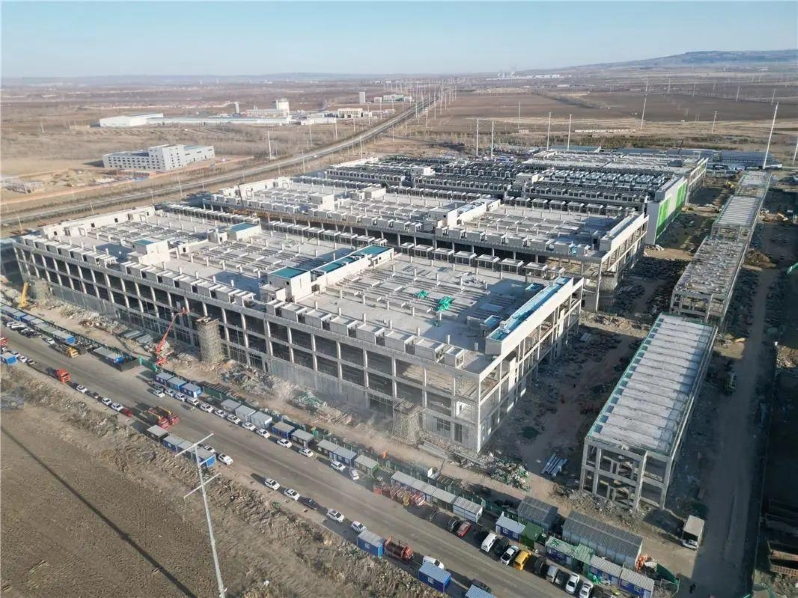
China is accelerating the development of large-scale artificial intelligence (AI) data center hubs in its western regions as it seeks to accommodate growing computing demand while taking advantage of more abundant land, renewable energy resources and lower operating costs.
The expansion is part of the country’s ambitious East Data, West Computing initiative, a national infrastructure program designed to connect computing demand concentrated in eastern economic centers with data center capacity in western regions. The strategy is increasingly reshaping China’s digital infrastructure landscape. It is also creating new opportunities for data center construction, electricity generation, transmission networks and supporting engineering services.
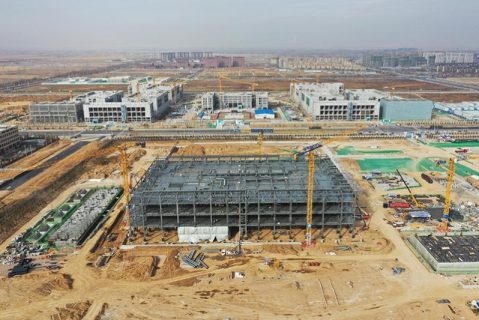
The scale of development is becoming increasingly visible. In June 2026, China’s official digital development news platform reported that five of the country’s eight national computing hubs under the initiative were located in western regions. More than 30 data centers were also under construction within a three-kilometer radius in the Horinger New Area of Hohhot, Inner Mongolia. Another wave of development was also underway in Zhongwei, Ningxia.
For the construction industry, the East Data, West Computing initiative represent a significant shift in the geographical distribution of large-scale data center investment. Rather than concentrating new facilities around established coastal technology centers, developers are increasingly looking towards China’s western provinces, where energy resources and land availability can support large computing campuses.
However, the strategy also presents substantial infrastructure challenges, particularly around electricity transmission, cooling and fiber-optic connectivity.
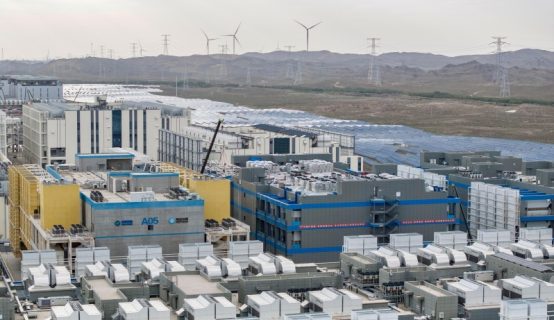
China’s East Data, West Computing Strategy Drives Construction
China introduced its East Data, West Computing initiative to address the geographical imbalance between the country’s major centers of digital demand and its available computing resources.
Eastern regions, including Beijing-Tianjin-Hebei, the Yangtze River Delta and Guangdong-Hong Kong-Macao, host large concentrations of technology companies, financial institutions and AI developers. These markets generate substantial demand for cloud computing, data processing and AI services.
However, developing all the required computing capacity in these densely populated and economically developed regions presents challenges involving land availability, electricity costs and infrastructure constraints.
Western China offers a different proposition. Regions such as Inner Mongolia, Ningxia, Gansu, Guizhou and parts of the Chengdu-Chongqing economic region have access to extensive land resources and renewable energy potential.
The national strategy seeks to use these advantages to establish interconnected computing hubs capable of supporting workloads generated in the country’s eastern regions.
The East Data, West Computing initiative is therefore not simply about constructing isolated data centers. It involves developing a wider network of computing facilities, electricity infrastructure, fiber-optic connections and supporting industrial ecosystems.
Inner Mongolia Emerges as a Major AI Data Center Construction Destination in China’s Western Computing Hubs
Among the regions benefiting from the strategy, Inner Mongolia has emerged as one of China’s most prominent destinations for large-scale AI computing infrastructure.
Cities such as Hohhot and Ulanqab are attracting investment from technology companies, data center operators and energy infrastructure developers.
According to an October 2026 report by Xinhua, Inner Mongolia’s computing capacity had nearly quadrupled in less than two years, reaching 363,000 petaflops by August 2026.
The report also highlighted the scale of construction underway in Ulanqab. Within its Chahar High-Tech Development Zone alone, 22 computing-power projects were under construction, involving nearly 30,000 construction workers.
Investment has also extended beyond individual data center projects. By the first half of 2026, approximately 20 of China’s 30 leading private computing companies had established a presence in Inner Mongolia. They also represented a combined investment exceeding 200 billion yuan (approximately US$29.75 billion), according to the report.
Ningxia and Gansu Expand Their Computing Infrastructure
Beyond Inner Mongolia, Ningxia and Gansu are also attracting investment under China’s national computing network strategy.
In Ningxia, Zhongwei has become an important destination for data center development. Its location and energy resources have helped attract operators seeking to establish large-scale computing facilities outside China’s major eastern technology markets.
Construction is increasingly focused on AI-specific requirements. According to China’s official digital development news platform, new facilities in Zhongwei are being built with server-room ceiling heights of approximately 7.5 meters, compared with around five meters in older facilities.
The same report also highlighted the expansion of overhead fiber-optic cable-routing infrastructure. This is designed to accommodate AI computing systems. These require substantially more optical fiber connections than traditional server environments.
This illustrates how the expansion of AI computing is influencing the design and engineering requirements of new data center buildings.
Gansu is another important part of China’s western computing infrastructure landscape. The Qingyang computing cluster is among the country’s designated national data center clusters, positioning the province to attract further investment in large-scale computing facilities.
Its renewable energy potential and location within the national computing network make it an important region to watch as China expands its AI infrastructure capacity.
Meanwhile, Guizhou’s Gui’an New Area has developed an established big-data industry and is another important part of the country’s wider computing infrastructure strategy.
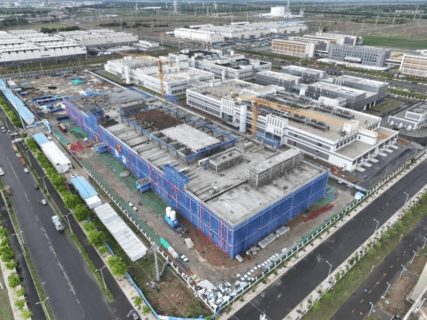
Renewable Energy and Electricity Infrastructure Drive the Expansion
One of the main reasons behind China’s push to develop computing facilities in western regions is the availability of renewable energy resources.
Large AI data centers require substantial and reliable electricity supplies. As computing workloads become more intensive, developers must consider not only the initial power requirements of their facilities but also how electricity demand will evolve as additional server halls and computing equipment are installed.
Inner Mongolia offers considerable wind and solar potential. This is while other western regions have access to different combinations of renewable energy resources.
In Ulanqab, the expansion of computing infrastructure is being accompanied by investments in renewable electricity generation, battery storage and dedicated power distribution systems.
Xinhua reported in October 2026 that the surrounding areas of Ulanqab’s Chahar High-Tech Development Zone had approximately 10GW of wind and solar development potential. The proposed zero-carbon industrial park is also intended to distribute renewable electricity to individual computing centers, with more than 80% of its planned electricity supply expected to come directly from renewable sources.
This approach also reflects China’s broader ambition to coordinate electricity generation and computing demand.
However, renewable generation alone cannot guarantee uninterrupted electricity supply. Data center operators must also invest in storage systems, grid connections, backup power and electrical management technologies to maintain reliable operations.
Furthermore, these requirements create additional opportunities downstream. Electrical contractors, transmission developers, battery manufacturers and power infrastructure engineering companies would also benefit.
Fiber-Optic Connectivity Remains an Important Construction Requirement
Another important consideration is connecting western computing facilities with businesses and AI developers concentrated in eastern China.
The East Data, West Computing initiative depends on the development of a nationwide network capable of transferring large volumes of data between computing hubs and end users.
Consequently, China is expanding its fiber-optic backbone infrastructure, including routes associated with high-speed railway corridors.
A June 2026 report highlighted the expansion of the country’s New Eight Vertical and Eight Horizontal backbone optical cable network. The network is intended to strengthen connectivity around computing hubs and data center clusters.
The infrastructure is also particularly important as AI applications increasingly depend on rapid data transfer between computing facilities, cloud platforms and end users.
For construction companies, this creates opportunities beyond the development of data center buildings. Fiber-optic installation, telecommunications infrastructure, network equipment facilities and supporting civil engineering works are also becoming important components of China’s computing infrastructure expansion.
Can China’s Western Computing Hubs Deliver on Their Ambitions?
Despite the scale of investment, China’s western computing strategy faces several challenges.
The first is ensuring that electricity generation and transmission infrastructure can keep pace with the rapid expansion of data center capacity. Renewable energy resources may be abundant, but connecting them to computing facilities and maintaining stable electricity supplies requires substantial investment.
Water availability is another consideration. AI data centers generate significant heat and require sophisticated cooling systems. Although operators in regions such as Inner Mongolia are increasingly adopting water-efficient technologies and reclaimed water, cooling requirements remain an important infrastructure consideration.
There is also the question of connectivity. Moving computing workloads between western data centers and eastern demand centers requires reliable, high-capacity networks. Any limitations in fiber-optic infrastructure could affect the efficiency of the wider computing network.
Perhaps the most important challenge, however, is ensuring that physical computing capacity translates into commercially useful AI services.
The availability of advanced processors is also an important part of this equation. China’s efforts to expand domestic semiconductor production and reduce dependence on foreign technology are therefore closely connected to its broader data center construction ambitions.
Recent uncertainty surrounding Nvidia‘s business in China has further highlighted the importance of this relationship. The developments raise questions about whether Chinese developers can secure the processors needed to equip their expanding computing facilities. This is while navigating US export restrictions and the country’s domestic technology policies. Jensen Huang’s return to Nvidia could also bring a different meaning to China’s AI data center construction boom.
What Next for China’s Western Computing Hubs?
China’s western computing hubs are also becoming an increasingly important part of the country’s long-term AI infrastructure strategy.
Developments in Inner Mongolia, Ningxia and Gansu demonstrate how the initiative is creating demand for data center campuses, renewable energy projects, electricity transmission, battery storage and telecommunications infrastructure.
Envision‘s Galaxy campus offers an example of how these investments are evolving, with computing facilities increasingly being integrated with renewable energy generation and advanced power management systems.
However, the long-term success of the strategy will depend on more than the number of data centers constructed or the amount of computing capacity installed.
Developers must ensure that the facilities have access to reliable electricity, sufficient connectivity, suitable cooling infrastructure and the semiconductor technologies needed to operate them.
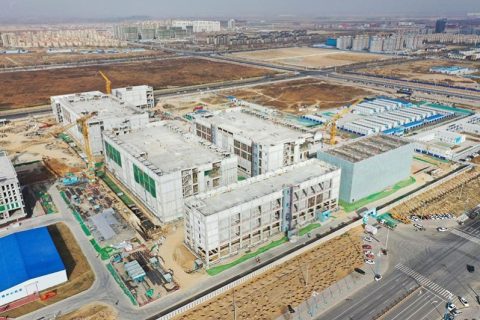
China’s western computing strategy is consequently creating a new frontier for construction and infrastructure investment. Its success could help determine how the country accommodates its rapidly growing AI demand while reshaping the geography of its digital economy.
For the construction industry, the opportunity extends well beyond building server halls. It encompasses the entire infrastructure ecosystem required to make large-scale AI computing possible.


Leave a Reply