Nvidia co-founder Jensen Huang’s return as chief executive officer may have restored some confidence in the world’s most valuable AI chipmaker, but it has not necessarily resolved the uncertainty surrounding China’s rapidly expanding artificial intelligence (AI) data center construction industry.
On November 23, 2026, Nvidia announced that its board had reinstated Huang as CEO, less than two weeks after his resignation amid a controversy involving reported extramarital relationships and allegations surrounding a Chinese businesswoman suspected by US authorities of having links to Chinese intelligence. The company had previously indicated that it would not reappoint him, making the latest decision a significant reversal.
The reinstatement followed pressure from US President Donald Trump, investors and key figures in Silicon Valley. It also came as Nvidia faced heightened scrutiny over its business dealings with China, the movement of advanced AI processors and broader questions about corporate governance.
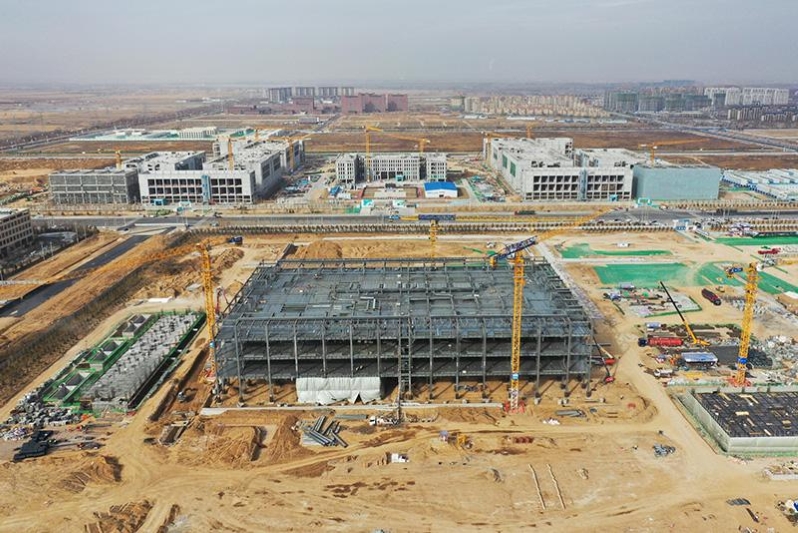
For China’s AI infrastructure industry, Jensen Huang’s return as CEO comes at a particularly sensitive time. Developers are investing heavily in large-scale computing facilities, server infrastructure and supporting power systems. However, access to advanced processors remains subject to US export restrictions and growing geopolitical uncertainty.
The immediate question is whether Jensen Huang’s return as chief executive officer will help stabilize Nvidia’s China business or whether the controversy will accelerate China’s efforts to reduce its dependence on American semiconductor technology.
Jensen Huang’s Return as Nvidia Chief Does Not End the China Chip Controversy
Huang’s return follows a turbulent period for Nvidia. The co-founder resigned on November 12 after reports of extramarital relationships. This included an alleged relationship involving a Chinese businesswoman whom US authorities reportedly suspected of having links to Beijing. China has denied the espionage allegations, and the claims have not been independently established.
Nvidia’s board subsequently reversed its position and reinstated Huang on November 23. Nvidia had also formed a committee to investigate whether foreign intelligence efforts had targeted Huang. The company also sought to appoint a new chief compliance officer.
The controversy has also drawn attention to Nvidia’s exposure to the Chinese market. Huang had been one of the most prominent corporate advocates for allowing American semiconductor companies to continue supplying Chinese customers,. He argued that maintaining access to the market was important for US competitiveness.
However, Washington’s restrictions have already limited the availability of Nvidia’s most advanced AI processors in China. The company has consequently sought to maintain its presence through less powerful products and software offerings that can comply with applicable export rules.
Jensen Huang’s return as Nvidia CEO could complicate that strategy. This will especially come up if US lawmakers push for additional restrictions or greater scrutiny of Nvidia’s remaining legal chip sales to Chinese customers.
Billions of Dollars in Chinese AI Computing Demand at Stake
The commercial implications are already becoming visible.
A November 23 Reuters investigation reported that Nvidia’s China business had experienced a significant recovery through sales of less powerful processors and software, despite restrictions on its most advanced AI chips.
Additionally, revenue from customers headquartered in China and Hong Kong rose from US$2.97 billion in Nvidia’s October 2025 quarter to US$11.05 billion in the quarter ended October 25, 2026. This is according to the company’s financial results.
However, the leadership controversy has unsettled some Chinese customers and suppliers. Some customers had reportedly begun cancelling or hesitating to place orders amid uncertainty over whether certain Nvidia products would be permitted into China.
The report also highlighted demand for Nvidia’s RTX PRO 5500 graphics card. Chinese companies were reportedly seeking more than six million units before Huang’s November 12 resignation. At listed prices, the potential value was nearly US$70 billion, although this figure represents reported demand rather than confirmed purchases or completed deliveries.
Importantly, the RTX PRO 5500 is a professional graphics product that can support AI workloads. It should not be confused with the high-end data center processors used to train the largest AI models.
Nevertheless, the wider uncertainty shows the challenges facing Chinese businesses attempting to secure computing hardware while managing restrictions imposed by Washington.
For data center developers, the issue extends beyond the purchase price of processors. Equipment availability, server compatibility and networking requirements can all affect the delivery and commercial operation of large computing facilities. Commissioning schedules also factor in the delivery of the data centers.
China’s AI Data Center Construction Boom Faces a Technology Test
China is continuing to invest heavily in AI computing infrastructure. This includes large-scale data campuses designed to support cloud services, AI model development and industrial applications.
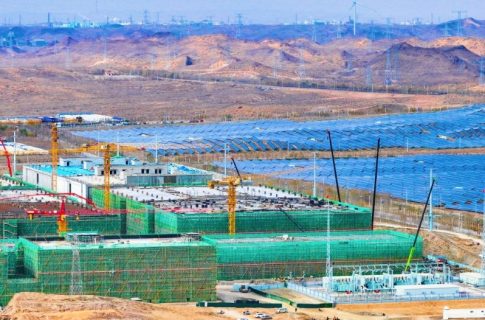
The country’s East Data, West Computing initiative is particularly important. It seeks to connect computing demand concentrated in eastern economic centers with data center hubs in western China where land and renewable energy resources are more abundant.
Inner Mongolia, Ningxia and Gansu have consequently become important destinations for new computing infrastructure.
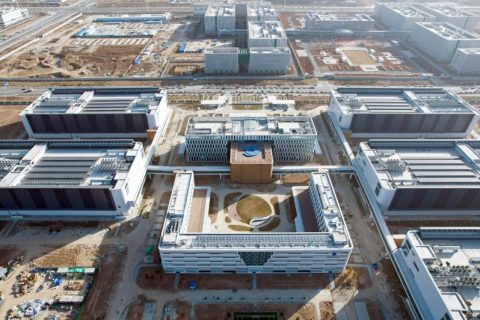
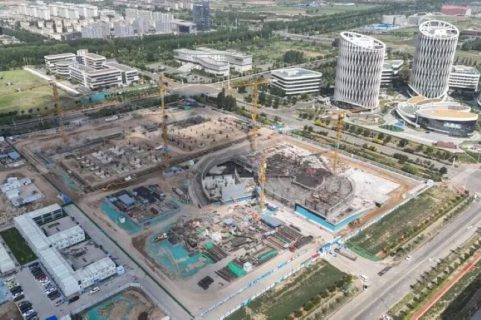
The expansion is already visible on the ground. In June 2026, China’s official digital development news platform reported that more than 30 data centers were under construction within a three-kilometer radius in the Horinger New Area of Hohhot, Inner Mongolia. It also reported a new wave of construction in Zhongwei, Ningxia. Here, facilities are being designed to accommodate the requirements of AI computing servers.
These projects also require substantial investments in buildings, electrical distribution, cooling systems, fiber-optic networks and supporting infrastructure.
However, the availability of advanced processors remains a critical part of the equation. A completed data center does not automatically translate into usable AI computing capacity. If the developer cannot secure sufficient processors and servers, the data center remains a building – like any other without a tenant.
This is where Nvidia’s position in the global AI ecosystem becomes particularly important. Many developers have built their computing environments around its processors and software platforms. This makes a transition to alternative technologies potentially expensive and technically challenging.
Envision’s Galaxy Campus Illustrates China’s Infrastructure Ambitions
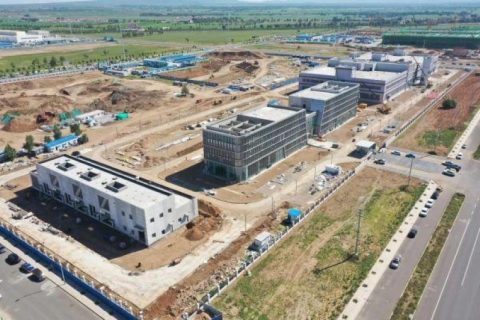
One of the clearest examples of China’s ambitions is Envision Group’s Galaxy AI Data Center Campus in Ulanqab, Inner Mongolia.
The development demonstrates how Chinese companies are moving beyond conventional data center construction towards integrated AI infrastructure combining computing facilities, renewable electricity, energy storage and advanced power management.
Envision announced the commissioning of the Galaxy Campus in August 2026. Its flagship facility covers approximately 120,000 square meters and is designed to scale to more than 2GW of capacity. The broader development subsequently targets 3GW capacity.
The first 200MW phase was handed over to a Chinese internet company in late October 2026. A second 200MW phase is expected to begin operating in the second quarter of 2027.
The project is also pursuing a model in which more than 80% of its planned electricity requirements will be supplied through direct renewable energy connections.
In another significant development, Envision announced on November 2 that its integrated 800V direct-current power system had entered commercial operation at Galaxy. The system combines solid-state transformers, battery energy storage and AI-driven controls to coordinate electricity supply with computing demand.
These developments show the scale of investment required to support China’s AI ambitions. They also illustrate why uncertainty over semiconductor procurement matters to construction companies, infrastructure suppliers and investors.
Could China Accelerate Its Domestic Chip Strategy?
The uncertainty surrounding Nvidia could strengthen the commercial case for Chinese semiconductor alternatives.
Companies such as Huawei have been developing domestic AI processors and computing systems intended to reduce reliance on American technology. Other Chinese semiconductor manufacturers are also seeking to capture demand from data center operators, cloud providers and technology companies.
However, replacing Nvidia is not simply a matter of installing a different processor.
AI computing infrastructure relies on interconnected hardware and software ecosystems. This includes processors, memory, networking equipment, server architecture and software development platforms. Changing one component can require substantial adjustments to the wider computing environment.
Recently, Huawei also acknowledged difficulties meeting domestic demand for AI computing equipment. This suggests that even as Chinese developers seek alternatives, domestic suppliers may face capacity and technology challenges.
The transition could therefore create opportunities for Chinese semiconductor manufacturers and server suppliers. It also introduces additional procurement, integration and commissioning considerations for data center developers.
What Next for China’s AI Data Center Construction Boom?
Jensen Huang’s reinstatement may also restore some stability to Nvidia’s leadership. It however does not automatically resolve the wider US-China technology dispute.
Washington’s export controls remain a major consideration. Beijing also continues to encourage the development and adoption of domestic semiconductor technologies. Chinese customers and infrastructure developers must consequently navigate an increasingly complicated procurement environment.
For the construction industry, the implications could extend to project costs and equipment specifications. Construction schedules and the commercial viability of planned AI data centers could also be affected.
If access to Nvidia processors becomes more uncertain, developers may accelerate diversification towards alternative hardware platforms. This could require changes to server configurations, cooling systems, electrical infrastructure and software integration.
At the same time, China’s expanding computing hubs and investments in renewable-powered data centers suggest that the country’s infrastructure ambitions are unlikely to be defined by one semiconductor supplier alone.
The broader development of China’s western computing hubs is particularly important in this regard. Through its East Data, West Computing initiative, the country is attempting to build an interconnected network of facilities that can support its growing demand for AI computing capacity.
Ultimately, the question facing China’s AI infrastructure industry is no longer simply how quickly it can construct larger data centers. It is whether developers can secure the technology, electricity and supply-chain partnerships needed to make those facilities commercially operational.
Huang may be back at Nvidia, but the challenges surrounding China’s AI data center construction boom remain far from resolved.

Leave a Reply