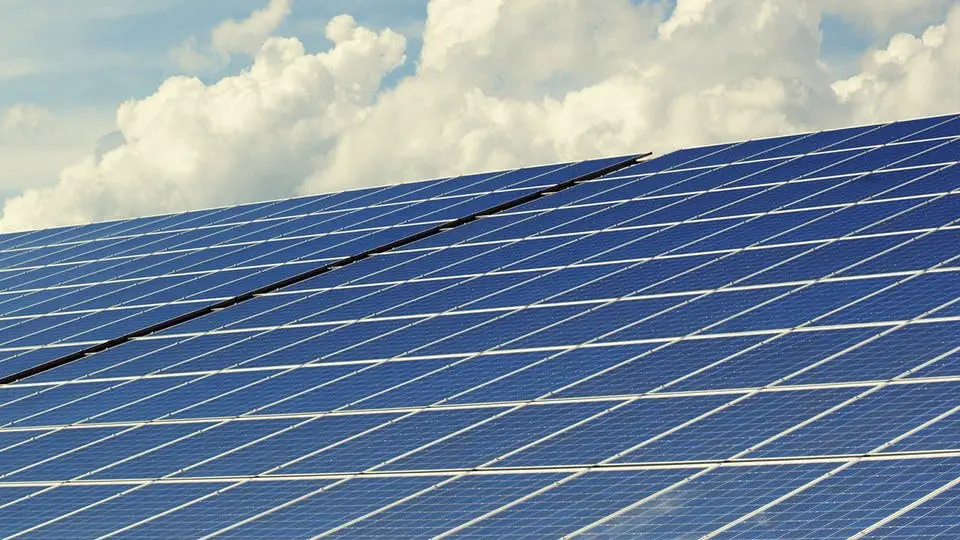
Developed and operated by Lightsource bp, the 173-megawatt Bellflower Solar Farm is located about 40 miles east of Indianapolis across Rush and Henry Counties. The facility reached commercial operation in early 2023. It supplies clean power directly to Verizon under a long-term power purchase agreement to support the telecom company’s net-zero carbon goals.
The site serves as an active hub for agrivoltaics and ecosystem research. Local farmers graze sheep between the panel rows to manage vegetation, while commercial beekeepers manage active hives on-site to produce solar farm honey. Additionally, hundreds of acres feature native pollinator plants and specialized gardens. The project continues to participate in a multi-institution study with Argonne National Laboratory, the National Renewable Energy Laboratory, and the University of Illinois system to evaluate the ecological impacts of co-locating utility-scale solar arrays with pollinator habitats.
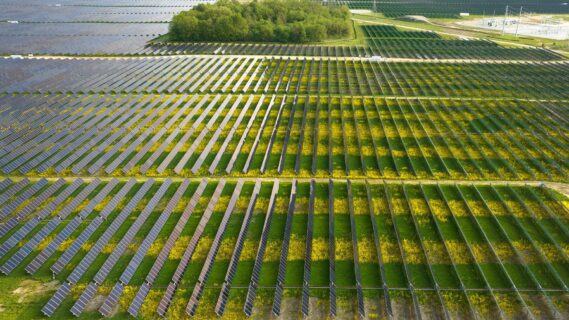
A Boost for Indiana’s Clean Energy Goals
Projects like Bellflower Solar and others like the multi-gigawatt Mammoth Solar complex play a crucial role in transforming Indiana from a historically coal-dependent state into a regional leader in clean energy. By adding gigawatts of solar capacity directly into the grid, these developments help satisfy rising commercial power demands, replace retiring fossil-fuel generation, and reduce local carbon emissions. Together, they enable Indiana to modernize its energy infrastructure while diversifying agricultural income and preserving rural land for generations.
December 24, 2021
The Bellflower Solar Farm in Rush and Henry Counties, east of Indianapolis, Indiana, has begun construction. In January, Lightsource BP unveiled plans for a 173-megawatt solar farm. When fully operational, the solar farm will be able to provide enough sustainable energy to power almost 27,000 houses each year. The business announced that it has received a US$367 million portfolio financing package, which will fund not just the Bellflower Solar project, but also many other solar projects. They also stated that the solar farm is planned to go operational in late 2022. The project is planned to provide around 200 construction employment, with the vast majority of employees employed locally.
Also Read: US$150 million Lauth Group industrial campus planned for Indiana
According to the firm, the project will produce an estimated US$30 million in property tax income for Rush and Henry counties over the course of its existence. Bank of America provided the tax equity investment for the portfolio, marking the bank’s fourth transaction with Lightsource bp in the last two years. Bellflower Solar, for example, can assist to enhance local rural economies. Over the course of its existence, the project is estimated to generate US$30 million in property tax income for Rush and Henry Counties, benefiting local schools and other community public services. Its annual operating budget of US$2.4 million will be spent mostly in the area. In addition, the Bellflower project will provide around 200 construction employment.
Commentary on the Bellflower Solar Farm, Indiana
“This project finance deal demonstrates top-tier investors’ and power offtakers’ continuous trust in Lightsource bp and the quality of our solar assets.” “Our commitment to responsible solar development, such as the research we’re doing at Bellflower on co-locating pollinator habitat with solar, multiplies solar’s contribution to preserving our planet for future generations,” said Kevin Smith, Lightsource’s chief executive officer of the Americas, in a news release.
Bellflower Solar Farm Factsheet
Project Name: Bellflower Solar Farm
Developer and Owner: Lightsource bp
Location: Rush and Henry Counties, Indiana (east of Indianapolis)
Installed Capacity: 173 MWdc (152.5 MWac)
Operational Status: Commercial operation achieved in early 2023
Offtaker / Partner: Verizon Communications (under a long-term Virtual Power Purchase Agreement)
Land Use Strategy: Dual-use agrivoltaics (co-locating solar panels with sheep grazing and commercial beekeeping)
Ecological Impact: Dedicated native pollinator habitats and multi-institution environmental impact studies
Research Partners: Argonne National Laboratory, National Renewable Energy Laboratory (NREL), and the University of Illinois system

Leave a Reply