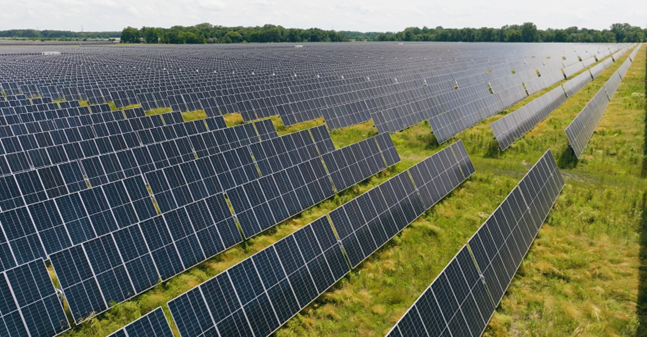
Renewable energy company Doral informed investors this morning that it has been accorded construction permits for the second phase of the large-scale solar farm it is developing in Indiana in the U.S. Midwest. Also, this project joins others in Indiana in advancing the state’s clean energy goals.
The permits cover two projects. These projects boast a combined capacity of 1,100 megawatts. Additionally, upon completion, which is slated for 2029, the solar farm’s total capacity will reach approximately 2,700 megawatts. Furthermore, an additional section with a capacity of approximately 216 kilowatts is expected to be added later on.
Size of the Solar Farm
The farm’s total area will span roughly 80,000 dunams. The size is equal the combined size of Tel Aviv, Holon and Bat Yam.
Moreover, Doral expects that the new phase will generate NIS 350 million in revenue and NIS 300 million in annual EBITDA. Construction costs are projected to range between NIS 2.5 billion and NIS 3 billion.
Significance
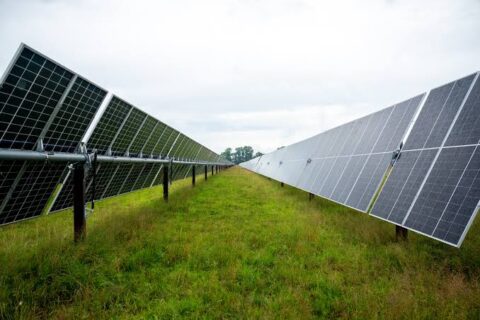
The solar field, one of the largest in the world, will be an agrivoltaic facility. This means that it will combine agriculture with electricity generation. Landowners will continue to grow crops such as corn, wheat and vegetables between the solar arrays. Also, other sections of the site will be utilized for grazing, with livestock helping control vegetation growth and ensuring that the panels remain exposed to sunlight.
Landowners to Receive Payment from Doral
Landowners will receive fixed payments from Doral for the use of their land, while the company benefits from revenue generated by selling the electricity produced at the site.
No Energy Storage, Power to be Fed Directly to the Grid
Unlike many solar projects, the facility will not initially include energy storage alongside the solar panels. Instead, the electricity will be fed directly into the PJM grid in the U.S. Additionally, at this stage, no contracts have been signed for direct sales to major customers such as AI data center operators.
Also, Doral CEO Yoni Hantis said to Calcalist: “We secured eligibility for federal tax incentives, which lower construction costs, by moving quickly on development processes. However, reliance on tax incentives will eventually disappear. Electricity prices in the U.S. are rising, and solar generation is the most efficient and cost-effective option.”
However, the company did not disclose the scale of the tax benefits. Among the beneficiaries will be investors in the project designated as “tax partners,” Bank of America and Truist Bank. Moreover, the partnership is based on an arrangement that allows investors to claim tax benefits associated with a U.S. infrastructure project for a specified period.
Lastly, regarding data centers, major energy consumers whose demand is rising due to the need to train and operate artificial intelligence models, Hantis said: “We want to build data centers, to create a data center platform within a solar facility that is independent of the grid and fluctuating energy tariffs.”
Mammoth Solar Project Factsheet
Project Name: Mammoth Solar
Developer: Doral Group (via subsidiary Doral LLC)
Location: Indiana, U.S. Midwest
New Permits Approved: Phase 2 development (2 projects totaling 1,100 MW)
Total Target Capacity: 2,700 MW (plus a planned 216 kW addition)
Expected Completion: 2029
Total Site Area: 80,000 dunams (20,000 acres / 80 km²)
Land Use Type: Agrivoltaics (combining crop cultivation like corn, wheat, and vegetables with livestock grazing)
Grid and Storage: Direct feed into the PJM Interconnection grid; no initial battery storage
Estimated Phase 2 Investment: NIS 2.5 billion – NIS 3.0 billion ($680M – $815M)
Phase 2 Projected Financials: NIS 350 million in annual revenue; NIS 300 million in annual EBITDA
Key Tax Partners and Financials: Bank of America and Truist Bank (utilizing U.S. federal tax incentives)

Leave a Reply