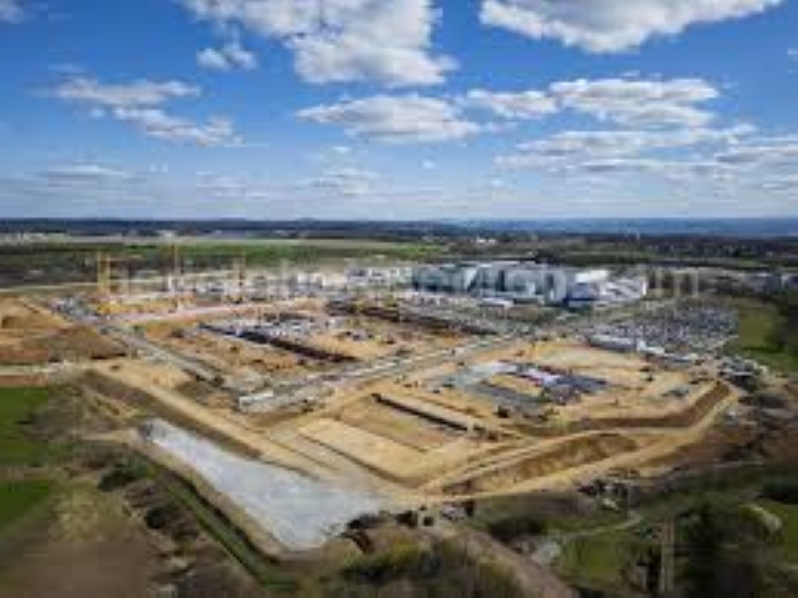
The €10 billion plus semiconductor fabrication plant being developed by European Semiconductor Manufacturing Company (ESMC) in Dresden has transitioned into vertical construction and early systems preparation in 2026. This progress builds upon a 2024 groundbreaking event. The project has since advanced from excavation and foundation works into structural build-out, with core buildings now rising and early topping-out milestones achieved. This is while preparations for cleanroom and equipment installation in H2 2026 are already underway. The development also remains on schedule for 2027 production start, reinforcing its role in Europe’s push for semiconductor sovereignty and supply chain resilience. Other countries are also increasingly strategizing on this independence, including major players in the global East, such as South Korea, which is now focusing on vertically integrated facilities, such as the new P&T7 advanced packaging facility developed by SK hynix.
ESMC Dresden Semiconductor Fab: Project Fact Sheet – Updated 2026
Location: Dresden (Silicon Saxony)
Developer: European Semiconductor Manufacturing Company
Lead Investor: Taiwan Semiconductor Manufacturing Company with 70% stake
Partners:
- Robert Bosch GmbH with 10% stake
- Infineon Technologies with 10% stake
- NXP Semiconductors with 10% stake
Total Investment: Over €10 billion
Public Subsidy: €5 billion from EU, German government
Technology Nodes: 28/22 nm and 16/12 nm with automotive and industrial focus
Capacity: 40,000 wafers monthly
Jobs: 2,000 direct positions
Current Status (2026): Under construction: structural and early fit-out phase
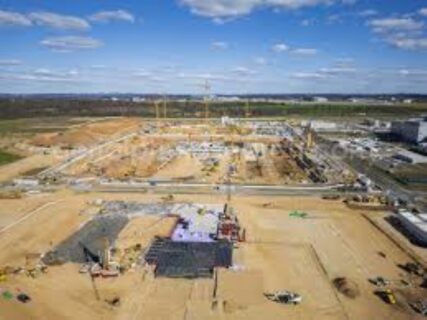
Updated Timeline for Construction of Europe’s First Semiconductor Plant
Aug 2024: Groundbreaking ceremony and site mobilization
Late 2024 – Early 2025: Excavation, drainage, and site preparation completed
2025: First concrete milestone reached. Foundation works done. Transition to structural construction.
Late 2025 – Early 2026: Main structures rise; office and utilities buildings reach advanced stages
2026: Structural completion progressing. Early building fit-out begins. Cleanroom systems and tool installation expected in H2 2026
2027: Equipment ramp-up and start of production
Project Developer and Partners
Developer
- European Semiconductor Manufacturing Company
Equity Partners
- Taiwan Semiconductor Manufacturing Company – Lead operator and technology provider
- Robert Bosch GmbH – Automotive semiconductor demand anchor
- Infineon Technologies – Power and automotive chips
- NXP Semiconductors – Automotive and industrial semiconductors
Government and Institutional Partners
- European Commission
- Federal Government of Germany
- Free State of Saxony
- City of Dresden
Talent Partners
- Technical University of Dresden
- Technical University of Munich
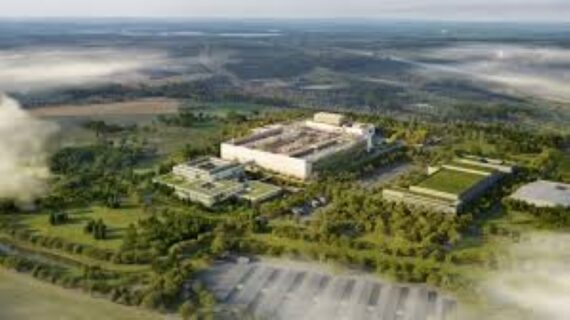
Construction of Europe’s First Semiconductor Plant Breaks Ground: A Monumental Achievement
Reported August 21, 2024 – In recent updates, the Europe is gearing towards implementing the construction of its first semiconductor plant. The inauguration of the plant occured earlier this week as Taiwanese semiconductor giant TSMC broke ground on the plant in the eastern German city of Dresden. The EU accolades this endeavor as it looks to shift key supply chains onto the continent. German Chancellor Olaf Scholz and European Commission President Ursula von der Leyen attended the ceremony. The European Commission President noted that the prohect was “an endorsement for Europe as a global innovation powerhouse.” Semiconductors have become indispensable in an array of industries, from electronics to wind turbines and even missiles. TSMC is investing $3.9 billion in the Dresden project and will own 70 percent of the capital. On the other hand, Dutch chipmaker NXP, Germany’s Infineon and Bosch will own 10 percent each.
State of Affairs Regarding Europe’s First Semiconductor Plant
The construction of Europe’s first semiconductor plant is assured for success as it partners with one of the world’s best. Taiwan is home to a powerhouse semiconductor industry, largely thanks to TSMC’s dominance. However, the supply chain is highly vulnerable to shocks and what von der Leyen referred to as “growing geopolitical tensions.” A major concern that has emerged in recent years is over Taiwan’s neighbor, China. The nation claims the self-ruled island as part of its territory and has ramped up rhetoric about “unification.” For such reasons, TSMC has come under pressure to widen its operations by opening factories in other parts of the world. Furthermore, it aligns with the aim of western countries of redoubling their efforts to bring semiconductor production closer to home. Germany’s Chancellor noted that Europe is dependent on semi conductors from other regions of the world, which should be changed.
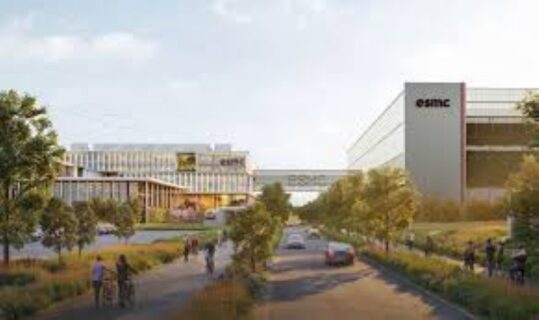
The Significance of the Multi-Billion Plant to Europe as a Continent
The implementation of the Europe’s first semiconductor plant is one that is precedented to bring innumerable benefits. The German Chancellor feels that the construction of the plant in Germany is a commendable approach. This is clearly noted as he stated that “we are dependent on semiconductors for the sustainable technologies of the future” and added that “we must not be dependent on other regions of the world for the supply” of the chips. The Dresden facility will be specialized in the production of semiconductors for Germany’s flagship automotive industry. The nation is currently in the process of transitioning to electric vehicle production. Furthermore, the company will also see other sectors of the tech industry and economy thrive. This is because the supply of semiconductors will be affordable and accessible to European states.
The Expected Timeline of the Dresden Factory
The construction of Europe’s first semiconductor plant is set to provide some 2,000 jobs and start production before the end of 2027. Furthermore, It will have a monthly production capacity of 40,000 300mm-silicon wafers, one of the most advanced technologies. Approximately $12 billion has been ploughed into the flagship project in the “Silicon Saxony” region, which has an industrial heritage dating back to the communist era. The German government is supporting the Dresden plant with five billion dollars of public funds. Furthermore, the project will received an exemption from EU state aid rules to ensure its succesful implementation.
Europe’s Largest Floating Solar Power Plant Under Construction in France: Les Îlots Blandin
Leave a Reply