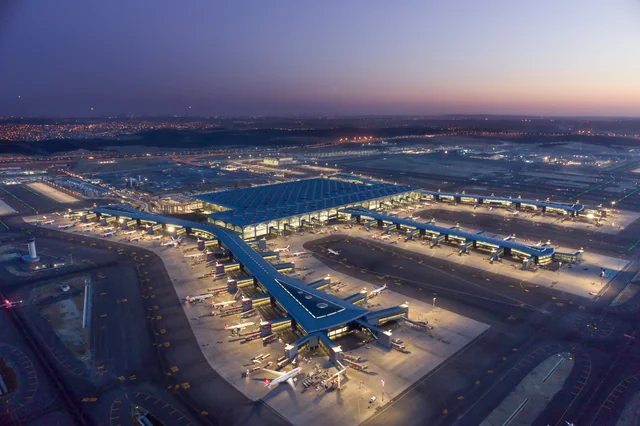
The Istanbul Airport project is a record-breaking aviation expansion set to define the future of European and global air transport by growing its capacity from current operations to a full potential of up to 200 million passengers per year once all phases are complete. This expansion builds on the success of the airport since its official opening in 2018, when it replaced the older Atatürk Airport as Istanbul’s primary international gateway. As of recent years, the airport serves tens of millions annually and ranks among Europe’s busiest hubs. Expansion is progressing through a multi-phase master plan that will add runways, terminal buildings and support infrastructure, including remote aprons, satellite terminals, parking facilities and auxiliary services, to support vastly increased traffic and operations. This long-term growth strategy mirrors other major airport modernisation efforts in Europe, including Greece’s Athens Airport Expansion Project, which is advancing a €1.3 billion programme to increase terminal capacity and improve passenger handling as demand rises across the region. At full build-out, the Istanbul facility will incorporate six runway systems, multiple terminal complexes connected by internal transport links, and extensive cargo, logistics and passenger amenities. This long-term growth strategy reflects regional ambitions to strengthen Istanbul’s position as a global intercontinental transit hub, leveraging its strategic geographic location at the crossroads of Europe and Asia. The airport’s phased development not only increases capacity but also stimulates economic activity in aviation, tourism, logistics and urban development.
Project Overview
- Name: Istanbul Airport expansion project (Turkey)
- Location: Arnavutköy district, Istanbul, Turkey
- Purpose: Grow to handle up to 200 million passengers annually
- Operational since: First phase opened 2018
- Regional role: Replaces Atatürk Airport as main international hub
- Current capacity: ~90 million passengers in early stages
- Phases: Multi-phase expansion (4 main phases planned)
- Terminal buildings: Main terminal + additional future terminals
- Runways: Planned 6 runway systems at full completion
- Total terminal area (full build): ~3.2 million m²
- Apron aircraft capacity: ~500 aircraft at full build
- Passenger transfer: Integrated inter-terminal rail links
- Ancillary facilities: Cargo zones, VIP lounges, hotels, medical & service facilities
- Parking: Large parking for tens of thousands of vehicles
- Global position: One of Europe’s busiest airports (2024: ~80 million)
- Strategic role: Links Europe, Asia, Africa through transit networks
Project Team
- IGA — Istanbul Grand Airport – Developer and operator
- General Directorate of State Airports Authority (DHMİ) – Government aviation authority
- Architects & design consultants – Nordic Office of Architecture and Haptic Architects (design contributors)
- Terminal and infrastructure contractors – Consortium contractors managing runways, terminals and support facilities (various civil and mechanical firms across phases)
- Local government stakeholders – Istanbul Metropolitan Municipality and Turkish national planning agencies (coordination and approvals)
- Transport integration partners – Rail and metro connection agencies supporting transit integration (e.g., metro and motorway authorities)
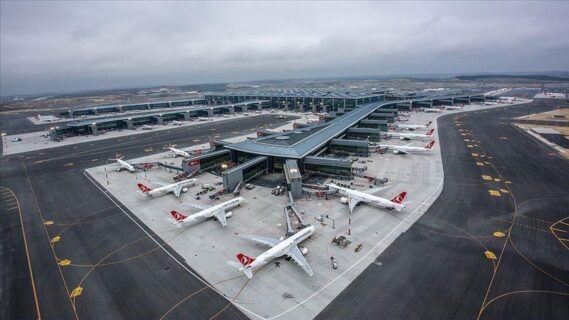
Reported 15th August 2024: The ambition of the world’s largest airport in Europe is taking shape as Turkey slowly but steadily continues construction. Officially inaugurated in 2018, Europe’s busiest airport is making strides to become the world’s largest. Turkey celebrated a significant moment in aviation history with the official inauguration of Istanbul Airport. The grand opening coincided with Turkey’s Republic Day celebrations and was presided over by President Recep Tayyip Erdogan. The sheer scale of Istanbul Airport is matched only by its ambitious vision.
Designed as a global transit hub bridging continents, the airport boasts an impressive capacity that outstrips even the busiest aviation centers worldwide. The airport accommodates up to 90 million passengers annually. Plans for expansion to accommodate a staggering 200 million travelers in the future are still on course and ongoing. To put this into context, this capacity nearly doubles that of Atlanta’s Hartsfield-Jackson International Airport in Georgia, USA, one of the busiest airports in the world as of last year.
The Current State of Affairs on the World’s Largest Airport in Europe
The state of affairs regarding the world’s largest airport in Europe, the Istanbul Airport, shows promise. With its strategic location straddling Europe, Asia, and Africa, the airport aims to redefine air travel by facilitating seamless connectivity across continents. Istanbul Airport’s sheer size and infrastructure are among its most impressive features. With six runways, four more than London’s Heathrow Airport, it is built to accommodate the massive air traffic expected in the future.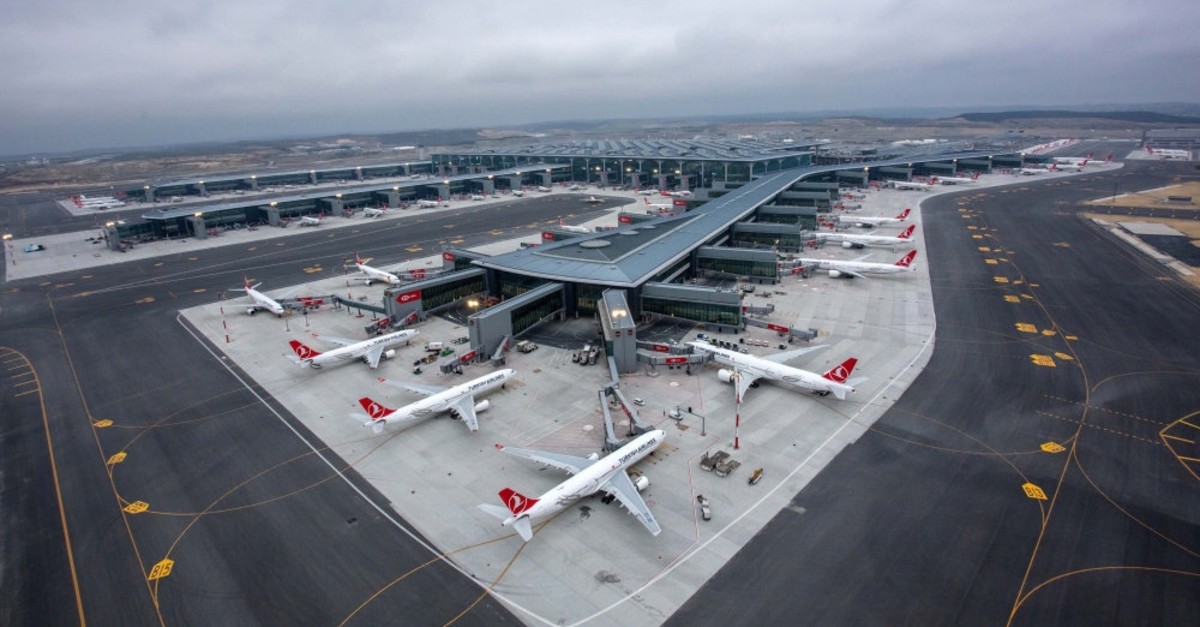
Furthermore, the airport’s phased construction includes multiple terminals and boarding bridges. It also includes extensive parking facilities and ancillary infrastructure to support its operations. The shift to Istanbul Airport will be a significant turning point for Turkey’s aviation sector. Plans to transfer all operations from Ataturk Airport to Istanbul Airport in 2018 are ongoing, marking the end of an era for the iconic airport. It has served as Istanbul’s gateway for decades. As Istanbul Airport continues to expand, it represents an extraordinary engineering achievement and ambition and ushers in a new era in Turkey’s aviation history.
Also read:
The Significance of the Istanbul Airport Upon Completion
Upon completion, the world’s largest airport in Europe has proven viable since opening in October 2018. The Istanbul Airport has become the Turkish city’s primary air hub, replacing Atatürk Airport. In its first three years, the new facility handled over 100 million passengers. With five runways and a single terminal, the airport has proved fundamental in housing both domestic and international passengers. Through this, the airport has received various accolades, noting its exceptional design and facilities.
Despite taking over as the Turkish city’s main air hub, the new Istanbul Airport is still only partially complete. Indeed, the sprawling facility is being built over four phases, as laid out by parent company IGA. 2023 marked the start of the third phase, which will run until 2025 and add a second terminal building with the capacity for up to 60 million passengers, plus an additional runway. Meanwhile, the fourth phase will add another runway and the option to include additional satellite terminal buildings for 50 million passengers.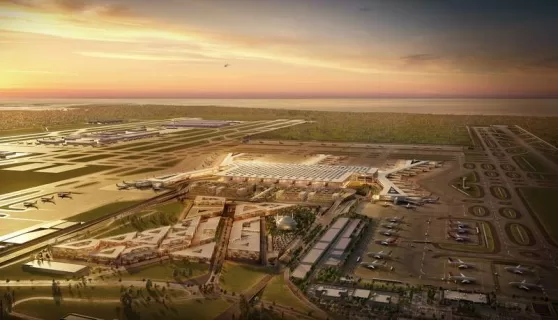
Also read:
One of the World’s Largest Wind Farms to Commence Construction in 2026 in Egypt
Ellinikon: Europe’s Largest Smart City Project Underway in Athens




Leave a Reply