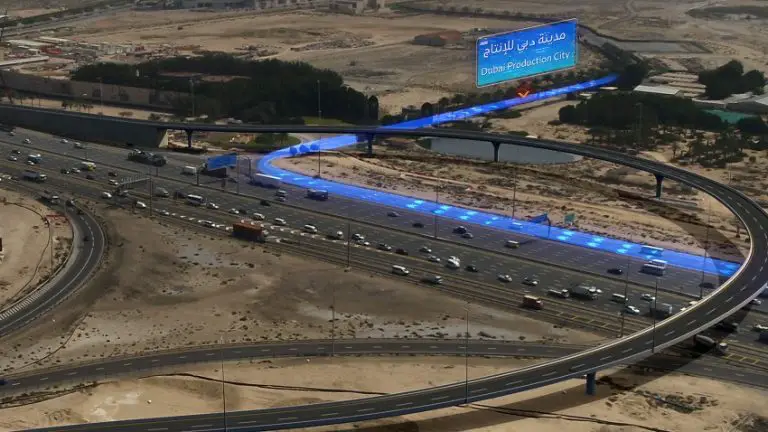
The Garn Al Sabkha Street construction project continues to advance in Dubai as the Roads and Transport Authority (RTA) delivers a major intersection upgrade designed to improve traffic flow between Sheikh Zayed Road and Sheikh Mohammed bin Zayed Road. Moreover, the project forms part of Dubai’s long-term urban mobility expansion strategy, which prioritises congestion reduction and corridor efficiency across high-density transport routes.
Initially awarded at an estimated AED374m ($102m), the scheme has now moved into advanced implementation stages as bridge structures and interchange works near completion. In addition, the development supports increasing traffic demand driven by continued residential and commercial expansion along the corridor.
Garn Al Sabkha Street construction project reaches advanced delivery stage
The Garn Al Sabkha Street construction project has reached advanced completion, with RTA confirming substantial progress across all major bridge structures. Furthermore, the scheme includes four key bridges stretching nearly 3,000 metres and designed to handle up to 17,600 vehicles per hour. According to updated 2026 reporting, the project is now in its final delivery phase, with most structural works already completed and finishing works progressing across road surfaces, lighting, drainage systems, and traffic integration components.
Additionally, engineers have completed major structural foundations and columns, while remaining works focus on final road expansion and traffic diversions. Consequently, the corridor is expected to significantly improve connectivity across one of Dubai’s busiest interchange zones once fully operational. The project directly supports smoother integration between major arterial roads, reducing pressure on surrounding junctions.
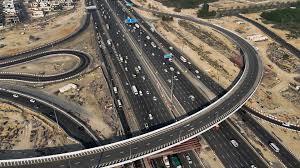
Garn Al Sabkha Street improvement project strengthens Dubai transport network
The Garn Al Sabkha Street improvement project enhances one of Dubai’s most critical transport corridors connecting Sheikh Zayed Road and Sheikh Mohammed bin Zayed Road. Moreover, it improves access to key residential districts and logistics routes, particularly toward Al Qusais, Deira, Jebel Ali, and surrounding growth zones. Once completed, the infrastructure is expected to reduce peak-hour travel times significantly and improve corridor reliability.
In addition, the project aligns with Dubai’s broader road expansion strategy aimed at supporting urban population growth and increased vehicle ownership. It also complements other major interchange upgrades across the emirate that prioritise multi-level flyovers and high-capacity traffic distribution systems. Therefore, the scheme plays a central role in balancing mobility demands across the city’s eastern and western corridors.
The Garn Al Sabkha Street construction project shares strong regional relevance with the Sheikh Jaber Al-Sabah Road construction project in Riyadh, which was recently awarded a $1.3 billion contract by the Royal Commission for Riyadh City (RCRC). Both projects focus on large-scale interchange development, congestion reduction, and high-capacity corridor upgrades within rapidly expanding metropolitan regions.
Moreover, while Dubai’s project optimizes interconnectivity between Sheikh Zayed Road and Sheikh Mohammed bin Zayed Road, the Riyadh scheme strengthens the Second Eastern Ring Road network through a 12-kilometre corridor featuring five major interchanges. Consequently, both developments reflect a shared Gulf-wide strategy of expanding arterial road capacity to match accelerating urban growth and long-term infrastructure planning.
Read Also: Fifth Phase of Mohammed bin Rashid Al Maktoum Solar Park in UAE Launched
The Garn Al Sabkha Street Improvement Project Set To Significantly Ease Transit Distances And Time
In response to the directives of the Vice President of Dubai, the project aims to keep pace with the region’s thriving profile. Moreover, it targets to accommodate the needs of the urban population and development growth.
While commenting on the Garn Al Sabkha Street Improvement Project, the DIrector-General at RTA said it forms part of a much larger initiative to improve the street corridor. Mattar Al Tayer further noted that the road improvement developments will guarantee the smooth flow of traffic. More especially, between Al Asayel Street and Sheikh Zayed Road, as well as First AL Khail Street.
Upon completion, the project is said to potentially reduce transit time and distance by 40%. This will include traffic that stems from Garn Al Sabkha Street down to Sheikh Mohamed bin Zayed Road, in the direction of Sharjah and Al Qusais. This, in turn, will slash peak hour journey time from 20 minutes to 12 minutes. Additionally, the direction of Jebel Ali Port from Sheikh Mohamed bin Zayed road rightwards to Al Yalayis will be from 21 minutes to 7 minutes.
Project Fact Sheet
Project name: Garn Al Sabkha Street – Sheikh Mohammed bin Zayed Road Intersection Improvement Project
Location: Dubai, United Arab Emirates
Client: Roads and Transport Authority (RTA)
Initial contract value: AED374 million ($102 million)
Scope: Intersection upgrade and corridor improvement works
Key components:
- Construction of four major bridges
- Total bridge length: ~2,874–3,000 metres
- Traffic capacity: 17,600 vehicles per hour
- Road widening and surface upgrades
- Drainage and lighting systems
- Traffic signal and diversion works
Corridor links: Sheikh Zayed Road, Sheikh Mohammed bin Zayed Road, Al Yalayis Road, Al Qusais routes
Current status (2026): Advanced completion stage with final finishing works underway
Objective: Reduce congestion and improve interchange efficiency
Project Team
Project Owner: Roads and Transport Authority (RTA), Dubai
Strategic Oversight: Government of Dubai leadership directives
Executive Leadership: RTA Director-General and Board of Executive Directors
Design & Engineering Supervision: RTA Engineering and Road Infrastructure Departments
Main Contractor: Appointed construction contractor under RTA procurement framework
Structural Works Contractor: Bridge and interchange construction teams
Systems Contractor: Traffic signals, lighting, and smart mobility systems providers
Utilities Coordination: Dubai Electricity and Water Authority (DEWA) and telecom infrastructure providers
Traffic Management Authority: Dubai Police and RTA Traffic Operations Division


Leave a Reply