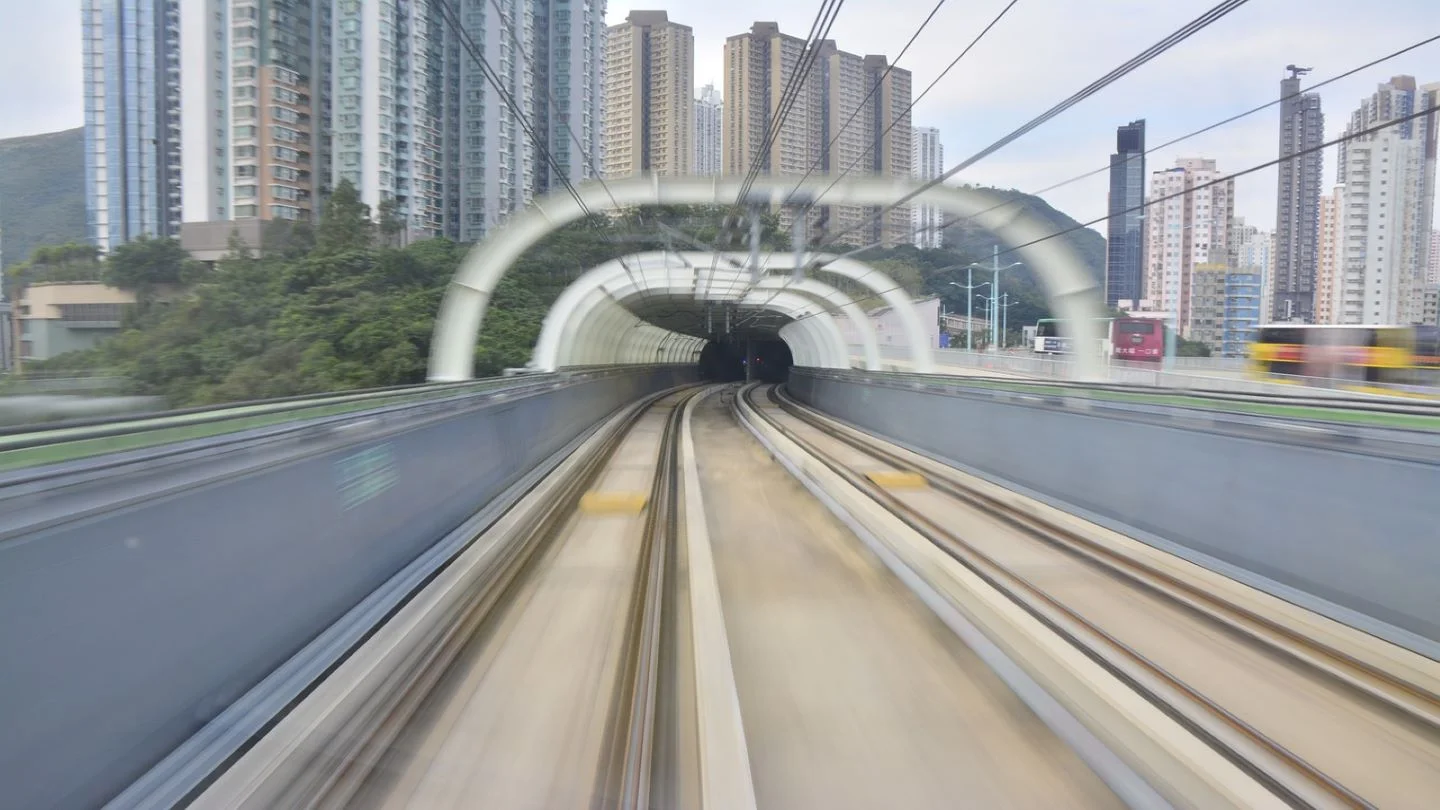
Dublin’s flagship MetroLink project,a planned 19-kilometer, mostly underground automated metro line running from Estuary and Swords through Dublin Airport down to Charlemont in the city centre, has entered a crucial operational phase following major legal and procurement milestones. After An Coimisiún Pleanála granted planning approval, the project’s Railway Order officially became operative, clearing the path for Transport Infrastructure Ireland (TII) to initiate major civil works procurement and land acquisitions after lingering judicial review challenges were successfully resolved through mediation.
With planning certainty secured, project activity has shifted heavily toward tender releases and site preparation. Procurement is underway for key infrastructure packages, including the multi-billion-euro M401 and M402 civil works design-and-build contracts, alongside the €7.3 billion M500 Design, Build, Finance, Operate and Maintain (DBFOM) package, which encompasses rolling stock, signaling systems, trackwork, depot facilities, and 25 years of operational service. Concurrently, TII is advancing utilities diversions, archaeology frameworks, monument protection measures, and strategic property acquisitions, such as securing the site of the former Carlton Cinema for the planned O’Connell Street station.
Main construction is projected to break ground between mid-2027 and 2028, with an estimated build timeline of six to eight years pointing toward an operational opening in the mid-2030s. Transport officials have also discussed the potential for a phased opening approach, which could allow northern segments running from Swords into Dublin city center to begin passenger operations ahead of the full line’s completion. Once fully operational, the high-frequency line is expected to reduce travel time between Dublin Airport and the city center to approximately 20 minutes while seamlessly integrating with Irish Rail, DART, Dublin Bus, and Luas networks.
The delivery of MetroLink serves as a critical transport spine for the North Inner City, directly complementing Dublin City Council’s multi-million-euro regeneration of the Parnell Square Cultural Quarter. Placed at the northern end of Dublin’s historical “Civic Spine,” Parnell Square is undergoing a major transformation anchored by the construction of a landmark central City Library, public plaza initiatives, and enhanced facilities for cultural institutions like the Hugh Lane Gallery. MetroLink’s underground station at O’Connell Street (just south of the square) and nearby stops at the Rotunda and Mater Hospitals will provide seamless, high-frequency mass transit directly into this cultural cluster. By enabling rapid, direct connections from Dublin Airport, Swords, and the outer suburbs directly to the top of O’Connell Street, MetroLink will dramatically broaden public access to Parnell Square’s arts and civic venues, replacing traffic congestion around the Georgian square with a heavily pedestrianized, transit-accessible cultural hub.
February 22, 2023
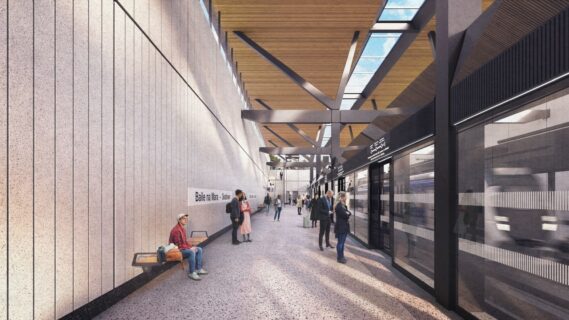
Transport Infrastructure Ireland has chosen Atkins, an SNC Lavalin Group member, to provide the detailed design for the MetroLink Project’s Advance Works programme. This integrated public transportation system includes a metro railway with high capacity and frequency. It links the Greater Dublin Area, including Dublin Airport and the city centre.
Atkins will develop the detailed design for a programme of activity to precede the main infrastructure works. Thus, it will achieve site readiness to facilitate the mobilisation of MetroLink’s main infrastructure works. This activity programme will include utility diversions and archaeological and heritage works. It will also reduce land access and environmental monitoring.
Read Also: Plans Approved for Construction of New Railway Station at Cheadle, UK
MetroLink Project to offer faster, more practical, and cleaner transportation options
Martina Finn, Managing Director of Atkins Ireland, stated, “The Metrolink Project will give Dublin a modern, interconnected transportation system that relieves congestion. Thus, it provides commuters with faster, more practical, and cleaner transportation options in and around the city.”
“We’re pleased to bring our local teams of experts and our extensive global transportation experience to support Transport Infrastructure Ireland as they advance this exciting project. This appointment expands on our current role as Operations Advisor for Metrolink.”
MetroLink is one of the key projects identified in Ireland’s National Development Plan. It will be a first-of-its-kind public transportation system in Ireland. This is because a large portion of the 18.8 km route is underground.
The project is expected to carry up to 53 million passengers annually, connecting essential locations in the city centre. As a result, it will join Dublin Airport, Irish Rail, DART, Dublin Bus, and Luas services.
Project Factsheet
Official Name: Dublin MetroLink
System Type: Fully automated, driverless high-capacity underground metro railway (Ireland’s first)
Lead Agencies: Transport Infrastructure Ireland (TII) & National Transport Authority (NTA)
Estimated Capital Cost: €9.5B central scenario estimate (Major procurement: M401 €4.6B, M402 €3.3B, M500 DBFOM €7.3B)
Total Route Length: 18.8 km to 19.4 km (largely running underground via bored tunnels)
Total Stations: 16 stations (11 underground, 5 surface/elevated)
Primary Route Corridor: Estuary (Swords)- Dublin Airport- Ballymun- Glasnevin- Dublin City Centre- Charlemont
Major Transport Interchanges: DART / Irish Rail (Glasnevin, Tara St), Luas Green Line (Charlemont), Dublin Bus networks
Design Capacity and Ridership: 20,000 passengers/hour/direction (50–53 million passengers annually)
Service Frequency: Every 3 minutes during peak hours at launch (scalable down to every 90 seconds)
Target Travel Times: 20 mins (Dublin Airport to City Centre); 25 mins (Swords to City Centre)
Core Infrastructure and Facilities: 3,000-space Park and Ride at Estuary (Swords); Maintenance Depot at Dardistown
Project Timeline: Construction expected 2027/2028; Operational target in the mid-2030s
Key Operational and Technical Highlights
- Tunneling Infrastructure: Features two major single-bore, twin-track tunnel sections—a 2.3 km tunnel beneath Dublin Airport and a 9.4 km city tunnel stretching from Northwood down to Charlemont.
- Integrated Network Connectivity: Serves key national institutions and employment hubs along its route, including Dublin City University (DCU), Trinity College Dublin (TCD), the Rotunda Hospital, the Mater Hospital, and Dublin Airport.
- Environmental Impact: Designed to deliver over 1 billion carbon-neutral passenger trips by 2050, reducing road traffic congestion across the Greater Dublin Area.
Project Team
Public Authorities and Sponsoring Agencies
- Transport Infrastructure Ireland (TII): The lead state administrative and contracting agency responsible for overall procurement, contract management, and execution of MetroLink on behalf of the Irish state.
- National Transport Authority (NTA): The overarching transport authority overseeing the strategic integration of MetroLink into the broader Dublin and national transport framework.
Client Advisory and Programme Management Partners
- Turner and Townsend: Appointed as the official Client Partner to TII, providing long-term programme management, project controls, procurement support, and cost management.
- Newsom Consulting / Steering Point: Executive recruitment partners assisting TII in establishing the core MetroLink directorate and leadership team.
Major Bidding Consortia (M500 PPP / DBFOM Package):
Alstom-Led Consortium
- Alstom (Rolling stock, railway technology, and automated systems integration)
- FCC Construction (Civil engineering and infrastructure development)
- RATP Dev (Automated metro operations and maintenance)
- Meridiam (Global equity investment and asset management)
Plenary-Led Consortium
- Plenary Group (Lead coordinator, financial sponsor, and equity investor)
- Webuild (Heavy underground tunneling and civil engineering)
- Hitachi Rail (Rolling stock, signal systems, and autonomous integration)
- Keolis (Driverless metro operations and maintenance)
Design, Engineering and Specialist Partners
- Arup and Egis Design Joint Venture (DJV): Multidisciplinary engineering and infrastructure design partners collaborating with the Plenary-led consortium.
- Archaeological and Heritage Framework Contractors: Five specialized archaeology and heritage firms appointed under qualification systems to deliver advance site preservation and monument safeguarding works across the Dublin alignment.



Leave a Reply