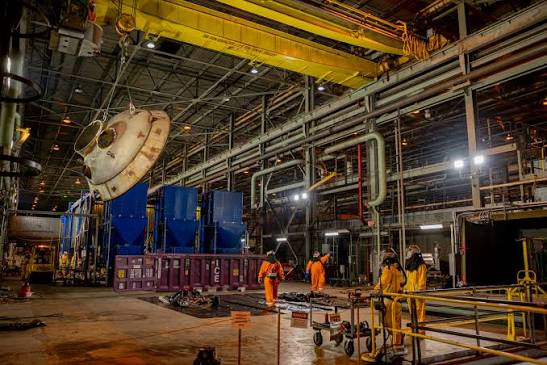
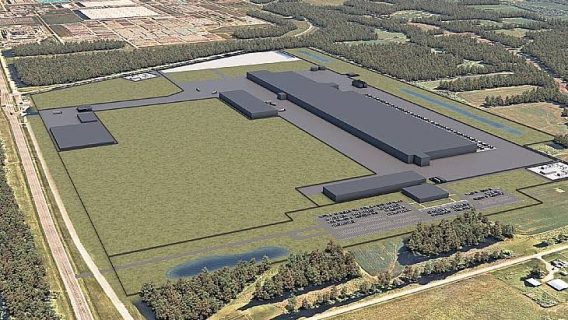
DOE cleanup crews are clearing the historic Paducah site for General Matter’s $1.5 billion Paducah uranium enrichment plant. The Office of Environmental Management in the Department of Energy is closing the gaseous diffusion complex that ceased enriching uranium in 2013. In addition, its efforts paved the way for the new facility on a leased 100-acre site.
The investment was announced in August 2025 and a multi-decade lease was signed with DOE for 100 acres. In addition, Gov. Andy Beshear said the agreement was “a significant milestone in a very ambitious project. The company expects up to 200 permanent jobs. Furthermore, it will create almost 1,000 construction positions during the construction process.
Other Projects
Oklahoma communities are pitching the $50 billion Nuclear Lifecycle Innovation Campus to the federal government. The Department of Energy is considering which city to host, and five cities are actively courting the site. In addition, the agency will choose three states by the end of 2026. Oklahoma is one of five states that advanced from 28 submissions from 26 states. Nick Archer is the chairman of the Oklahoma House Energy Committee. He sees the hunt as a once-in-a-lifetime economic opportunity. It’s a huge economic opportunity in the state of Oklahoma,” Archer said. The award is still pending, and state officials expect to hear a decision in the next few weeks.
Scope of the Paducah uranium enrichment plant
The economics carry national weight. The company states that the United States used to supply 86 percent of the world’s enriched uranium. It notes that domestic production is now below 1 percent. New capacity thus fills a strategic void in the nuclear fuel supply chain. As per the company’s announcement in 2025, the company plans to start enrichment at the facility by the end of the decade.
The DOE agreement also converts liabilities into fuel. The lease agreement provides General Matter with cylinders of depleted uranium hexafluoride from previous enrichment activities. In addition, the cylinders are from the remaining inventory of 40,000 DUF6 cylinders at the site, according to DOE. A joint contract with Global Laser Enrichment makes the same supply available to both firms. The company said it wants to make the U.S. globally competitive to scale, with a target of making nuclear energy cost competitive with other baseload sources.
Outlook for the Paducah site transition
The workforce spans both eras. Brad Pond has been with Paducah since the early 1990s. He helped keep the gaseous diffusion plant running, and now he leads dismantling work inside the C-333 process building. So it was only natural that the technology would outperform us from a gaseous diffusion perspective,” Pond said. Now it’s time to turn off everything and take it down, and let our new technologies do the work that we used to do.
Site preparation is already evident. As the demolition program continues, crews have taken equipment out of the former process buildings. Recently, Assistant Secretary Tim Walsh visited C-333, and DOE sees cleanup as the key to reuse. “This is a critical asset for America,” said a DOE official in the report, “and being able to turn that back over to productive use for the community is what’s really exciting.”
The multi-decade horizon shapes the company’s calculus. “We know this is going to be a multi-decade facility. We wanted to choose a community that appreciated that and could provide that workforce,” General Matter said. In the meantime, the regional effect is profound. The DOE and local officials estimate that the annual regional economic benefits exceed $70 million. In addition, the federal report includes about 140 full-time positions, which is less than the company’s estimate of up to 200. Finally, the timeline is from demolition to construction on leased land to enrichment by the end of the decade. Then, the enrichment legacy continues on clean ground, driven by the cleanup that made it possible.

Leave a Reply