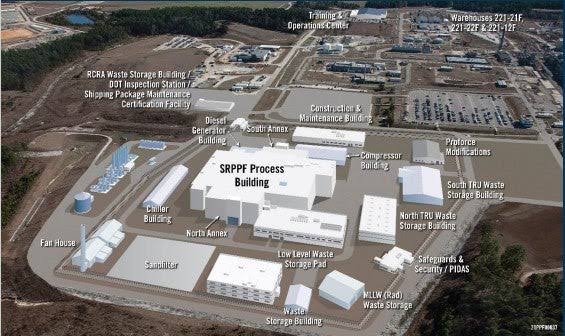
The Savannah River plutonium plant secured a $23.5 billion cost baseline and a December 2038 completion date. The US Department of Energy approved the baseline and gave full construction approval on Oct. 15. In addition, the National Nuclear Security Administration confirmed the $23.5-billion amount. Meanwhile, the project turns the unfinished shell of the abandoned MOX megaproject into a plutonium-pit production plant.
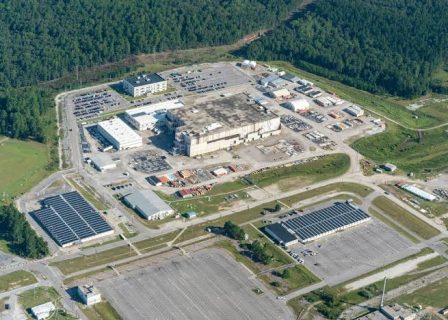
The approved baseline includes the Main Process Building, which is a modification to the approximately 400,000-square-foot former MOX structure. In addition, the Savannah River Plutonium Processing Facility is designed to manufacture at least 50 plutonium pits annually. The fissile cores of nuclear weapons are made of pits. The entire complex also covers approximately 160 acres with auxiliary facilities. NNSA anticipates over 3,000 more workers at peak construction.
The conversion has a troubled history. MOX construction started in 2007 and was originally scheduled to be completed in 2016. In 2018, DOE ended the contract when it forsook that milestone. Furthermore, the cost of completing MOX as-designed was estimated to be nearly $17.2 billion through 2048. The agency then switched the site to pit production.
Other Projects
Rural residents are fighting the $1.2 billion Gopher to Badger transmission line in southeast Minnesota. The citizens group NO765MN has stepped up town hall meetings along the way. In addition, the 765-kilovolt project is supported by Xcel Energy and Dairyland Power Cooperative. The Minnesota Public Utilities Commission has not yet given its approval to the line. The project forms part of a wider grid push. In 2024, the Midwest Independent System Operator approved a $22 billion plan. It includes 24 projects in nine states, including Minnesota. In addition, the southeast Minnesota route, the MariBell Segment, is a line from South Dakota to Wisconsin.
Scope of the Savannah River plutonium plant project
The execution strategy is a compromise between schedule risk and speed. The project’s performance baseline was set at 60% design maturity, instead of the 90% that is typically required by DOE. Furthermore, the department acknowledged the change “introduces more risk to project execution from potential late design changes causing rework and the potential for design interface issues.” Procurement and selected construction progressed, with design ongoing.
By 2023, NNSA have divided the larger project into six projects. In October 2024, the work was then streamlined into three. Furthermore, three of the project scopes were moved from the Project Building to the Main Process Building during that restructuring. NNSA then authorized 10 early procurement and site-preparation packages totaling about $3.1 billion, per GAO. The packages provided temporary utilities, wall-section demolition, removal of old equipment, procurement of glovebox and bulk materials. But GAO noted that some packages were delayed due to late arrival of design packages. The watchdog also identified issues with hiring and contractor performance.
Progress accelerated regardless. As of June 2025, Fluor had issued 243 of 320 planned glovebox fabrication subcontracts, per GAO. In September 2026, NNSA told prospective contractors it anticipated 90% design drawings by Sept. 30. “NNSA completed the final design for the Savannah River Plutonium Processing Facility’s Main Process Building before receiving Critical Decision 2/3 approval on Oct. 15,” an agency spokesperson told ENR by email. Meanwhile, site crews have already stripped the MOX shell of HVAC ducts, piping, conduits, pumps, tanks, gloveboxes and wall coatings.
Outlook for the Savannah River pit production buildout
The economics show the acceleration’s price. The approved $23.5 billion is more than double the high end of DOE’s 2021 preliminary range. The previous range was $6.9 billion to $11.1 billion. In addition, the building was projected to cost over $22 billion in the fiscal 2026 budget documents and be completed by September 2035. This means that the December 2038 goal is over three years further out than that forecast. GAO blamed scope changes, hiring struggles and contractor performance for the increase.
The funding structure now has more clear incentives. The Main Process Building is a rare building. It is a stand-alone contract line item, according to a September GAO report. In addition, it has a cost-plus-award-fee contract, which means that fees are directly linked to project results. Pooled evaluation obscures problems, NNSA officials told GAO. “Poor performance in one area tends to be obscured by good performance in other areas. However, GAO warns that incentives are not a sure path to cost and schedule success.
The broader portfolio puts pressure. The total overruns for 16 major NNSA projects in execution were approximately $4.8 billion. In addition, the efforts had 30 years of cumulative delays as of June 2025. In the end, the Oct. 15 authorization will allow for construction to proceed on additional MOX repurposing, underground utilities and supporting infrastructure. After that, the 2038 deadline applies to all that follows, and the finish line is pit production.

Leave a Reply