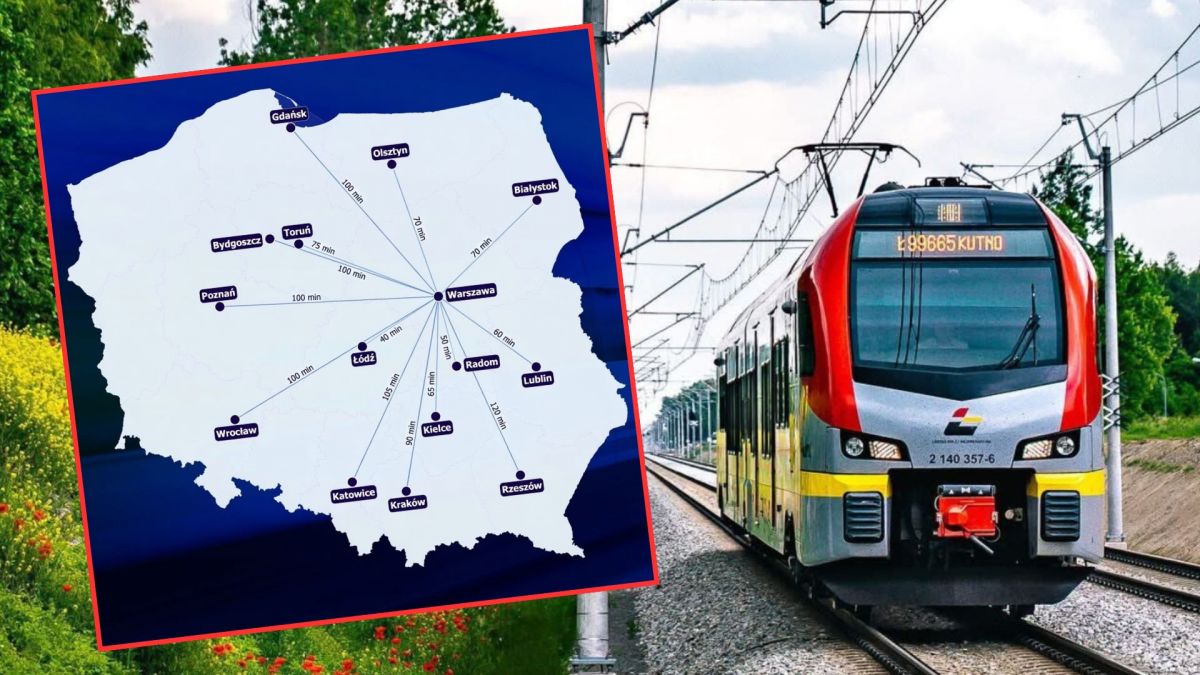
Poland railways revamp begins with a €140 billion integrated national transformation of rail infrastructure. The country plans to build and modernize over 10,000 kilometers of railway lines across the country. Moreover, the program combines new high-speed corridors with deep modernization of legacy routes. According to TVP World reporting, the initiative anchors Poland’s long-term transport strategy under the Port Polska framework. Consequently, authorities expect stronger regional connectivity and faster national mobility.
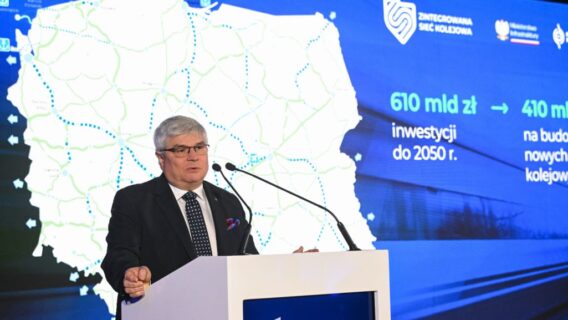
The Integrated Railway Network (ZSK) forms the core delivery mechanism for this transformation. Additionally, officials presented the program during a government press conference in Warsaw. The plan includes 4,700 kilometers of new rail lines and 5,600 kilometers of upgrades. Furthermore, designers allocate major capacity to high-speed rail development and freight efficiency. However, execution depends on phased financing and coordinated institutional delivery. Therefore, planners align rail investment with airport and road integration goals.
Poland railways revamp delivers 10,000km integrated rail expansion
Poland railways revamp delivers one of Europe’s largest rail expansion program. Moreover, it reshapes national mobility by linking underserved regions to major urban centers. The plan prioritizes balanced territorial development across counties. Additionally, it integrates local bus feeder systems with rail nodes. Consequently, transport exclusion reduces significantly in rural and peripheral regions.
The program allocates €97 billion for new line construction and €46 billion for upgrades. Furthermore, PKP Polskie Linie Kolejowe manages infrastructure works alongside national partners. The design includes dual-use corridors supporting civil and strategic mobility. Meanwhile, construction sequencing ensures continuity of existing rail services. As a result, disruption remains controlled during long-term execution.
Poland railways revamp accelerates high-speed corridors and travel time cuts
Poland railways revamp project accelerates high-speed rail deployment across key national corridors. Moreover, it introduces 2,700 kilometers of lines designed for high-speed travel. The government targets dramatic travel time reductions under the “Poland in 100 minutes” initiative. Additionally, planners aim to connect major cities within approximately one hour and forty minutes.
Furthermore, the “Poland in three hours” concept strengthens east–west and north–south connectivity. Consequently, journey times across the national grid fall significantly. Officials also expect passenger demand to increase sharply. Piotr Malepszak noted forecasts reaching 720 million rail passengers by 2050, compared with 439 million in 2025. Therefore, the system prepares for a 64 percent rise in usage.
Port Polska integration and national connectivity transformation
Port Polska integration drives the wider strategic purpose of the rail program. Moreover, the network connects directly to a new mega-airport planned west of Warsaw. The airport is expected to open in 2032 and serve as a central mobility hub. Additionally, the rail system ensures seamless access from all regions of Poland.
The development links aviation, rail, and road infrastructure into a unified transport ecosystem. Furthermore, planners schedule the first 1,000 kilometers of new rail for completion by 2035. However, later phases continue beyond that timeline. Consequently, Poland builds a long-term transport architecture extending into mid-century planning horizons. The system also strengthens national resilience through dual-use infrastructure planning.
Poland railways revamp project aligns closely with broader European rail integration efforts, particularly the Rail Baltica high-speed corridor. Moreover, both initiatives strengthen east–west connectivity under the EU’s TEN-T transport framework. Rail Baltica connects Estonia, Latvia, Lithuania, and Poland through a continuous standard-gauge rail link.
Additionally, it aims to integrate Warsaw into a wider European high-speed rail network. Similarly, Poland’s Integrated Railway Network (ZSK) expands national capacity through over 10,000 kilometres of upgrades and new lines. Consequently, both projects reinforce Poland’s role as a central hub in continental rail mobility. Furthermore, they support freight efficiency, passenger growth, and military logistics across Central and Northern Europe.
Project Fact Sheet
Project Name: Integrated Railway Network (ZSK) under Port Polska program
Location: Nationwide, Poland
Total Investment: €143 billion (~$151 billion)
Scope: 10,000+ km rail development (4,700 km new, 5,600 km modernized)
High-Speed Rail: 2,700 km dedicated high-speed corridors
Strategic Link: Port Polska transport hub and new Warsaw airport (2032)
Travel Targets: “Poland in 100 minutes” and “Poland in three hours” concepts
Passenger Forecast: 720 million by 2050 (up from 439 million in 2025)
Delivery Timeline: First 1,000 km by 2035, full rollout to 2050
Funding Structure: €97 billion new builds, €46 billion upgrades
Project Team
Project Owner / National Sponsor: Government of Poland
Lead Transport Authority / Programme Director: Ministry of Infrastructure (Poland)
Integrated Transport Hub Developer: Port Polska Programme Authority
Rail Infrastructure Manager / Network Operator: PKP Polskie Linie Kolejowe
Urban & Regional Coordination Bodies: Regional and county transport authorities
Financial Partners / Co-Funders: European Union institutions and European Investment Bank (EIB)
Engineering, Procurement & Construction (EPC) Contractors: International and domestic construction consortiums


Leave a Reply