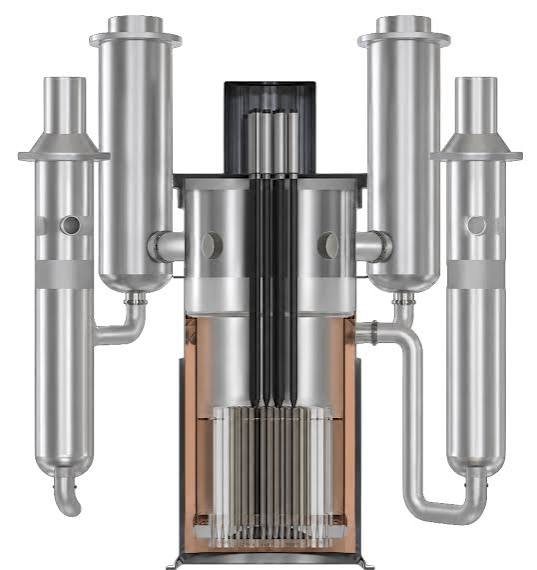
The EAGL-1 nuclear reactor project in Indiana is advancing through US regulatory engagement as First American Nuclear Co. (FANCO) develops plans for a 240-megawatt advanced reactor and integrated nuclear fuel facilities.
The proposed $4 billion development combines reactor deployment, fuel fabrication and recycling infrastructure, positioning it as a broader nuclear construction program rather than a standalone power plant.
Meanwhile, Indiana’s separate evaluation of up to 6 GW of CANDU nuclear capacity highlights growing interest in large-scale nuclear construction across the state.
FANCO submitted its Regulatory Engagement Plan to the US Nuclear Regulatory Commission (NRC) in April 2026, opening pre-application discussions for its lead-bismuth-cooled, fast-spectrum small modular reactor. The process allows the developer and regulator to discuss technical and licensing requirements before a formal construction permit application.
The regulatory milestone does not authorize construction. FANCO must continue developing the design, addressing safety requirements and completing the necessary licensing steps before the reactor can proceed to construction.
The regulatory milestone matters because EAGL-1 uses an uncommon reactor architecture. It combines fast-spectrum operation with liquid lead-bismuth cooling. FANCO describes it as the only US reactor using this cooling technology. Another major project advancing is the $1 billion nuclear fusion research facility in Albuquerque, New Mexico. The California-headquartered company will house its Demonstration System at the Mesa del Sol site. The ambitious Pacific Fusion New Mexico facility targets net facility gain by 2030, producing more energy than initially stored. Meanwhile, this marks a critical milestone toward commercial fusion power deployment in the United States.
EAGL-1 Nuclear Reactor Project Advances Regulatory and Construction Planning
The EAGL-1 design targets 240 MW of electrical output and 600 MW of thermal capacity per reactor. FANCO has proposed multi-reactor clusters, with a six-unit configuration potentially delivering approximately 1.44 GW of electrical capacity.
The reactor uses a liquid lead-bismuth eutectic alloy as its primary coolant. This technology supports operation at relatively low pressure, although developers must address corrosion, coolant management and radioactive polonium production.
Furthermore, the proposed modular construction strategy aims to manufacture and test reactor components before delivery to project sites. This approach could reduce the amount of complex assembly required on site and support repeatable deployment.
FANCO also plans integrated fuel-cycle infrastructure alongside its reactor program. The wider development includes facilities for fuel fabrication and recycling, although these facilities will require their own technical development and regulatory approvals.
The company has identified 2033 as its target for initial electricity delivery. However, that target remains dependent on licensing, design development, financing, construction planning and other project milestones.
EAGL-1 Nuclear Reactor Project Adds Fuel Infrastructure and Construction Partners
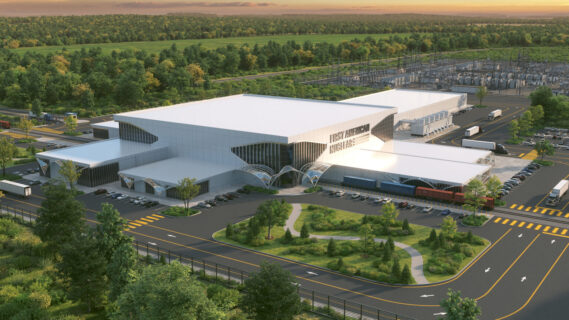
The Indiana development extends beyond reactor construction. FANCO plans to integrate fuel manufacturing and recycling facilities to support EAGL-1 and potentially other advanced reactor customers.
The fuel fabrication program includes processing high-assay low-enriched uranium and manufacturing reactor fuel. FANCO has pursued separate regulatory engagement for a proposed fuel facility, which would require its own licensing pathway.
AtkinsRéalis is supporting the project through an engineering, procurement and construction management alliance with FANCO. The partnership covers reactor deployment and associated fuel-cycle facilities across North America.
Hyundai Engineering & Construction has also signed a framework agreement with FANCO. Its initial work includes balance-of-plant design, constructability reviews and modularization planning, while the companies explore a possible future engineering, procurement and construction role.
These partnerships could help establish a coordinated delivery model. Nevertheless, the final construction scope, financing arrangements and project schedule remain subject to further development.
Indiana’s Expanding Nuclear Construction Pipeline
EAGL-1 is not the only nuclear development under consideration in Indiana. On October 19, 2026, AtkinsRéalis, the State of Indiana and Hoosier Energy Rural Electric Cooperative signed a memorandum of understanding to evaluate a potential campus of up to eight CANDU reactors.
That separate proposal could deliver up to 6 GW of nuclear baseload power. The partners will assess potential sites, financing, utility agreements, licensing requirements and transmission infrastructure before making any construction decision.
The two developments use different reactor technologies and have distinct development arrangements. EAGL-1 centers on a 240 MW lead-bismuth-cooled reactor and integrated fuel-cycle facilities, while the CANDU initiative evaluates a much larger multi-reactor campus.
Both remain subject to regulatory and commercial milestones. Their progress illustrates the range of nuclear construction concepts being considered as Indiana evaluates options for future electricity demand.
EAGL-1 nuclear reactor project advances toward construction
EAGL-1 will generate 240 MW of electricity and 600 MW of thermal power. A standard six-reactor cluster could therefore deliver about 1.44 GW. FANCO says such a cluster could power approximately 1.5 million homes.
Moreover, the design targets a footprint about one-tenth that of conventional nuclear sites with comparable output. This compact configuration could support deployment near industrial customers and existing power infrastructure.
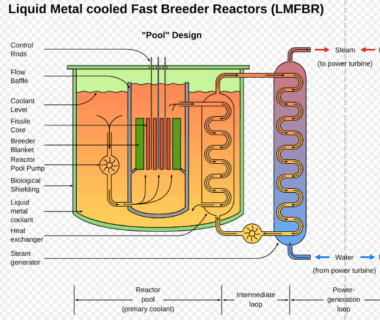
The reactor uses lead-bismuth eutectic as its primary coolant. Unlike sodium, the coolant does not react violently with air or water. Consequently, the design can operate at low pressure and avoid some complex intermediate systems.
However, lead-bismuth technology presents engineering challenges. Developers must address corrosion and radioactive polonium management during operation. These issues will remain important considerations throughout regulatory review and detailed design.
The regulatory plan does not represent a construction permit. Instead, it establishes a structured pathway for technical discussions and future regulatory submissions. FANCO expects the process to support eventual licensing and construction of EAGL-1.
EAGL-1 nuclear reactor project integrates fuel facilities
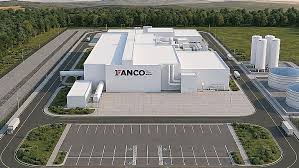
The EAGL-1 nuclear reactor project goes beyond power generation. FANCO plans integrated fuel fabrication and recycling facilities alongside the reactors. The arrangement would create a closed-fuel-cycle energy park.
The reactor can use uranium oxide, mixed-oxide, recycled uranium, and transuranic fuels. It can also operate with high-assay low-enriched uranium, providing additional fuel-supply flexibility.
FANCO designed the system to reprocess spent nuclear fuel and reuse valuable materials. The company says the approach could reduce long-lived nuclear waste by up to 95%.
Meanwhile, AtkinsRéalis will provide engineering, procurement, and construction management services. Its strategic alliance with FANCO covers EAGL-1 reactors, fuel fabrication, and recycling facilities across North America.
The 20-year alliance includes up to $250m in services during its first five years. AtkinsRéalis will also support testing, design reviews, and licensing validation.
Hyundai Engineering & Construction has also entered the project through a framework agreement with FANCO. Its initial scope covers balance-of-plant design, constructability reviews, and modularization strategies.
The companies will also explore Hyundai E&C’s future EPC role. This could strengthen the project’s construction delivery model as regulatory work advances.
FANCO targets initial power delivery by 2033. The company also plans its proprietary Bridge Power solution for customers requiring earlier electricity. That system initially uses gas-fired package boilers before transitioning to EAGL-1.
The project represents a different approach to advanced nuclear construction than Radiant’s transportable Kaleidos reactor. While EAGL-1 advances through US Nuclear Regulatory Commission engagement, the Kaleidos project is moving toward physical testing at Idaho National Laboratory.
The contrast highlights two emerging construction models: larger modular reactors supported by integrated fuel facilities, and factory-built microreactors designed for transportation to deployment sites. The Kaleidos project’s 1,000-mile journey to Idaho will test whether its modular construction concept can translate into practical deployment.
Project Fact Sheet
Name: EAGL-1 Small Modular Reactor.
Type: Generation IV fast-spectrum small modular reactor.
Focus: EAGL-1 nuclear reactor project.
Location: Indiana, United States, with the first deployment under development.
Proposed investment: Approximately $4bn for the wider Indiana development.
Electrical capacity: 240 MW per reactor.
Thermal capacity: 600 MW per reactor.
Cluster configuration: Six reactors.
Potential cluster capacity: Approximately 1,440 MW.
Reactor technology: Liquid-metal fast reactor.
Coolant: Lead-bismuth eutectic.
Fuel flexibility: UO2, MOX, TRU, recycled uranium, and HALEU.
Fuel-cycle model: Closed-cycle fuel recycling.
Waste strategy: Up to 95% reduction in long-lived nuclear waste, according to FANCO.
Manufacturing strategy: Factory-built and tested reactor modules.
Regulatory status: NRC pre-application engagement.
Regulatory submission: Regulatory Engagement Plan submitted in April 2026.
Target power delivery: 2033.
Supporting system: Bridge Power gas-to-nuclear transition solution.
Wider development: Nuclear manufacturing, reactor deployment, and integrated fuel facilities.
Project Team
Developer: First American Nuclear Co. (FANCO), developer of EAGL-1 and the associated deployment system.
Nuclear regulator: US Nuclear Regulatory Commission, overseeing the federal regulatory pathway.
EPCM partner: AtkinsRéalis, serving as exclusive EPCM provider for EAGL-1 projects in North America.
Construction partner: Hyundai Engineering & Construction, supporting early design, constructability, modularization, and potential future EPC delivery.
Indiana development partner: State of Indiana, working with FANCO on the planned nuclear energy park.
Fuel infrastructure: FANCO and AtkinsRéalis, developing integrated fabrication and recycling facilities.
Technology team: FANCO’s nuclear engineering and fuel specialists, supporting reactor design, licensing, and fuel-cycle development.
Future delivery structure: FANCO, AtkinsRéalis, and potential EPC partners will develop the construction framework as licensing progresses.
Leave a Reply