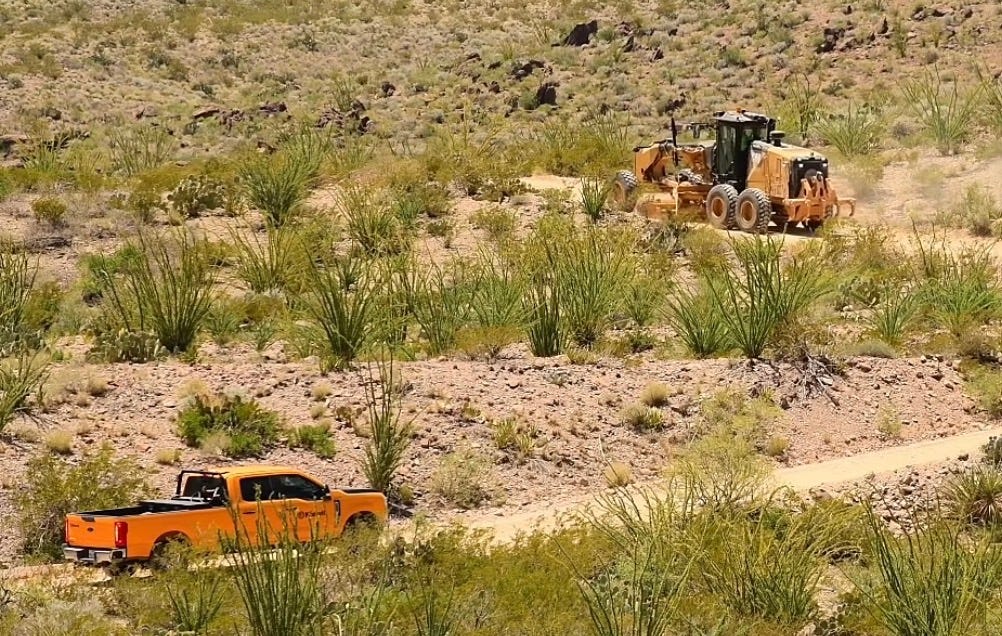
Federal work on the $1.7bn Big Bend Border project is has commenced in the Big Bend National Park. Currently, equipment is officially mobilizing inside the national park in southwest Texas. U.S. Customs and Southwest Valley Constructors are jointly coordinating early phases. Moreover, this ongoing mobilization acts as an opportunity to secure the region. The proposed border project site spans rugged Big Bend National Park. Moreover, it is planned as a low-profile, strategic security route. It will also host 17 miles of barriers and 205 miles of roads. The Department of Homeland Security first revealed details earlier this year. Recently, crews began soil assessments to determine proper excavation depths. The development also aims to establish essential detection technology. The administration of U.S. President Joe Biden approved the construction of the border barrier in an area where officials had reported increased numbers of border crossings. The The U.S-Mexico border wall is being funded through congressional allocations originally designated for border barrier construction in the Rio Grande Valley.
Outlook on the Big Bend Border Project
The outlook for the Big Bend Border project remains highly contentious. This is according to U.S. Customs and Border Protection insights. Following current soil assessments, the agency plans to initiate formal construction. The contractor is also scheduled to deploy alternating steel rail barriers. This massive project covers an area larger than Rhode Island. Therefore, it demands significant upgrades to functional patrol roads. The development presses forward after officials waived numerous environmental laws. Despite pushback, authorities state the integration of technology will proceed.
Waivers and Growing Community Opposition
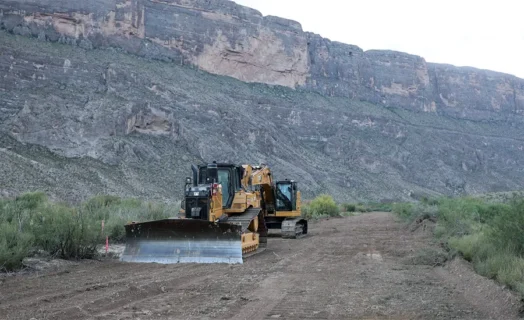
The project implementation has sparked intense opposition from local conservationists. Specifically, the government bypassed critical federal procurement and environmental regulations. The Department of Homeland Security legally invoked Section 102. This action bypassed the National Historic Preservation Act and NEPA. Consequently, local businesses urged lawmakers to abandon physical barriers entirely. They strongly prefer utilizing an all-technology approach instead. The Center for Biological Diversity quickly launched a federal lawsuit. They are challenging the constitutionality of bulldozing a national park. Advocates argue waiving these environmental laws is completely unconstitutional. However, Customs and Border Protection maintains they will coordinate designs. Ultimately, public access to the Rio Grande will remain protected.
Project Overview
- Project Value: $1.72 Billion
- Location: Big Bend National Park, Texas
- Developer: U.S. Customs & Southwest Valley Constructors
- Status: Soil assessments and mobilization underway
Scope
- 17 miles of low-profile vehicle barriers
- Improvement of 205 miles of patrol roads
- Integration of advanced border detection technology
- Up to 24-foot wide all-weather roads
Project Highlights
- Over $1.7B federal border infrastructure contract
- Combines technology with natural terrain obstacles
- Replaces bollards with 4-to-6-foot steel rails
- Waives standard federal rules to expedite work
Key Developments
- Equipment mobilized near Cottonwood Campground
- DHS invoked Section 102 to waive NEPA
- Soil assessments are currently determining excavation depths
- Conservation groups launched a federal lawsuit
Key Challenges
- Strong opposition from businesses and conservation groups
- Managing construction across extremely rugged mountain terrain
- Protecting 1,000-year-old Indigenous cultural sites
- Balancing strict security with National Park preservation
Outlook
- Project awaits formal start of full construction
- Federal court battles over waivers will continue
- Road design coordination with park officials remains ongoing
- Public access to park trails will be maintained

Leave a Reply