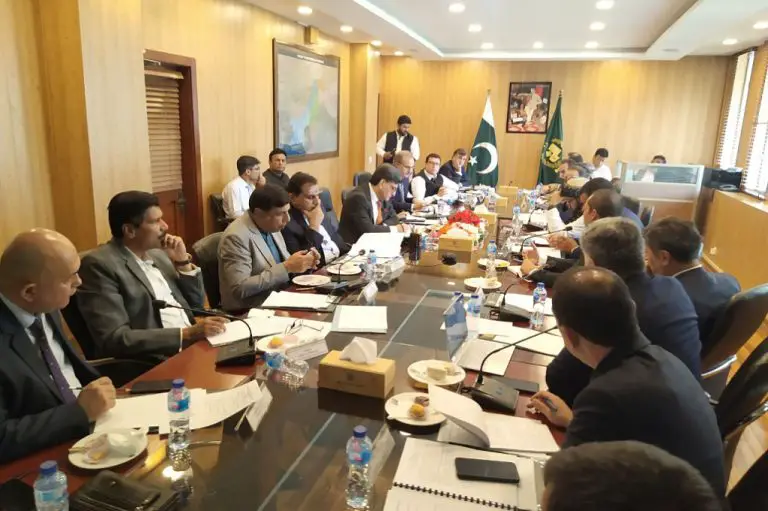
Trans-Afghan railway project has entered a new development phase as Uzbekistan and Pakistan accelerate preparations for its feasibility study. The proposed railway would connect Central Asia with Pakistan through Afghanistan. Recent developments have shifted the project beyond the negotiation stage reported in 2023. Uzbekistan approved the intergovernmental feasibility-study agreement in February 2026.
The railway would establish a new freight and passenger corridor between Uzbekistan and Pakistan. It would also provide Central Asian exporters with access to Pakistani seaports. The route forms part of wider efforts to strengthen transport links between Central and South Asia.
Trans-Afghan Railway Project moves into feasibility stage
Uzbekistan’s President Shavkat Mirziyoyev approved the feasibility-study agreement on February 11, 2026. The agreement involves the transport ministries of Uzbekistan, Afghanistan and Pakistan. It provides for technical and economic studies covering the proposed railway connection.
The latest planning focuses on a route from Naibabad in Afghanistan toward Kharlachi in Pakistan. The alignment differs from earlier proposals centered on Kabul and Peshawar. Uzbekistan’s approval formally cleared its internal procedures for advancing the joint study.
In July 2026, Uzbekistan and Pakistan discussed accelerating the feasibility study. Officials also agreed to organize an online session involving specialists from the participating countries.
Uzbekistan said it had completed organizational preparations for field surveys. The discussions therefore indicate movement toward practical technical investigations along the proposed corridor.
The three countries signed the framework agreement for the joint feasibility study in July 2025. That agreement established a formal basis for advancing the railway after years of preliminary discussions.
Trans-Afghan Railway Project targets regional connectivity
The railway could connect Uzbekistan’s existing network with Pakistan through Afghanistan. The proposed corridor would improve freight access toward Karachi, Port Qasim and Gwadar.
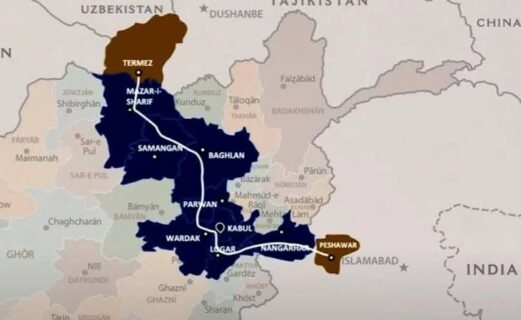
Pakistan’s Foreign Ministry identifies the project as a planned 760-kilometre railway connection. Earlier project plans described a Termez-Mazar-i-Sharif-Kabul-Peshawar corridor.
However, newer feasibility planning centers on the Naibabad-Kharlachi alignment. Therefore, final route characteristics remain subject to the ongoing technical and economic assessment.
The project also carries wider logistics implications for regional trade. Pakistan has promoted multimodal transport links connecting Central Asian markets with its seaports.
Meanwhile, Pakistan’s government has identified regional connectivity as an important infrastructure priority. Officials have called for stronger rail, road and maritime links with Central Asia.
The project’s financing requirements remain another major development issue. Earlier estimates placed the construction cost at approximately $5.96 billion. More recent reporting has cited a tentative cost of about $4.8 billion.
The differing estimates reflect the project’s continuing feasibility and route-development stages. A final investment cost should emerge after completion of the technical studies.
Rail construction gains wider regional significance
The Trans-Afghan Railway Project forms part of a broader expansion of cross-border rail infrastructure across Asia. Similar projects are seeking to improve freight movement, market access and regional integration.
Vietnam is also advancing major urban railway construction through international financing partnerships. The proposed Ho Chi Minh City-Long Thanh airport connection could receive substantial UK-backed financing.
The Trans-Afghan corridor nevertheless faces significant construction and implementation requirements. These include bridges, tunnels, communications systems, power infrastructure and border connectivity.
Our last report identified 774 kilometers and 1,212 associated facilities. Those facilities included five tunnels, 336 bridges, communications lines and power infrastructure.
Current developments show that the project remains under study rather than construction. The next major milestone will be completion of the joint feasibility process and subsequent financing decisions.
Read Also: ADB approves US $110m grant to boost power supply in Afghanistan
The Trans-Afghan Railway Project Negotiations
According to an official statement, ongoing negotiations held discussions highlighting several aspects of the Trans-Afghan Railway Project. These included construction and technical details, as well as methods of attracting financing. In addition to delivery and implementation deadlines.
At an estimate, the project cost stands at $5.96 billion. it will potentially boost regional trilateral trade by creating access to Pakistan’s major seaports. Beyond transport efficiency elevation, the Trans-Afghan Railway Project is also highlighted to strengthen economic and political ties between the three countries.
Along the Termez-Mazar-I-Sharif-Kabul-Peshawar route, the railway line length will stretch 774 kilometers. News outlets further report that the project will feature 1,212 facilities in total. These will include without limitation to 5 tunnels and 336 bridges. Additionally, the mega-development will also feature 790 kilometers of communication lines as well as 785 kilometers of power lines.
Board of Investment (BOI) Chairman and Minister of State noted that the railway development project impressively connects Central Asia with Pakistani ports including, Qasim, Karachi, and Gwadar. Muhammad Azfar Ahsan also added that the Trans-Afghan Railway Project serves as the most shortest and economical route in the region.
Project Fact Sheet
Project: Trans-Afghan Railway Project.
Type: Cross-border freight and passenger railway.
Participating countries: Uzbekistan, Afghanistan and Pakistan.
Proposed route: Uzbekistan through Afghanistan to Pakistan.
Current planning route: Naibabad to Kharlachi.
Earlier corridor: Termez-Mazar-i-Sharif-Kabul-Peshawar.
Estimated cost: Approximately $4.8 billion in recent estimates.
Earlier estimate: Approximately $5.96 billion.
Railway length: Earlier project planning cited approximately 774 kilometers.
Pakistan connectivity: Proposed access toward Pakistan’s major seaports.
Feasibility stage: Joint technical and economic study.
Latest milestone: Uzbekistan approved the feasibility-study agreement in February 2026.
Field surveys: Uzbekistan reported organizational preparations for field surveys in July 2026.
Associated infrastructure: Bridges, tunnels, communications and power systems.
Construction status: Construction has not yet commenced.
Strategic purpose: Improve freight connectivity between Central and South Asia.
Project Team
Lead country: Uzbekistan is coordinating significant elements of the project’s development process.
Afghan counterpart: Afghanistan’s Ministry of Public Works participates in the trilateral feasibility framework.
Pakistani counterpart: Pakistan’s Ministry of Railways participates in the joint railway development process.
Uzbekistan authority: Uzbekistan’s Ministry of Transport is responsible for implementing its side of the feasibility agreement.
Coordination office: A joint project coordination office operates in Tashkent under Uzbekistan Railways.
Technical specialists: Experts from the three participating countries will support the feasibility and field-survey process.
Financing stakeholders: Potential investors and financing institutions will assess the project after technical studies establish its requirements.



Leave a Reply