A Bitcoin treasury built through years of cryptocurrency mining is now being converted into physical AI infrastructure. Hyperscale Data is selling a portion of its Bitcoin holdings while borrowing against the remainder to accelerate construction of its Michigan AI campus, using the proceeds to fund infrastructure and long-lead equipment without issuing additional shares.
The financing supports work tied to a recently finalized 10-year master services agreement (MSA) with an unnamed “leading neo-cloud AI infrastructure provider.” The contract could generate more than $1.2 billion over its initial term and exceed $3.0 billion if the customer exercises an option to expand compute capacity within the first two years.
What Was Announced
Hyperscale Data said it has:
- Sold approximately 100 Bitcoin, with proceeds directed toward construction of the Michigan campus.
- Established a Bitcoin-backed credit facility by pledging part of its remaining Bitcoin holdings as collateral at variable interest rates of approximately 4.5% to 5.0%.
- Retained the majority of its Bitcoin treasury, which Executive Chairman Milton “Todd” Ault III said was valued at approximately $71 million in the company’s latest disclosure.
Chief Executive Officer William Horne described the move as a balance sheet reallocation rather than a retreat from Bitcoin ownership, saying the company is exchanging one asset class for another in order to build infrastructure expected to generate long-term contracted revenue.
Financing Construction Instead of Diluting Shareholders
Rather than raising capital through another equity offering, Hyperscale Data is using digital assets accumulated through years of Bitcoin mining to finance construction. The combination of a limited Bitcoin sale and a collateralized loan allows the company to inject capital into the project while preserving most of its cryptocurrency holdings.
The strategy is particularly notable because the Bitcoin treasury originated from mining operations at subsidiary Sentinum, Inc., effectively allowing the company to recycle value created by one business into another. Instead of treating Bitcoin solely as a treasury reserve, Hyperscale Data is deploying it as a financing tool for an AI infrastructure business expected to generate recurring contractual revenue once operational.
Michigan Campus Continues to Expand
The financing announcement builds on a series of expansion milestones announced throughout 2026.
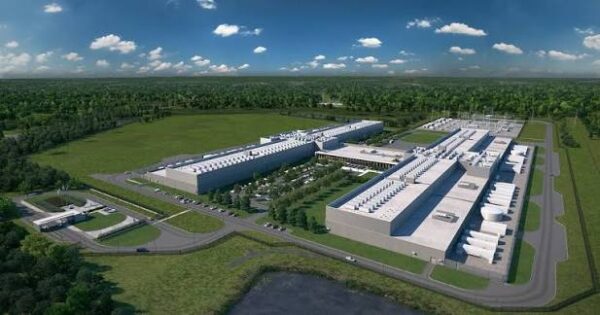
In June, Hyperscale Data more than doubled the Southwest Michigan campus to approximately 83 acres through a 48.5-acre land acquisition. The company also established a dedicated $120 million Michigan AI development reserve to fund electrical infrastructure, cooling systems and networking equipment required for future expansion.
Hyperscale Data plans to expand the campus in phases. The site currently has approximately 30 MW of available power, with another 40 MW scheduled to come online by the second quarter of 2027. The company ultimately aims to increase capacity to 340 MW by 2029.
Hyperscale Data first disclosed the MSA during advanced negotiations in June before finalizing the agreement. The contract commits the customer to an initial 20 MW deployment and includes an option to expand by another 32 MW, making it one of the largest revenue commitments secured for the Michigan campus to date.
Understanding the Bitcoin-Backed Credit Facility
A Bitcoin-backed, or Bitcoin-collateralized, credit facility allows a company to borrow cash by pledging Bitcoin it already owns rather than selling the asset outright. The borrower retains exposure to future price appreciation while avoiding the immediate realization of gains or losses that would accompany a sale.
The approach, however, is not without risk. Because cryptocurrency prices can fluctuate sharply, lenders typically impose loan-to-value limits and may require additional collateral—or liquidate pledged Bitcoin—if market values fall below agreed thresholds. For companies willing to accept that volatility, the structure provides access to construction capital without issuing new shares or relying entirely on conventional debt.
A Different Way to Finance AI Infrastructure
AI data centers require significant upfront investment in land, power infrastructure, cooling systems and specialized equipment long before they begin generating revenue. Developers typically finance those projects through a combination of equity, traditional debt and strategic partnerships.
Hyperscale Data is adding another financing model to that list by leveraging a digital asset treasury accumulated through mining operations. While the company is monetizing only a small portion of its Bitcoin holdings, it is also using the remainder as collateral to unlock additional liquidity, allowing construction to proceed while maintaining exposure to future Bitcoin price appreciation.
Whether the strategy ultimately succeeds will depend less on cryptocurrency prices than on project execution. Delivering the initial 20 MW deployment, securing the optional 32 MW expansion and controlling construction costs as the campus grows toward its planned 340 MW capacity will determine whether today’s financing translates into long-term infrastructure revenue.
The financing strategy also reflects a broader shift across the AI infrastructure sector, where developers are increasingly repurposing existing assets to accelerate data center construction. NorthPoint Development’s redevelopment of Keystone Trade Center in Falls Township, Pennsylvania, illustrates the same trend from a real estate perspective, transforming a 247-acre logistics site into a planned 2 million-square-foot, 10-building data center campus after securing a new end-user agreement. While NorthPoint is redeploying industrial land and Hyperscale Data is leveraging digital assets, both underscore how capital and property are being redirected to meet rapidly growing demand for AI computing infrastructure.
Hyperscale Data Michigan AI Campus (Sentinum Facility) — Fact Sheet
- Location: Southwest Michigan (approximately 83 acres following a 48.5-acre land acquisition completed in June 2026)
- Existing facility: 617,000 square feet
- Current power capacity: Approximately 30 MW
- Next expansion: Additional 40 MW targeted by Q2 2027
- Long-term capacity: 340 MW by Q3 2029
- Anchor agreement: 10-year MSA with an unnamed neo-cloud AI infrastructure provider, plus two optional five-year extensions
- Initial deployment: 20 MW with an option for an additional 32 MW
- Potential contract value: More than $1.2 billion over the initial term, increasing to more than $3.0 billion if the customer exercises the expansion option within the first two years.
- Latest financing: Sale of approximately 100 Bitcoin and a Bitcoin-backed credit facility carrying variable interest rates of roughly 4.5% to 5.0%
- Dedicated reserve: Approximately $120 million Michigan AI development reserve established in June 2026


Leave a Reply