Huawei 3D data center represents a new construction model for artificial intelligence infrastructure, using vertical stacking to support ultra-dense computing.
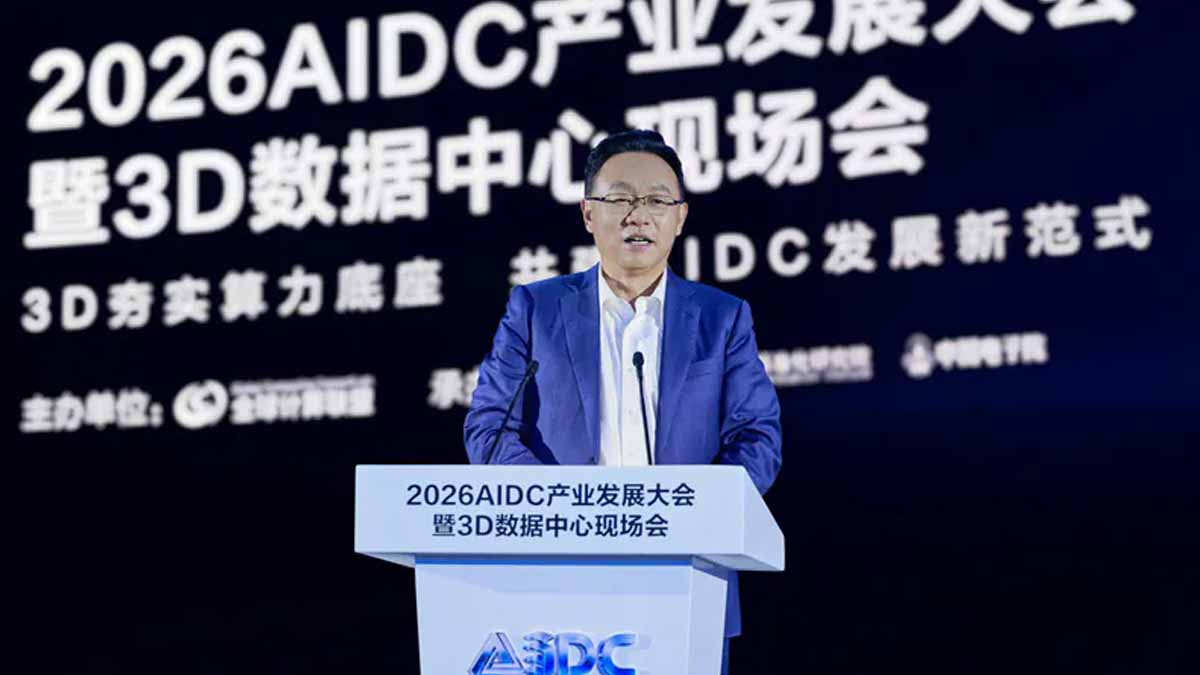
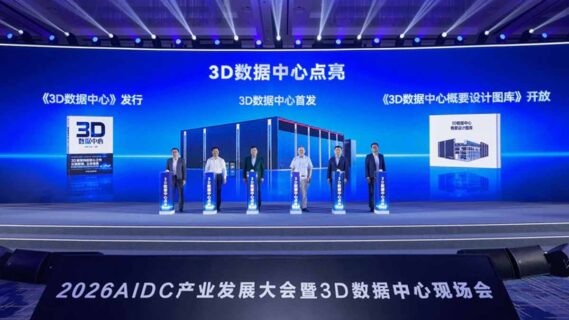
The facility debuted in Wuhu, Anhui, during the 2026 AIDC Industry Development Conference. Huawei says the architecture can support Ascend super node clusters exceeding 100,000 cards. The facility can support up to 168MW within a single building, according to Huawei.
Huawei 3D Data Center Introduces Four-Layer Construction
The data center replaces conventional horizontal layouts with a vertically stacked infrastructure model. The design separates cooling, computing, power and backup systems across dedicated layers.
The cooling layer occupies the lowest section of the four-layer arrangement. Above it, the IT equipment layer houses high-density computing infrastructure.
The third level contains power supply systems, while backup power occupies the uppermost section. Huawei also places battery systems on the roof.
This configuration separates critical infrastructure physically while shortening connections between computing, cooling and power systems. Huawei says the approach improves reliability and limits fault propagation between zones.
Moreover, vertical power and cooling routes reduce infrastructure distances inside the facility. The approach also supports modular construction and standardized deployment for future AI computing projects.
Huawei 3D Data Center Targets 100,000-Card AI Clusters
The Huawei 3D data center targets the rapid growth of large-scale AI models and their associated computing requirements. Huawei Deputy Chairman and Rotating Chairman Wang Tao said demand for trillion-parameter models continues to increase.
He said clusters exceeding 100,000 Ascend cards could become a basic configuration for future AI infrastructure. The architecture therefore provides a reference design for constructing large-scale supernode clusters.
The Wuhu facility forms part of Huawei Cloud’s wider 3D data-center deployment strategy. Huawei Cloud is also developing 3D data centers in Guizhou and Inner Mongolia.
Additionally, Huawei has opened its 3D Data Center Overview Design Library. The library covers architectural, structural, electrical, mechanical and other engineering disciplines.
The company says standardized drawings and room models can help industry partners reproduce the architecture. This could shift data-center delivery toward greater prefabrication and standardized construction.
Huawei’s architecture also addresses growing power and thermal requirements from AI computing. Cabinet power has already reached 100kW and 200kW in some high-density environments.
The 3D approach consequently integrates cooling and power infrastructure more closely with high-density computing areas. Huawei says the architecture can also accommodate different generations of AI chips.
For China’s expanding AI infrastructure, the Huawei 3D Data Center highlights the scale and engineering demands of next-generation computing facilities. Hong Kong is pursuing a similarly ambitious infrastructure push through its $3.2 billion Sandy Ridge data center project, which targets major AI computing capacity and requires substantial financing.
Also read: $35 Billion DeepSeek Data Center: Construction Planned for 1GW AI Infrastructure in Inner Mongolia
Project Fact Sheet
Project: Huawei 3D Data Center
Location: Wuhu, Anhui, China
Type: Artificial intelligence data center
Capacity target: More than 100,000 Ascend cards
Building power capacity: Up to 168MW per facility, according to Huawei
Architecture: Four-layer vertical data-center configuration
Cooling infrastructure: Dedicated cooling layer
Computing infrastructure: Dedicated IT equipment layer
Power infrastructure: Dedicated power supply layer
Backup systems: Roof-level backup power and battery systems
Construction approach: Layered, modular and vertically stacked infrastructure
Launch date: September 15, 2026
Construction cost: Not publicly disclosed
Design resources: Huawei 3D Data Center Overview Design Library
Strategic purpose: Support large-scale AI supernode clusters
Project Team
Developer and technology provider: Huawei Technologies
Cloud infrastructure operator: Huawei Cloud
Location partner: Wuhu, Anhui, China
Architecture development: Huawei data-center engineering teams
Data-center operations contribution: Huawei Cloud Data Center Operations Department
Mechanical and electrical design contribution: Huawei Infrastructure, Electromechanical and HVAC Design Management Department
Industry collaboration: Global Computing Consortium and participating AIDC industry partners
Conference organizer: Global Computing Consortium
Conference co-organizers: China Electronics Standardization Institute and China Electronics Engineering Design Institute Co., Ltd.

Leave a Reply