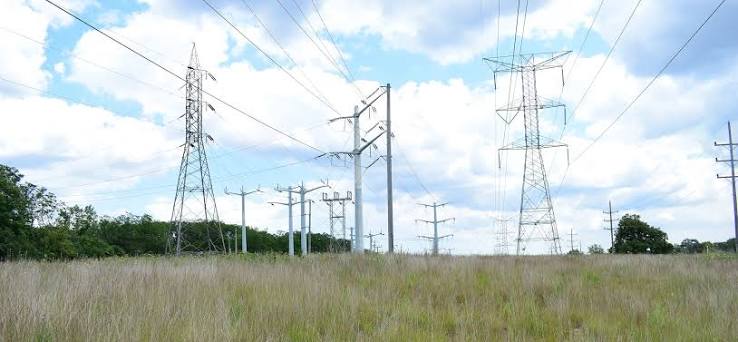
ComEd has cleared a major regulatory hurdle for a new transmission project in DeKalb County, Illinois, as the utility prepares to expand the local grid for rising electricity demand.
The Illinois Commerce Commission (ICC) approved ComEd’s Kishwaukee Area Reliability Extension (KARE) Project, authorizing construction of a new high-voltage transmission line and substation south of DeKalb.
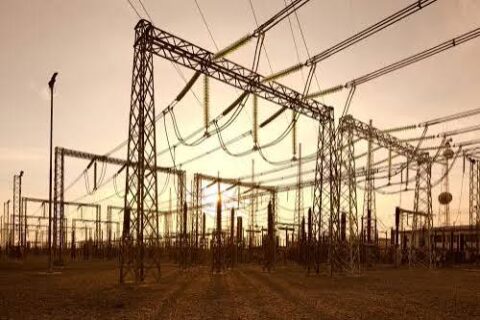
The project includes approximately 6.8 miles of new 345-kilovolt (kV) overhead transmission line and a new 345-kV/138-kV substation near Keslinger Road and Crego Road in Afton Township.
ICC filings estimate the preferred KARE route at approximately $197 million, including the transmission line and substation infrastructure.
The approval comes as the DeKalb region prepares for substantial growth in electricity demand from businesses, data centers, industrial development and other customers.
$197 million investment expands DeKalb’s grid
The KARE Project will add a double-circuit 345-kV transmission line to ComEd’s existing network.
The new line will connect existing transmission infrastructure to the planned substation near Keslinger Road and Crego Road. The project will primarily use existing transmission rights-of-way to reduce impacts on surrounding land.
The ICC’s cost estimate for the preferred route totals approximately $197 million.
That figure includes about $65 million for the 345-kV portion of the substation, $73 million for the 138-kV portion and $59 million for the transmission line.
The new facilities will provide additional transmission capacity while strengthening the reliability and resilience of the electrical system in the DeKalb area.
ComEd also expects the infrastructure to create additional capacity for future renewable-energy interconnections.
Rising electricity demand drives transmission project
The need for KARE extends beyond routine grid reinforcement.
ICC filings identified an existing ComEd customer seeking an expansion requiring up to 210 megawatts (MW) of additional electricity. The customer is expected to ramp its demand beginning in 2027.
ComEd also reported additional requests totaling approximately 1,354 MW from new and existing customers that had entered the study process and paid required deposits.
Together, those requests illustrate the scale of electricity demand emerging across the region.
The KARE Project will give ComEd additional transmission capacity to connect future customers while maintaining reliable service as demand increases.
New substation anchors development south of DeKalb
The planned substation will occupy a roughly 160-acre property near the intersection of Keslinger Road and Crego Road.
ComEd purchased the property in summer 2025 and plans to develop it as the electrical hub for the KARE Project.
The site will accommodate the substation and associated electrical equipment, along with construction staging, security, stormwater and access infrastructure.
The City of DeKalb is also moving forward with the annexation process for the property as part of the project’s development.
The location places the new electrical infrastructure near an area experiencing continued commercial and industrial growth.
Transmission capacity could support major developments
The additional grid capacity is expected to support more than residential growth.
The DeKalb area has several large developments and infrastructure initiatives that could increase electricity demand, including data center development and industrial expansion.
The broader development pipeline includes future phases of the Meta data center, the Edged data center project, improvements involving Nehring Electric, Northern Illinois University’s sustainability initiatives and industrial and logistics development in northern DeKalb County.
The KARE Project therefore represents a major piece of enabling infrastructure for the area’s next phase of growth.
ComEd studied multiple routes
ComEd partnered with engineering firm Burns & McDonnell to evaluate potential transmission routes before submitting the project for regulatory approval.
The routing study covered approximately 23 square miles and examined existing conditions, land use, natural resources and cultural resources.
ComEd also held public meetings and met with landowners and local stakeholders to discuss the project and proposed routing alternatives.
The utility said the final routing options sought to minimize impacts on landowners and surrounding communities.
The ICC reviewed the project’s need, design, route alternatives and potential impacts before granting ComEd its Certificate of Public Convenience and Necessity (CPCN).
Approval clears the way for construction
ComEd’s ICC application dates to January 2025, when the utility formally sought authorization to construct the project.
The commission subsequently conducted regulatory review and held an evidentiary hearing in April 2026 before issuing its approval.
The CPCN now gives ComEd the regulatory authorization required to construct the transmission facilities.
The approval also makes KARE the first ComEd transmission line requiring ICC siting approval since the Grand Prairie Gateway project entered service in 2017.
ComEd’s earlier project schedule anticipated construction beginning in 2026 and completion in 2027. However, that schedule preceded the final regulatory approval, so the utility’s current construction timetable will be important to watch as the project moves forward.
KARE adds to a broader wave of grid construction
The DeKalb project is part of a broader push by utilities to expand transmission infrastructure as electricity demand changes and generation resources evolve.
A similar effort is underway in Minnesota, where Xcel Energy is developing the Minnesota Energy Connection, a roughly 175-mile, 345-kV transmission line between the Sherco site near Becker and a new substation in Lyon County. Xcel says the Minnesota line will deliver enough energy to power more than 1 million homes across the Upper Midwest when it enters service in 2028.
Xcel is developing that transmission investment alongside the Lyon County Generating Station, a new 420-MW natural gas peaking plant near Garvin, Minnesota. Construction of the generating station is scheduled to begin in summer 2026, with operations expected in late 2028.
While the projects serve different regional needs, both developments show how utilities are pairing major grid investments with changing electricity requirements.
For DeKalb, the immediate focus is the KARE Project and its new high-voltage connection. Once built, the infrastructure will provide additional capacity for customers and developments while strengthening the electrical network serving the region.
Factsheet: KARE Transmission Project in DeKalb County
- Project: Kishwaukee Area Reliability Extension (KARE) Project
- Location: DeKalb County, Illinois
- Utility: ComEd
- Estimated cost: Approximately $197 million for the preferred route
- Transmission line: Approximately 6.8 miles
- Voltage: 345 kV
- Configuration: Double-circuit overhead transmission line
- Substation: New 345-kV/138-kV substation
- Substation site: Approximately 160 acres near Keslinger Road and Crego Road
- Engineering partner: Burns & McDonnell
- Regulatory authority: Illinois Commerce Commission
- Approval: Certificate of Public Convenience and Necessity
- Primary purpose: Increase transmission capacity, improve reliability and support growing electricity demand
- Key demand driver: Existing customer expansion of up to 210 MW, alongside additional customer requests totaling about 1,354 MW


Leave a Reply