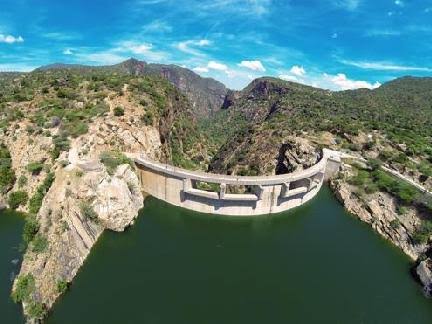
The Kibuka High Grand Falls Dam Project has officially stepped back into the national spotlight after Kenya’s National Treasury re-advertised competitive tenders for transaction advisory services under a revamped Public-Private Partnership model.
As the state seeks to expand nationwide electricity access and secure long-term water reservoirs, this renewed procurement framework directly mirrors earlier strategic capacity upgrades, such as those outlined in Kenya’s Government Announces Plans for Masinga Dam Expansion to Boost Country’s Energy Capacity, which established critical benchmarks for reservoir management and grid reliability across the Tana River basin.
Published on October 27, 2026, the latest tender notice kicks off a fast-tracked bid evaluation process to select top-tier financial, legal, and engineering consultants to structure the Ksh 337 billion infrastructure undertaking.
Hydropower Generation via Kibuka High Grand Falls Dam Project
The multipurpose dam design features a massive gravity structure built across Kibuka Falls on the Tana River, straddling the regional border between Tharaka-Nithi and Kitui counties.
Once fully operational, the hydroelectric installation will house seven main power turbines generating 700 megawatts of clean electricity, positioning the complex as Kenya’s single largest power station.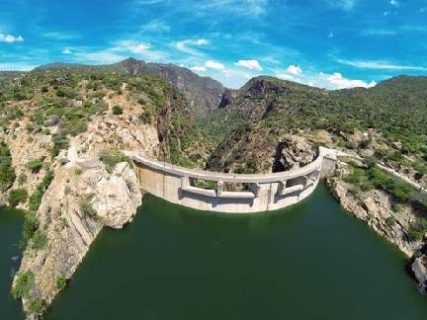
The expansive reservoir behind the main wall will hold more than 5.6 billion cubic meters of water, creating a critical primary storage buffer for downstream communities.
In addition to electricity generation, the massive water reservoir will support the agricultural transformation of drylands by providing gravity-fed irrigation water for nearly 500,000 acres of arable farmland across Eastern and Coastal counties.
The National Treasury and the Public Private Partnerships Directorate are executing the transaction advisory procurement on the government’s E-GP portal. Transaction advisers will refine the project’s financial model, evaluate risk-sharing matrices, and prepare concession documentation for international private developers.
Interested consultancy consortia must attend a pre-bidding orientation conference on November 3, 2026, before submitting final technical and financial proposals on November 24, 2026.
Engineering Metrics in Kibuka High Grand Falls Dam Project
- Power Plant Capacity: Installed turbine capacity targeting 700 MW of renewable power to feed directly into the national grid.
- Reservoir & Storage Volume: Total water storage capacity of 5.6 billion cubic meters dedicated to flood control, municipal supply, and agricultural development.
- Irrigation Coverage: Infrastructure pipeline engineered to supply irrigation water to 500,000 acres of agricultural land.
Constructing the megastructure will require millions of metric tons of high-grade concrete, extensive earth-moving equipment, and advanced subterranean tunneling for power waterways.
State authorities estimate that civil engineering works, reservoir clearing, and power plant assembly will generate thousands of direct technical jobs while transforming local transport networks across Tharaka-Nithi and Kitui counties.
Project Fact Sheet
Name: Kibuka High Grand Falls Dam Project (High Grand Falls Power Station).
Type: Multi-purpose Hydroelectric Power Generation, Water Storage, and Irrigation Infrastructure.
Location: Kibuka Falls, Tana River (Tharaka-Nithi County & Kitui County border), Kenya.
Total investment: Ksh 337 billion (Estimated $2 billion USD).
Developer: National Treasury (PPP Directorate) / Kenya Electricity Generating Company PLC (KenGen).
Status: Procurement Phase (Transaction Advisor RFP Re-Advertised October 2026).
Construction employment: Estimated 10,000+ direct civil, mechanical, and electrical engineering roles.
Permanent employment: Multi-hundred permanent technical, maintenance, and agricultural management staff.
Timelines and production targets: Procurement re-opened October 2026; Bids due November 24, 2026; Concessioning & 6-year construction phased launch targeting 700 MW output.
Technology integration: 7-Turbine Hydroelectric Plant, Automated Spillway Gates, E-GP Bidding Infrastructure.
Raw material supply: Tana River Surface Water, High-Grade Aggregate, Structural Reinforced Steel, Heavy Concrete Formwork.
Economic impact: Enhances national grid reliability, controls seasonal coastal flooding, and supports food security via 500,000 acres of irrigated farmland.
Key infrastructure needs: High Gravity Dam Wall, Power House, Tunnels, High-Voltage Transmission Lines, Irrigation Canals.
Delivery risks: Transaction advisory delays, land acquisition and community resettlement, environmental flow requirements.
Primary target markets: Kenya National Electricity Grid (Kenya Power), Commercial Farms, Municipal Water Utilities.
Project Team
- Contracting Authority & Developer: National Treasury of Kenya (PPP Directorate)
- State Energy Partner & Operator: Kenya Electricity Generating Company PLC (KenGen)
- Primary Government Stakeholders: Ministry of Energy and Petroleum, Ministry of Water, Sanitation and Irrigation
- Local Economic Development Stakeholders: Tharaka-Nithi County Government, Kitui County Government



Leave a Reply