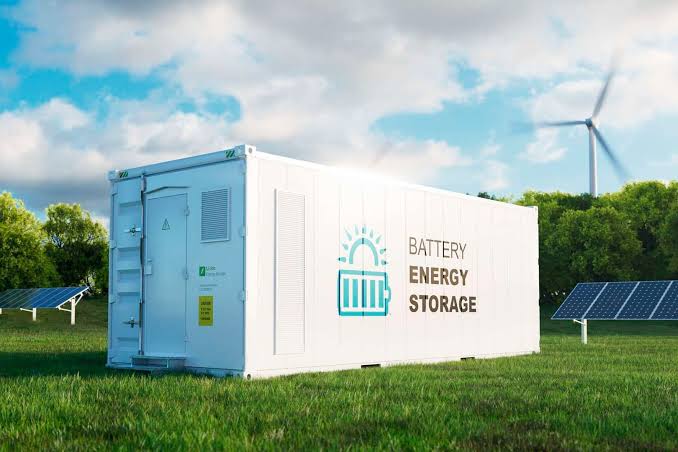
State-owned power producer KenGen has secured a Sh10 billion ($77 million) financing package from the World Bank and United Nations-backed development channels to construct its flagship KenGen Battery Storage facilities.
This large-scale energy storage investment complements offshore power generation ventures, such as the Sh39B Floating Gas Power Plant, which highlights Kenya’s ongoing drive to diversify national energy infrastructure.
Under the approved framework, technical teams will build a 100 Megawatt (100 MW) Battery Energy Storage System (BESS) network across primary sub-stations and generation hubs. Executive leadership confirmed that the project directly addresses power curtailment while stabilizing the national electrical grid.
Read also: Floating Gas Power Plant: Kenya Advances $300 million Offshore Energy Hub
Managing Director and Chief Executive Officer Eng. Peter Njenga emphasized that battery storage represents a critical operational bridge for fluctuating renewable power.
Incorporating utility-scale storage enables the grid operator to capture peak geothermal and hydro output for later dispatch.
Operational Framework for KenGen Battery Storage Infrastructure
Engineering teams selected four strategic regional centers to host the industrial battery installations. Specific development zones include Olkaria in Naivasha, Kipevu in Mombasa, Embakasi in Nairobi, and Muhoroni in Kisumu County.
Distributing storage capacity across key consumption nodes minimizes transmission losses while enhancing grid resilience during localized surges.
The high-capacity battery units store surplus power generated during off-peak night hours. System operators then release stored electricity into the national grid during peak evening demand windows.
This active load-balancing mechanism displaces expensive emergency thermal power plants, driving down bulk power purchasing costs for consumers.
Financial structuring proceeds under the broader Kenya Green and Resilient Expansion of Energy (GREEN) program.
World Bank development directors aligned multilateral climate financing with national decarbonization targets. The comprehensive program accelerates energy transition metrics while ensuring stable baseload distribution for industrial parks.
Long-Term Grid Impact of KenGen Battery Storage Deployments
Deploying grid-scale energy storage supports Kenya’s target of reaching 100% clean energy generation. Technical specialists continue preparing procurement tenders for high-density lithium-iron-phosphate battery banks, smart step-up transformers, and power conversion systems.
Regional Capacity Allocation: Facilities at Olkaria, Kipevu, Embakasi, and Muhoroni absorb local generation surpluses to stabilize voltage levels.
Active Load Balancing: Automated battery management systems balance load spikes dynamically, preventing widespread blackout cascades.
Thermal Plant Displacement: Stored renewable electricity replaces costly diesel-fired peaking units, lowering overall generation tariffs.
Construction contractors, electrical engineers, and SCADA integrators will execute civil and electrical works across all four project sites. The rollout creates hundreds of technical positions during construction while establishing specialized power storage maintenance roles nationwide.
Project Fact Sheet
Name: KenGen Utility-Scale Battery Energy Storage System (BESS) Project.
Type: Grid-Scale Battery Energy Storage Facilities, Power Conversion Systems & Substation Upgrades.
Location: Olkaria (Nakuru County), Kipevu (Mombasa County), Embakasi (Nairobi County), and Muhoroni (Kisumu County), Kenya.
Total investment: Sh10 Billion ($77 Million USD).
Developer: Kenya Electricity Generating Company PLC (KenGen).
Status: Active Planning, Procurement & Site Preparation Phase.
Construction employment: Estimated 650+ specialized electrical engineers, civil construction crews, and high-voltage technicians.
Permanent employment: Multi-hundred permanent technical storage operators, power systems engineers, and SCADA monitoring specialists.
Timelines and production targets: Installation of 100 MW total battery storage capacity; progressive site commissioning aligned with national grid expansion milestones.
Technology integration: High-Density Lithium Iron Phosphate (LFP) Battery Arrays, Modular Inverters, Advanced SCADA Monitoring, Liquid Cooling Systems.
Raw material supply: Tier-1 industrial battery racks, power conversion modules, structural steel enclosures, and high-voltage underground cables.
Economic impact: Eliminates renewable power curtailment, stabilizes grid voltage, cuts peak-demand electricity tariffs, and supports industrial growth.
Key infrastructure needs: Fire Suppression Systems, Substation Interconnection Transformers, Climate-Controlled Container Enclosures, High-Voltage Inverters.
Delivery risks: Specialized battery supply chain lead times, high-voltage grid synchronization delays, extreme weather cooling demands.
Primary target markets: National Electricity Grid (KPLC Off-take), Regional Industrial Zones, Domestic Commercial Power Consumers.
Project Team
Project Developer & Operator: Kenya Electricity Generating Company PLC (KenGen)
Primary Multilateral Financiers: World Bank Group & United Nations Climate Finance Frameworks
Offtaker & Transmission Stakeholders: Kenya Power and Lighting Company (KPLC), Kenya Electricity Transmission Company (KETRACO)
Lead Government Ministry: Ministry of Energy and Petroleum (Kenya)



Leave a Reply