Why Equipment Selection Is Becoming More Application-Specific
Compressed-air equipment is often purchased through broad search terms, but the underlying applications are rarely broad. A homeowner exploring a cng compressor for home may be thinking about vehicle fueling, while a contractor searching for a portable air pump may actually need a tool-grade portable air compressor for a nailer, impact wrench, or spray gun. Treating these searches as interchangeable can lead to incorrect specifications, unsuitable installation environments, and avoidable operating costs.
The more reliable approach is to begin with the application rather than the product label. What gas or air medium will the equipment handle? What pressure and flow are required? Is the unit intended for indoor, outdoor, mobile, intermittent, or continuous operation? What electrical, ventilation, fuel, maintenance, and regulatory conditions must be satisfied? These questions form the basis of a defensible purchasing decision.
The market itself is broad. Manufacturers and suppliers offer rotary screw compressors, oil-free scroll compressors, high-pressure piston compressors, vacuum systems, and portable units, often with different levels of technical support, product guidance, and fulfillment. Comparing suppliers on those services, and not only on price, is part of a sound selection process.
The Difference Between a CNG Project and a Conventional Air-Compressor Purchase
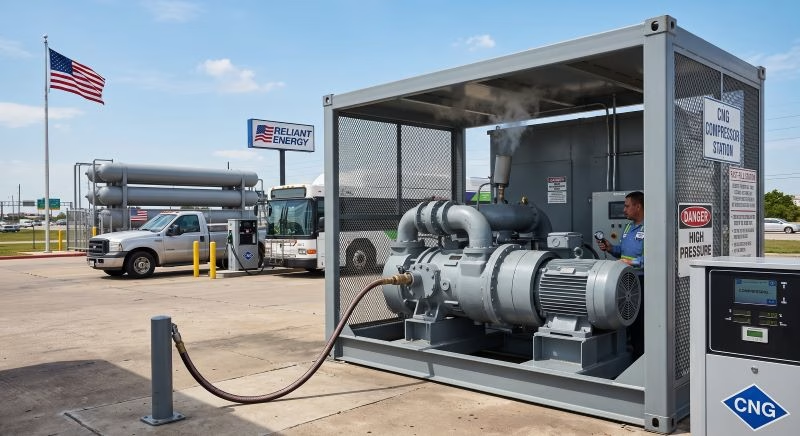
A home CNG compressor is not simply a smaller version of a workshop air compressor. CNG equipment handles natural gas and high-pressure service, which introduces a different set of engineering and compliance questions. Gas supply conditions, pressure stages, compression capacity, electrical service, ventilation, emergency shutoff provisions, equipment clearances, and local permitting may all affect whether a proposed installation is feasible.
This is why the phrase “CNG home compressor” should be treated as a project description, not a guarantee that a unit can be installed in any residential garage or utility room. Before purchase, the application should be reviewed by qualified professionals familiar with natural-gas systems and applicable local requirements. The gas utility, the authority having jurisdiction, fire-safety officials, and the installation contractor may all have a role in the approval process.
Supplier product listings for residential CNG equipment should be treated as a starting point for technical discussion, not a complete installation specification. When a listing does not show a full description, confirmed inventory, or a current price, the correct action is to request current specifications, availability, installation requirements, and a formal quotation.
What a Professional Evaluation Should Cover
A credible equipment review should document the following information before a purchasing recommendation is made.
| Evaluation area | Questions to answer | Why it matters |
| Gas supply | What natural-gas service, supply pressure, and available flow are present? | The equipment must be compatible with the incoming service and intended duty cycle. |
| Electrical service | What voltage, phase, breaker, grounding, and disconnect arrangements are available? | The installation may require dedicated electrical infrastructure. |
| Pressure and capacity | What working pressure, storage capacity, and expected fueling or operating frequency are required? | A single maximum-PSI number does not describe the complete system. |
| Location | Is the proposed area adequately ventilated and suitable for the equipment? | Gas and high-pressure equipment require a professionally assessed environment. |
| Compliance | Which permits, inspections, codes, and utility approvals apply? | Requirements vary by jurisdiction and application. |
| Serviceability | Are spare parts, technical support, maintenance procedures, and warranty terms available? | Lifecycle support affects uptime and total ownership cost. |
This framework is useful even when the final solution is not a home CNG compressor. It prevents a search phrase from becoming a premature equipment decision.
Where Portable Air Equipment Fits
The term “portable air pump” is intentionally broad. In consumer contexts, it may mean a compact tire inflator or a low-pressure pump. In construction, automotive, and workshop contexts, the intended product may be a portable air compressor capable of driving pneumatic tools. The distinction matters because portable tool operation depends on delivered airflow, working pressure, receiver capacity, duty cycle, and power source.
For short-duration inflation, a dedicated inflator may be sufficient. For a nailer or stapler, a compact compressor may be appropriate. For sanding, spray finishing, sandblasting, or repeated impact-wrench use, the buyer should compare the tool manufacturer’s CFM requirement with the compressor’s delivered CFM at the same PSI. The tank should be considered an air reserve, not a substitute for adequate continuous airflow.
Compact oil-free electric compressors are commonly marketed for home garages, workshops, and professional use, typically with tank sizes from about 1 to 11 gallons and features such as overheating protection and low-noise operation. For outdoor work where electrical access is limited, engine-driven compressors are common in roofing, construction, agriculture, and remote service.
A More Useful Way to Compare Equipment
Buyers should compare equipment in the context of the work cycle instead of relying on a single headline specification. A compact electric compressor may be the more practical choice for indoor DIY work because it avoids engine exhaust and can be used near a standard electrical service, subject to the selected model’s requirements. An engine-driven unit may be better suited to an outdoor job site where mobility and independence from utility power matter more.
Noise, maintenance, and air quality also matter. Oil-free equipment can simplify routine oil management, while applications such as painting may still require appropriate filtration and moisture control. A larger tank can help with intermittent peak demand, but it also adds weight and may reduce portability. These trade-offs should be weighed against the actual tool list and work environment.
As an illustration, a typical compact oil-free unit might offer a 5-gallon tank, around 5 CFM at 115 PSI, single-phase 110V operation, and a noise level near 65 dB. Whatever the model, buyers should confirm current inventory, pricing, shipping terms, and final specifications with the seller before relying on a listing for procurement.
From Search Intent to Sound Procurement
Search data can identify what customers ask for, but it cannot replace engineering review. A person searching for a CNG compressor for home use may need a feasibility conversation before a product recommendation. A person searching for a portable air pump may need help identifying whether an inflator or a tool-grade portable compressor is appropriate.
For buyers comparing options, the most valuable next step is to prepare a short application brief covering:
- the medium being compressed
- target pressure and required airflow
- the tools or vehicles served
- the operating location and expected frequency of use
- available power
- the delivery timeline
This gives a supplier enough context to recommend a category and identify questions that still require confirmation. It is most useful as part of a structured selection process, not as a substitute for site-specific technical review.
Conclusion
The most reliable compressed-air purchasing decisions are application-led. A CNG project must be evaluated as a high-pressure natural-gas installation, with professional engineering and local-code considerations. A portable-air search must be clarified by identifying whether the user needs a simple inflator or a compressor capable of powering pneumatic tools.
By organizing the decision around medium, pressure, airflow, duty cycle, environment, power source, compliance, and lifecycle support, buyers can move from an ambiguous search term to a practical equipment specification. That approach helps homeowners, contractors, fleet operators, and workshop managers choose more responsibly, and gives suppliers a clearer basis for delivering the right solution.