Manufacturers have battled many challenges, including supply chain delays, labor shortages and energy demand spikes. However, equipment lead times are holding up production more than most pain points, especially when transitioning to greener energy. A recent court ruling has also affected these time frames, reinstating a safe harbor rule that could further confuse the industry.
The New Bottleneck in Renewable Energy
It has been a tumultuous time for prospective renewable energy projects, such as 3,000 acres of solar panels in Kentucky and Virginia and wind farms out West. One of the primary ways projects secured funding was through tax credits. To earn them, organizations merely need to provide proof that the project has begun construction. They had several means to do this, giving the industry flexibility.
In the summer of 2025, the One Big Beautiful Bill prevented in-progress green power development from proving eligibility for essential tax credits under the 5% safe harbor rule. This qualification allowed entities to demonstrate they had spent 5% of the project’s total budget, rather than relying solely on a physical inspection to validate a project’s momentum.
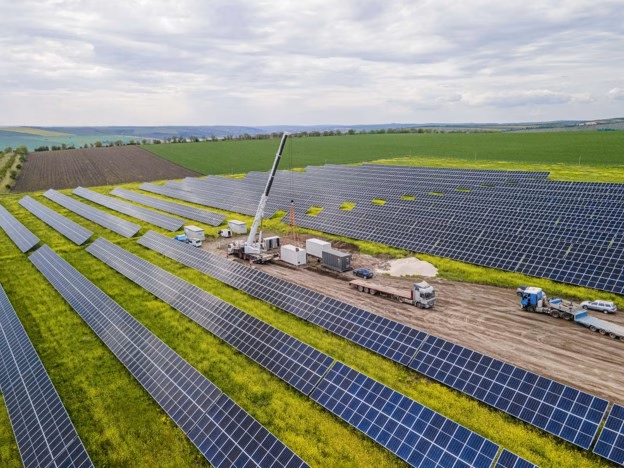
If projects cannot use spending as a verification measure, they need physical evidence, such as on-site equipment. to show the facility is underway. Many would be unable to deliver this evidence, putting many renewable efforts in jeopardy.
In June 2026, a U.S. federal court decision reinstated the 5% safe harbor rule, allowing wind and solar projects over 1.5 megawatts to move forward. However, it may have come a little too late, as the beginning-of-construction deadline was July 4, 2026. If renewable energy developers were quick enough, they could provide documentation to prove they have spent the necessary funds and receive the 45Y and 48E tax credits.
The ruling’s legal stability is uncertain, meaning developers had an unprecedented sense of urgency to buy equipment quickly. They feared a legal challenge or appeal that would make them ineligible. This would be a catastrophic loss for sustainable power, forcing teams to delay breaking ground. The marketability of solar is one of its primary advantages, earning many communities thousands of dollars. As the current administration continues to deregulate clean energy projects, these benefits, among others, are in flux.
The Dynamics of the Safe Harbor Rule
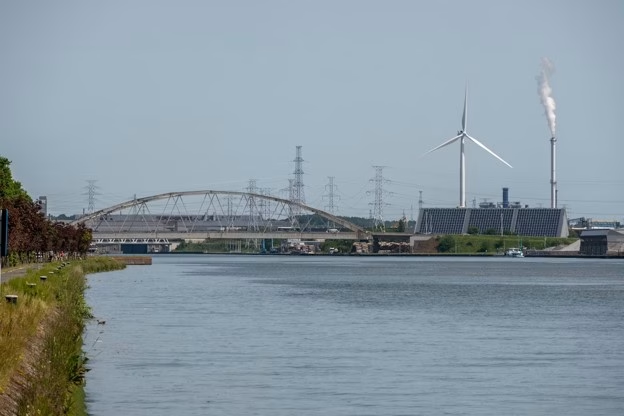
During the brief time when renewable energy projects were allowed to use spending as a form of tax credit verification, teams were ordering as much wind and solar power equipment as they could. While intended for the greater good, this placed immense pressure on procurement teams and supply chains. Organizations were buying everything as fast as possible, from panels to inverters. Because of this boom, equipment lead times became an issue.
Developers were more concerned with acquiring what they would need in the long term than with advancing construction. Constrained by the tax credit application, the plan was to acquire and hold a maximum amount of machinery, so it would be available when construction began. It did not matter how long it sat around unused, as long as the budget was spent to receive the credit for the year.
If a supplier could promise rapid procurement times, they would become the most competitive option immediately. However, this was difficult to find, as the supply chain was already strained by other global stressors, such as raw material shortages and international conflicts. The issues led to numerous reroutes, adding weeks to cargo transit times, even as warehouse supplies were bolstered for buyers.
The Changes in a Manufacturer’s Priorities
The likelihood of an appeal shifts how developers will operate when building new renewable energy projects. They will direct budgets toward purchasing equipment that could be months or years away from delivery, especially amid high demand, with little funds for other aspects of the development. This risky perspective requires developers to make immense, up-front financial investments with little immediate returns to mitigate the budgetary blow. It is an issue for projects needing reliable capital raises to keep moving forward.
Companies are justifying the expenses, as the tax credits are too significant to ignore. Alternatively, these bold monetary moves could put some projects out of commission before they have a chance to turn on the lights. The climate makes many renewable projects unstable, even if they qualify for the 5% safe harbor tax credit. However, providing options to the fullest intent for these efforts is vital to the U.S. expediting the clean energy transition.
Manufacturers have to respond to this influx as gracefully as possible, but it will change how they operate. For example, they may focus on production volume rather than other crucial metrics, such as quality control or research and development. These essential focus areas could be neglected in pursuit of satisfying orders. If they can succeed in fulfilling as much as possible, this will be a win for more widely available tech. However, there could be long-term issues with pushing too much at once.
The Way the Future of Renewable Energy Will Be Affected
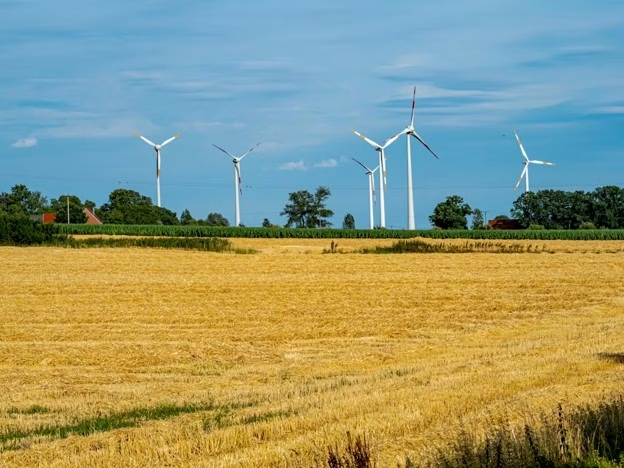
As developers continue to purchase and potentially hoard renewable equipment due to external urgency, meaningful construction could be delayed. They may be eligible for tax credits, yet the organization’s quarterly goals could be misaligned with the promises they hope to deliver by installing renewable infrastructure.
While developers will have their own internal pressures, the primary strain will be on suppliers and manufacturers. Even if renewable energy projects attempt to prioritize supplier diversification, the high quantities may still place burdens on acquisition, shipping and transportation.
The relationship between supply chains, warehouses and facilities must be strengthened to withstand these stressors. Purchase orders will increase, forcing manufacturers to do anything they can to send products to suppliers as quickly as possible. Building long-lasting partnerships has never been more crucial, as they need to be sustained after this ruling has been solidified.
The green energy sector is still growing, and the manufacturing of essential technologies is largely localized in a few countries, primarily China. While the industry is in its infancy and geographically isolated, these pressures could delay expansion into more regions of the world.
The Uncertainty of Policy
The volatility of these rulings makes it impossible for developers and suppliers to plan for practical, sustainable buildout of renewable energy projects. Planners are now locked into a competitive race to acquire as much equipment as possible, with little time or resources to devote to construction and additional strategizing. For the foreseeable future, quick procurement will be the key to success, unless different legislation further shakes up the industry.