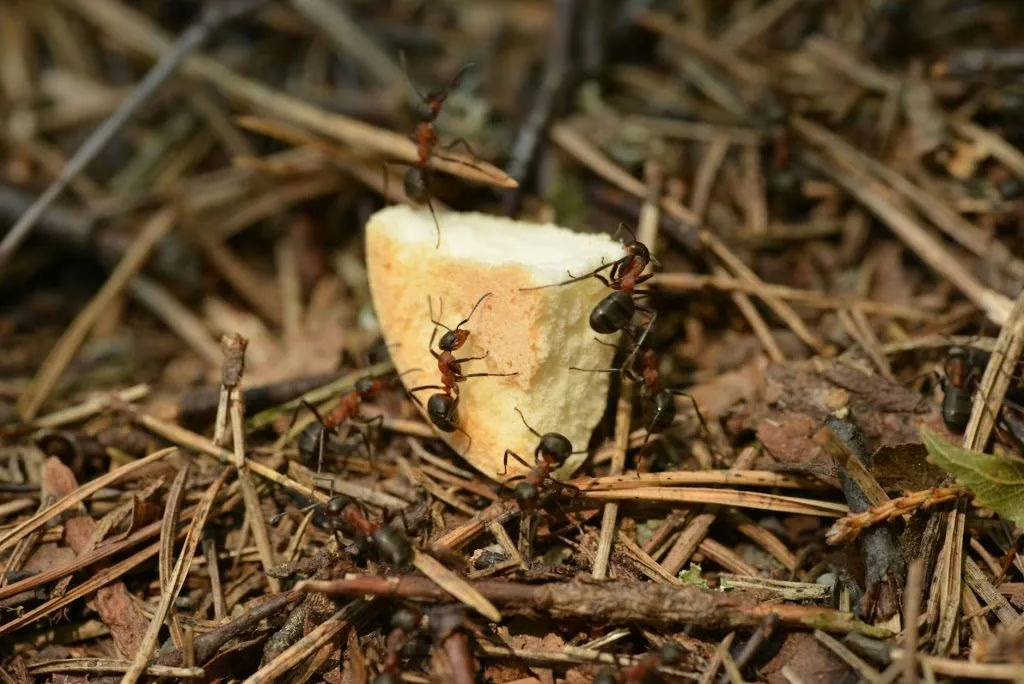
Construction professionals and project managers spend most of their energy thinking about structural loads, moisture barriers, and code compliance, but pests are a building science issue too. For readers of a construction-focused publication, ant infestations are not just a homeowner nuisance, they are a signal of how a structure interacts with its climate. Every slab foundation, crawl space, and landscaping choice either invites or repels colonizing insects, and that reality matters as much to a contractor pouring a foundation as it does to a family moving into a finished home.
In the Southeast, and especially around metro Atlanta, warm temperatures and heavy humidity create conditions that are almost tailor-made for ant colonies to thrive. Builders who understand these patterns can make smarter choices about grading, ventilation, and material selection before a structure is ever occupied. This article breaks down how climate and humidity drive ant behavior, what that means for building design and maintenance, and how local homeowners and property managers can respond effectively.
Marietta, Georgia sits squarely in this climate zone, with long warm seasons and consistent summer rainfall that keep soil moisture elevated for months at a time. Homeowners in this area benefit from understanding ant prevention tips Marietta GA homeowners can apply before colonies establish themselves near a structure, since prevention is far cheaper and less disruptive than remediation after an infestation takes hold. The same logic applies to new construction, where early decisions about drainage and sealing can prevent years of recurring pest problems.
How Marietta’s Warm, Humid Climate Creates Ideal Conditions for Ant Colonies
Ants are cold-blooded, so their activity level is dictated almost entirely by ambient temperature and moisture availability. Most species forage and reproduce most actively when temperatures sit between 77 and 95 degrees Fahrenheit, a range that metro Atlanta experiences for a large portion of the year. Combine that temperature window with the region’s naturally high humidity, and you get conditions that keep colonies active, growing, and searching for new territory far longer than in drier climates. Carpenter ants, one of the most structurally damaging species in the region, specifically seek out wood with moisture content above 15 percent, which is common in untreated sill plates, deck framing, and crawl space joists that sit too close to damp soil. This is why pest pressure in the Southeast is not just a seasonal inconvenience but a near year-round consideration for anyone managing a building envelope.
Seasonal Patterns: Why Ants Invade Homes During Specific Times of Year in Georgia
Ant activity in Georgia follows a predictable rhythm tied closely to rainfall and temperature swings. Heavy spring and summer rains saturate the soil, which pushes colonies out of their usual nesting sites and toward dry, stable ground, often found inside foundations, crawl spaces, and wall cavities. At the same time, rain washes away outdoor food sources that ants typically rely on, driving them indoors to scavenge in kitchens and pantries. Interestingly, research on Argentine ants has found that foraging activity depends heavily on relative humidity, with worker movement speed actually declining as humidity rises, and peak winter foraging occurring at relatively cool temperatures between 10 and 15 degrees Celsius regardless of the day’s high. According to NIH, higher accumulated minimum temperatures from the previous season correlate with increased ant incidence, while higher relative humidity accumulated from the same season correlates with lower ant incidence, demonstrating that climate patterns have measurable legacy effects on ant colony activity. That finding reinforces what regional pest professionals have observed for years: last season’s weather often predicts this season’s infestation risk.
Building Type and Landscaping: Why Slab Foundations and Mulch Increase Ant Risk in the Southeast
Construction choices common throughout the Southeast inadvertently make ant infestations more likely. Slab-on-grade foundations, while popular for their cost efficiency and resistance to frost heave, sit directly on soil that stays consistently moist in Georgia’s climate, giving ants an easy path along expansion joints and utility penetrations straight into living space. Mulch beds, a landscaping staple for moisture retention and aesthetics, hold humidity against foundation walls and offer ants a nesting material that’s both insulated and food-adjacent when placed too close to the house. Gutters that discharge water near the foundation, and crawl spaces without proper vapor barriers, compound the problem by keeping wood framing members within that critical 15 percent moisture threshold that carpenter ants favor. Builders and renovators who account for these risks during the design phase, by maintaining mulch clearance, directing downspouts away from the foundation, and specifying treated lumber near grade, can meaningfully reduce the pest pressure a finished structure will face for decades.
Actionable Prevention Tips Tailored to Marietta’s Climate and Regional Ant Species
Given how closely ant activity tracks temperature and humidity in this region, prevention strategies should be calibrated to the local climate rather than borrowed from generic national advice. The Georgia Pest Control Association recommends monthly or bi-monthly perimeter treatments during the warm season specifically because heat-driven ant activity in the state is sustained rather than a brief spring event. Homeowners and property managers should also prioritize moisture control, since reducing wood moisture content, sealing foundation cracks, and managing landscaping irrigation all directly counter the conditions ants depend on. Regular inspection of crawl spaces, sill plates, and areas where utility lines penetrate the foundation can catch early colonization before it becomes a structural concern. The table below summarizes the key climate and humidity figures that explain why this region sees such persistent ant pressure.
| Factor | Figure or Finding |
| Optimal ant foraging temperature range | 77 to 95 degrees Fahrenheit (2024-2025 pest control research) |
| Carpenter ant moisture preference | Wood moisture content above 15 percent (Hansen and Klotz, cited 2025) |
| Argentine ant foraging and humidity | Worker walking speed declines as humidity rises (25-93% RH); peak winter foraging at 10-15°C |
| Post-rain ant activity in humid regions | Saturated soil pushes colonies toward foundations and crawl spaces (2024 regional analysis) |
| Georgia summer treatment recommendation | Monthly or bi-monthly perimeter treatments during warm season (2025 guidance) |
Ultimately, ant infestations in Georgia are less about bad luck and more about predictable climate mechanics playing out against building design decisions. Contractors who understand how temperature and humidity drive pest behavior can design structures that are inherently more resistant to infestation, while homeowners who recognize these seasonal patterns can time their prevention efforts more effectively. Treating pest management as part of a building’s overall performance, alongside insulation, drainage, and moisture control, leads to fewer surprises and lower long-term maintenance costs for everyone involved.