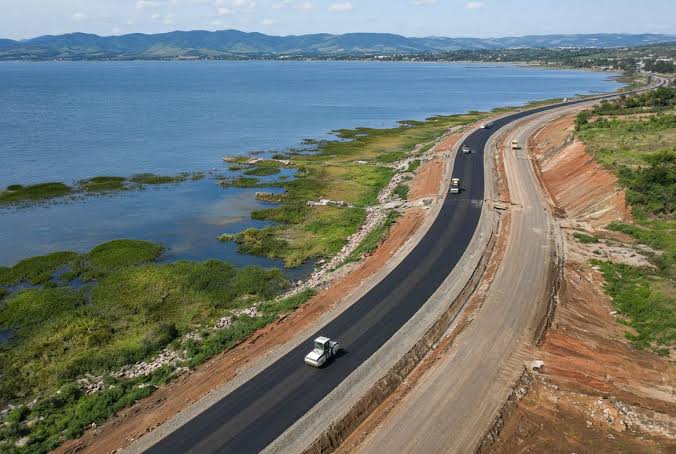
Lake Victoria highway plans in Kenya have advanced with the proposed KSh130 billion Lake Victoria Basin Connectivity and Development Project, an 815-kilometre transport and economic corridor linking Muhuru Bay in Migori County to Busia on the Kenya-Uganda border.
The Kenya National Highways Authority (KeNHA) will implement the project, which aims to improve road transport, regional trade and digital connectivity across western Kenya.
The development builds on the earlier Western Highway Project (Lake Victoria Ring Road), which Construction Review previously reported as a KSh70 billion (US$541 million) infrastructure initiative. The new programme has a wider scope, combining road construction with fibre-optic infrastructure, logistics facilities, export aggregation hubs and other economic development investments.
The proposed investment stands at approximately US$1 billion, equivalent to KSh130 billion. The Government of Kenya intends to seek this financing from the World Bank to implement the programme. However, the General Procurement Notice does not confirm final loan approval.
What the Lake Victoria highway project includes
The programme will upgrade approximately 815 kilometres of selected roads across eight counties: Migori, Homa Bay, Kisumu, Siaya, Busia, Vihiga, Nandi and Uasin Gishu. The initial government announcement highlighted five counties, while the procurement notice identifies the expanded eight-county coverage.
KeNHA has divided the roadworks into five design-build packages. The first covers the 176-kilometre Muhuru Bay-Sori-Nyagwethe section, while the second covers the 174-kilometre Nyagwethe-Mbita-Homa Bay route. The third package comprises the 188-kilometre Awasi-Katito-Otonglo-Asembo section.
The remaining packages include the 177-kilometre Asembo-Nyamonye-Port Victoria-Mulwanda section and the 100-kilometre Chavakali-Kapsabet-Eldoret route. Together, the five packages account for the planned 815-kilometre road network.
The project also includes approximately 815 kilometres of fibre-optic cable infrastructure along the transport corridor. Contractors will undertake the associated civil works alongside the road upgrades.
Other planned facilities include truck parking areas, roadside rest stops, export aggregation hubs, logistics support infrastructure and selected one-stop border facilities. The programme will also finance selected social and economic infrastructure for communities in the participating counties.
How the Lake Victoria highway could support regional trade
The improved road network could help farmers, fishermen and businesses transport goods to domestic and regional markets more efficiently. Better connections between production centres, trading towns and border facilities could also support agricultural exports and fisheries-related businesses.
Homa Bay County is expected to receive approximately 174 kilometres of the planned road network. During stakeholder consultations, Deputy Governor Danish Onyango requested KeNHA to include Ndhiwa Sub-County in the final route design.
He highlighted the importance of connecting agricultural producers and fishing communities to markets, health facilities and other essential services.
The fibre-optic component could also expand broadband access and support digital services along the corridor. Meanwhile, the planned logistics facilities and export hubs could strengthen the movement and handling of agricultural produce and other commodities.
The construction programme could create opportunities for civil engineering contractors, road equipment suppliers, construction material manufacturers and telecommunications companies. However, the government has not yet disclosed the expected construction workforce, permanent employment figures or individual contract values.
Procurement, financing and construction preparations
The Government of Kenya has published a General Procurement Notice under World Bank Project ID P520201 and procurement notice OP00479589. The notice outlines the proposed international procurement of road construction, fibre-optic civil works, port and marine facilities, logistics infrastructure and associated consultancy services.
The design-build packages will follow the World Bank’s Procurement Regulations for Investment Project Financing, revised in September 2025. KeNHA will publish specific procurement opportunities through its website, the World Bank’s procurement platform and national newspapers.
Before physical construction begins, the authority must address land acquisition, property valuation, compensation, environmental conservation and social safeguards. Stakeholder consultations are also helping officials collect feedback on proposed routes and community priorities.
Although government officials have described the programme as World Bank-backed, the procurement notice states that Kenya intends to apply for US$1 billion in financing. The loan should therefore not be described as approved until the World Bank confirms the financing decision.
KeNHA has not yet publicly confirmed the construction commencement date, completion schedule or appointed contractors. The next major milestones include financing approval, procurement, contractor selection and completion of the necessary project preparation requirements.
Once implemented, the programme could improve connectivity between western Kenya’s economic centres and neighbouring regional markets. Its wider scope also makes it an integrated transport, trade and digital infrastructure investment rather than a conventional highway upgrade.
PROJECT FACT SHEET
Project Name: Lake Victoria Basin Connectivity and Development Project (LVBCDP).
Project Type: Road transport, digital connectivity and regional economic development.
Location: Western Kenya and the Lake Victoria Basin.
Main Route: Muhuru Bay in Migori County to Busia on the Kenya-Uganda border.
Total Planned Road Network: Approximately 815 kilometres.
Estimated Project Investment: KSh130 billion.
Estimated US Dollar Value: US$1 billion.
Developer and Implementing Authority: Kenya National Highways Authority (KeNHA).
Parent Company: Not applicable. KeNHA is a government authority established under Kenyan law.
Proposed Financing Institution: World Bank.
World Bank Project Identification Number: P520201.
Procurement Notice Number: OP00479589.
Counties Covered: Migori, Homa Bay, Kisumu, Siaya, Busia, Vihiga, Nandi and Uasin Gishu.
Road Construction Packages: Five design-build packages.
Fibre-Optic Infrastructure: Approximately 815 kilometres of fibre-optic cable network.
Project Status: Project preparation, stakeholder engagement and procurement planning.
Construction Commencement: Not yet officially confirmed.
Expected Completion: Not yet publicly disclosed.
Construction Employment: Not yet disclosed.
Permanent Employment: Not yet disclosed.
Production Targets: Not applicable to this road infrastructure project.
Technology: Modern highway engineering, fibre-optic telecommunications infrastructure and integrated logistics facilities.
Raw Material Supply: Specific sourcing arrangements have not yet been publicly disclosed. Expected construction materials include aggregates, cement, bitumen, steel and drainage materials.
Economic Impact: Improved agricultural transportation, fisheries distribution, tourism access, regional trade, logistics and digital connectivity.
Key Infrastructure Requirements: Road upgrades, bridges, drainage systems, truck parking facilities, export aggregation hubs, roadside rest stops, border facilities, fibre-optic infrastructure and selected port and marine facilities.
Key Equipment Requirements: Excavators, bulldozers, graders, asphalt production plants, paving machines, rollers, concrete batching equipment, crushing plants and fibre-optic installation equipment.
Delivery Risks: Financing approval, land acquisition, compensation, environmental safeguards, procurement delays, construction logistics and coordination across participating counties.
Primary Target Markets: Domestic Kenyan markets, Uganda and wider East African regional trade.
PROJECT TEAM
Kenya National Highways Authority (KeNHA): Responsible for implementing the road development programme, coordinating procurement, managing project preparation and overseeing the highway construction packages.
Ministry of Roads and Transport: Provides national policy direction and institutional oversight for road infrastructure development.
National Treasury: Responsible for government financing and borrowing coordination.
National Land Commission: Involved in land acquisition and compensation processes in accordance with applicable Kenyan laws.
World Bank: Proposed financing institution for the US$1 billion development programme. Financing approval remains subject to confirmation through the formal project process.
Migori County Government: Local coordination and stakeholder engagement for the southern corridor.
Homa Bay County Government: County-level coordination, route consultations and engagement with affected communities.
Kisumu County Government: Local infrastructure coordination and stakeholder participation.
Siaya County Government: County-level coordination and community engagement.
Busia County Government: Coordination relating to the northern corridor and cross-border trade infrastructure.
Vihiga County Government: Local coordination within the expanded procurement coverage.
Nandi County Government: County-level infrastructure coordination.
Uasin Gishu County Government: Local coordination for the Chavakali-Kapsabet-Eldoret road package.


Leave a Reply