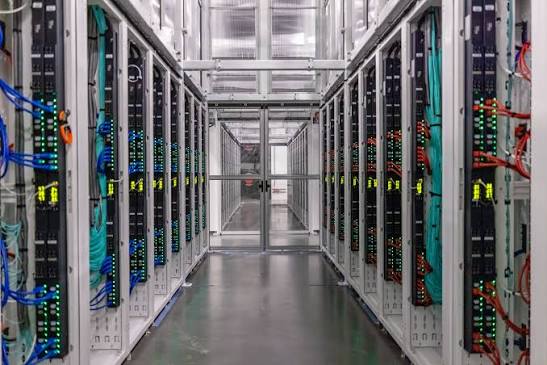
Lambda plans to invest $33.1 billion in a large-scale artificial intelligence data center campus in Lowndes County, Alabama, but the proposed development is facing a legal challenge over the county’s approval process and growing questions about its infrastructure requirements.
The company announced November 4 that it would serve as the end user for the Red Clay Technology Center Campus, which Cloverleaf Infrastructure has been preparing for development. The project is expected to create more than 1,000 construction jobs and support more than 225 permanent positions, with construction expected to begin in the first quarter of 2027 and take up to five years.
The announcement came as residents and environmental groups pursued a lawsuit challenging the county commission’s handling of the project’s tax incentives. The dispute puts the development’s projected economic benefits alongside questions about transparency, public participation and the costs of supporting a facility of its proposed scale.
Lawsuit challenges tax incentives and approval process
Protect Lowndes County and the Alabama Rivers Alliance, represented by environmental advocacy organizations, filed suit against the Lowndes County Commission in November, challenging the handling of approvals connected to Project Red Clay.
The plaintiffs allege that the commission violated Alabama’s Open Meetings Act and Open Records Act in connection with a vote approving more than $2.7 billion in local and state tax breaks for the project. They are asking a circuit judge to invalidate the commission’s votes.
The legal challenge does not establish that the commission violated the law, and the court has not ruled on the allegations. Nevertheless, the dispute has become a significant development for a project expected to bring one of Alabama’s largest private investments.
The tax incentives also need to be distinguished from the project’s projected tax revenue. Lambda and Cloverleaf have cited more than $2.8 billion in local tax revenue through 2049, including more than $1.6 billion for Lowndes County Public Schools. Combined state and local tax revenue is projected to reach $3.4 billion.
Those projections are not directly comparable with the tax relief cited by the plaintiffs. The figures cover different categories of public revenue and incentives, and the underlying agreements and assumptions need to be examined before the project’s net fiscal impact can be established.
Power demand puts infrastructure commitments under scrutiny
The proposed campus is expected to be powered by Alabama Power, subject to regulatory approval. Lambda says it will pay the full cost of the power and grid infrastructure required to serve the facility, including through upfront financial commitments that would remain in place if project plans change.
The company and Alabama Power have also signed the White House Ratepayer Protection Pledge, reinforcing their commitment to protect existing customers from the costs of serving the campus.
The scale of the proposed development makes those commitments central to the project. The lawsuit describes Red Clay as a 1,500-megawatt, 2,200-acre hyperscale data center proposal, which would make it one of the largest data center developments proposed in Alabama.
The project still requires regulatory approval for its power supply, and the public announcement does not detail the planned grid upgrades, their cost or the schedule for delivering them.
Those details will be important in determining whether the project can meet its proposed construction timeline while protecting existing electricity customers from additional costs.
Water commitments and community benefits
Lambda says the campus will use closed-loop cooling technology to reduce water consumption compared with traditional data center cooling systems. The company also plans to partner with N-Drip to support water conservation among local farmers, with a commitment to work with the community to return at least as much water as the facility uses.
The announcement does not provide a detailed water-use estimate or explain how the company will measure and verify the amount of water returned to the local system. Those details will be important in assessing the project’s effect on local water resources.
Lambda and Cloverleaf have also committed $10 million through a Community Benefits Agreement with the Central Alabama Community Foundation. The companies say they will use community input to determine how the funding supports local priorities.
The proposed campus is expected to generate significant construction employment, but the permanent workforce would be much smaller. Lambda anticipates more than 225 full-time roles in operations, technical and support functions, and says it will work with local partners to identify opportunities for county residents and contractors.
The company also says the project will include setbacks, buffers, noise-reduction measures and DarkSky lighting to limit impacts on neighboring properties. Final design details have not yet been established.
Alabama project reflects wider scrutiny of AI data center construction
The challenges surrounding Project Red Clay are part of a wider debate over the rapid expansion of artificial intelligence infrastructure in the United States.
Amazon’s plans for its first Washington data centers illustrate another side of that debate. Its proposed campuses in Walla Walla County and West Richland face environmental scrutiny, questions about electricity and water consumption, and new local restrictions on data center development.
Unlike Lambda’s Alabama proposal, Amazon’s Washington projects are at different stages of environmental and local planning review. Nevertheless, both developments show how community acceptance, infrastructure commitments and public oversight are becoming increasingly important to large-scale AI data center construction.
For Lambda, the next stages will involve securing the necessary power approvals, advancing campus planning and addressing the legal challenge surrounding the county’s earlier decisions.
The company’s investment commitment establishes the scale of the proposed development, but the agreements, regulatory filings and court proceedings will determine how its promises translate into enforceable obligations and measurable benefits for Lowndes County.
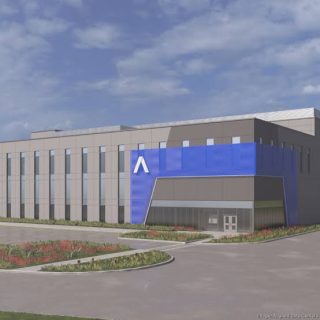
Red Clay Technology Center Campus: Factsheet
Location: Lowndes County, Alabama, near U.S. Highway 80 and Alabama Highway 21
End user: Lambda
Developer: Cloverleaf Infrastructure
Investment: $33.1 billion
Site area: Approximately 2,200 acres, as described in the lawsuit
Proposed power demand: 1,500 MW, as described in the lawsuit
Construction jobs: More than 1,000 projected
Permanent jobs: More than 225 projected
Construction start: First quarter of 2027, anticipated
Construction duration: Up to five years
Projected local tax revenue: More than $2.8 billion through 2049
Projected combined state and local tax revenue: $3.4 billion through 2049
Community Benefits Agreement: $10 million
Power provider: Alabama Power, subject to regulatory approval
Development status: Announced; power supply subject to regulatory approval; legal challenge pending

Leave a Reply