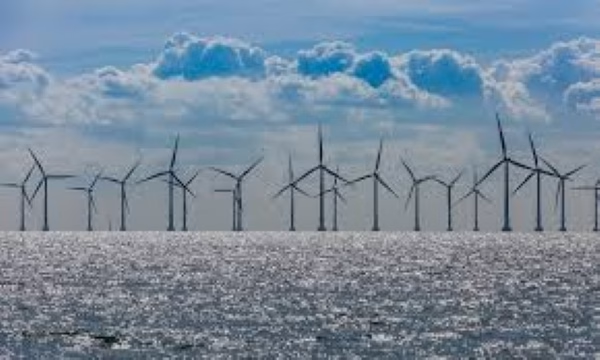
Europe is entering a new era of offshore wind expansion, driven by a wave of mega-projects now taking shape across the North Sea and the Baltic. As countries race to cut carbon emissions and strengthen energy security, developers are pushing ahead with some of the largest offshore wind farms ever attempted. These next-generation projects—many exceeding a gigawatt each—use advanced turbines, deeper-water foundations, and long-distance grid connections to deliver massive amounts of clean electricity. Together, they will transform Europe’s power landscape over the next decade, supplying millions of homes and reinforcing the region’s position as the global leader in offshore wind development. Lets take a look at the most prominent offshore wind farms in development in Europe.
Dogger Bank (UK)
-
Size: ~3.6 GW (Dogger Bank A, B, C – approx. 1.2 GW each)
-
Commissioning Date: Staged completion 2024–2027
-
Location: North Sea, ~130 km off the northeast coast of England
Dogger Bank is the largest offshore wind project currently under development globally, using some of the world’s biggest turbines and HVDC transmission systems. Once fully operational, it will provide power for millions of UK homes.
Hornsea Project 3 (UK)
-
Size: ~2.9 GW
-
Commissioning Date: Expected 2027–2029
-
Location: North Sea, off the Yorkshire coast
Developed by Ørsted, Hornsea 3 will join the existing Hornsea 1 and 2 offshore wind farms, forming the world’s largest offshore wind zone. Construction activities, including offshore converter platforms and cable installation, are already underway.
Nordseecluster Offshore Wind (Germany)
Size: 1.6 GW
Commissioning Dates: Phase A – early 2027; Phase B – early 2029
Location: German North Sea, 50 km north of Juist Island
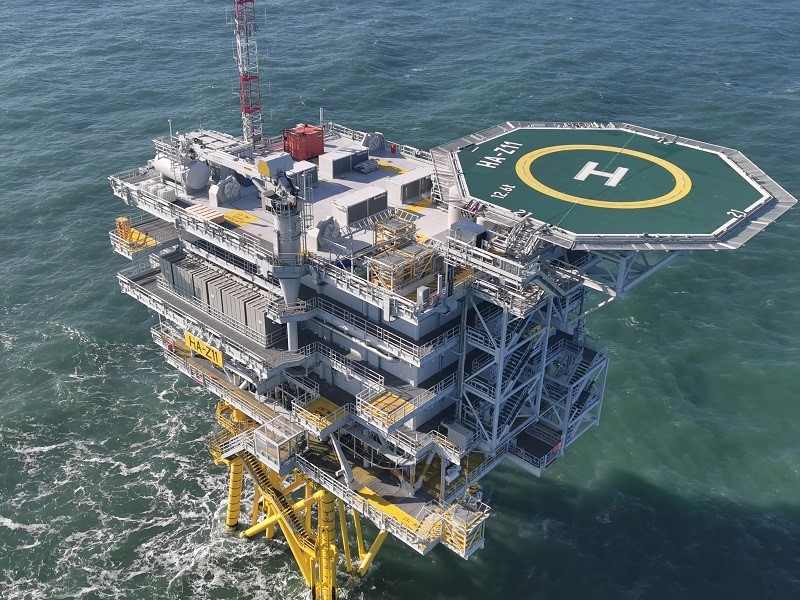
Nordseecluster is a 1.6 GW offshore wind project developed by RWE AG (51%) in partnership with Norges Bank Investment Management (49%). The project is being built in two phases: Nordseecluster A (660 MW) and Nordseecluster B (900 MW), featuring Vestas V236‑15 MW turbines. Phase A has completed installation of all 44 monopile foundations and secondary steel structures, with turbine installation planned for 2026. The project uses an innovative transition-piece-less monopile design to reduce steel use, and offshore substations and 70 km of internal cabling are underway. Once fully operational, the wind farm will supply electricity to around 1.6 million German households, making it one of Europe’s largest offshore wind hubs, with integrated logistics and port facilities supporting efficient construction and long-term operations.
Nordlicht 1 & 2 (Germany)
-
Size: ~1.6 GW combined
-
Commissioning Date: Expected late 2020s
-
Location: German North Sea
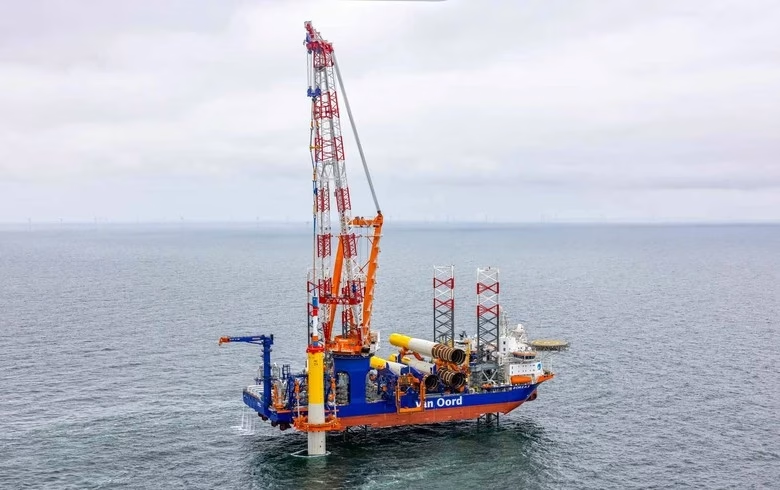
Developed by Vattenfall, the Nordlicht projects will be among Germany’s largest offshore wind installations, supporting the country’s accelerated renewable energy transition and EU-wide decarbonisation targets.
Celtic Sea Floating Offshore Wind (UK)
Size: 1.5 GW (part of a 4.5 GW Round 5 pipeline)
Commissioning Date: To be determined (development expected mid-2030s)
Location: Celtic Sea, off South Wales and South West England
Ocean Winds, a joint venture between EDP Renewables and ENGIE, has secured rights to develop a 1.5 GW floating offshore wind site in the Celtic Sea under the UK Crown Estate’s Round 5 leasing program. This project forms the final of three sites in the Crown Estate’s 4.5 GW floating wind pipeline and is expected to contribute significantly to the UK’s emerging floating wind sector. The development will support supply chain growth, job creation, and local economic development, while environmental surveys and Habitats Regulation Assessments have been conducted to minimize ecological impacts. Once fully realized, the Celtic Sea floating wind project will strengthen the UK’s renewable energy capacity and advance its floating wind industry ambitions.
Centre Manche 2 Offshore Wind (France)
Size: 1.5 GW
Expected Commissioning: ~2029–2030 (subject to permitting and grid connection)
Location: Offshore Normandy, France
Centre Manche 2 is a 1.5 GW offshore wind project being developed by TotalEnergies in partnership with RWE. The project will feature major offshore foundations, turbines, inter-array cabling, and an onshore grid connection. TotalEnergies will lead operations, leveraging its French market expertise, while RWE contributes its offshore wind construction and operational experience. The wind farm will supply power to over 1.5 million households. Sustainability measures include recycling and repurposing of turbine components, a €15 million biodiversity fund, and €10 million for local training and cultural programs, supporting ecological and community objectives alongside large-scale renewable energy generation.
Gwynt Glas Offshore Wind (UK)
Size: 1.5 GW (part of a 3 GW Round 5 pipeline)
Commissioning Date: Early 2030s (estimated)
Location: Celtic Sea, off South Wales and South West England
Gwynt Glas is a major floating offshore wind project led by Equinor in partnership with EDF Renewables UK and ESB, securing 1.5 GW of capacity under the Crown Estate’s Round 5 leasing program. The project will be assembled at Port Talbot and Bristol before being installed in deeper waters of the Celtic Sea, using floating turbine technology that unlocks sites unsuitable for fixed-bottom foundations. Haskoning has been appointed to lead the Environmental Impact Assessment and Habitats Regulations Assessment, supporting the project’s Development Consent Order and necessary licensing. Once operational, Gwynt Glas will generate clean electricity for roughly 750,000 households, create over 5,000 construction jobs, and contribute to the UK’s 2030 offshore wind targets, strengthening both energy security and local industrial growth.
East Anglia THREE Offshore Wind (UK)
Size: 1.4 GW
Commissioning Dates: Construction begins Q4 2026; Expected operation – TBD
Location: Offshore Suffolk, United Kingdom
East Anglia THREE is a 1.4 GW offshore wind farm jointly developed by Masdar (50%) and Iberdrola (50%), ranking among the largest offshore wind projects globally. The project reached financial close in July 2025 with a $6.1 billion facility, funded by 23 banks and Denmark’s export credit agency (EIFO). Construction will create over 2,300 jobs, with 100 permanent positions for operations. The farm will provide renewable electricity to approximately 1.3 million British households and is supported by a 15-year CPI-linked Contract for Difference (CfD) and a 2024 Power Purchase Agreement with Amazon. East Anglia THREE forms part of a €15 billion clean energy partnership between Masdar and Iberdrola, advancing the UK’s and Europe’s offshore wind ambitions.

Sofia Offshore Wind (UK)
Size: 1.4 GW
Commissioning Date: September 2026
Location: Dogger Bank, North Sea, 195 km off UK’s northeast coast
The Sofia offshore wind farm is a 1.4 GW offshore wind farm developed by RWE Offshore Wind featuring 100 Siemens Gamesa SG 14‑222 DD turbines with fully recyclable blades. The project includes monopile foundations, array cables, and an onshore HVDC converter station at Teesside Lackenby. Offshore installation has progressed rapidly, with all monopile foundations completed by July 2025 and all turbine blades installed by November 2025. Once fully operational, Sofia will supply renewable electricity to over 1.2 million UK homes, supporting the UK’s 2030 offshore wind targets and showcasing advanced HVDC transmission and turbine technology.
Bałtyk Offshore Wind (Poland)
Size: Bałtyk I – 1,560 MW; Bałtyk II & III – 720 MW each (1,440 MW combined)
Expected Commissioning: Bałtyk I – 2030; Bałtyk II & III – 2028
Location: Polish Baltic Sea; Bałtyk I ~80 km offshore, Bałtyk II & III 22–37 km offshore
The Bałtyk offshore wind cluster is being developed by Equinor and Polenergia (50‑50 JV). Bałtyk I will feature up to 1,560 MW of fixed-bottom turbines and has received final environmental approval, making it eligible for Poland’s 2025 offshore wind auction. Bałtyk II and III, totaling 1,440 MW, will each use 50 Siemens Gamesa SG 14‑236 DD turbines. Cadeler has been contracted to transport and install the turbines using O-Class and P-Class vessels, with offshore works starting in 2026 and turbine installation in 2027. Once operational, the combined Bałtyk I–III cluster will supply electricity to approximately 4 million households, marking a major step in Poland’s renewable energy development and supporting local supply chain engagement with over 300 Polish companies involved.
Seagreen Offshore Wind (Scotland)
Size: 1,075 MW
Commissioning Dates: First power – August 2023; Fully operational – October 2023
Location: Firth of Forth Zone, ~27 km off Angus, Scotland
Seagreen is Scotland’s largest offshore wind farm and the world’s deepest fixed-bottom offshore wind project. Developed by SSE Renewables (49%) in partnership with TotalEnergies (51%), the wind farm features 114 Vestas V164‑10 MW turbines installed on steel jacket foundations with suction-bucket caissons in water depths up to 58.6 m. Cadeler’s Wind Orca vessel transported and installed the turbines, supported by service operation and crew transfer vessels. Construction began in October 2021, with first turbine installation in December 2021. Seagreen generates approximately 5,000 GWh of renewable electricity per year, enough to power over 1.6 million Scottish households, demonstrating large-scale, deep-water offshore wind deployment in Europe.
Baltic Power Offshore Wind (Poland)
Size: 1.2 GW
Commissioning Date: 2026
Location: Baltic Sea, near Choczewo, Poland
Baltic Power is a 1.2 GW offshore wind project being developed as a joint venture between Orlen and Northland Power. The project has already installed two 2,500-ton offshore substations and several of its 76 turbines, each rated at 15 MW, about 20 km off the Polish coast. Once fully operational, the farm will supply clean electricity to around 1.5 million households, providing roughly 3% of Poland’s electricity demand. Baltic Power’s development integrates extensive domestic production of turbine components, subsea cables, and offshore substation pylons, and is supported by a new operations and maintenance base in Łeba, highlighting both energy security and local economic benefits.
Baltic East Offshore Wind (Poland)
Size: 1 GW
Commissioning Date: To be determined (post-FID, mid-2030s expected)
Location: Slupsk Bank, Baltic Sea, Poland
Baltic East is a 1 GW offshore wind project being developed by Orlen Neptun, a subsidiary of the Orlen Group, on the Slupsk Bank in Poland’s Baltic Sea. The project has recently secured environmental approval and offshore transmission permits, enabling the construction of submarine cables and offshore substations to connect the wind farm to the national grid. Once fully developed, Baltic East will contribute to Poland’s goal of 11 GW of offshore wind by 2040, enhancing energy security and complementing the nearby Baltic Power project. The development remains in the pre-FID stage, with engineering, procurement, and construction expected to follow in the coming years.
There are several other offshore windfarms currently under develoment off Europe’s coastline that are not over 1GW in size and some of those worht mentioning are found below
Borkum Riffgrund 3 (Germany)
Size: 913 MW
Commissioning Date: Expected 2026
Location: German North Sea, ~110 km off the coast of Lower Saxony
Borkum Riffgrund 3 is one of Germany’s largest offshore wind farms under development, delivering 913 MW of clean energy from a site roughly 110 km northwest of Borkum Island. Developed by Ørsted in partnership with Glennmont Partners from Nuveen Infrastructure, the project represents a major step toward large-scale, subsidy-free offshore wind deployment in Europe. It features Siemens Gamesa SG 11.0-200 DD turbines and shares the advanced DolWin5 HVDC grid connection with the neighboring Gode Wind 3 project. Once operational, Borkum Riffgrund 3 will generate enough renewable electricity to power more than 900,000 homes, reinforcing Germany’s long-term climate goals and expanding Ørsted’s offshore wind cluster in the North Sea.
Tonn Nua (Ireland)
Size: 900 MW
Commissioning Date: Mid-2030s (commercial operations targeted for 2037 under CfD terms)
Location: Irish South Coast, off County Waterford (Tonn Nua SC-DMAP maritime zone)
Tonn Nua is a major new 900 MW offshore wind farm under development off the coast of County Waterford, awarded provisionally to Ørsted and ESB following Ireland’s second ORESS offshore wind auction. The project covers a 306 sq km site in the South Coast designated maritime area and has secured a 20-year Contract for Difference at €98.72/MWh — a level considered competitive by Irish authorities. Once operational, Tonn Nua will generate enough clean electricity to power up to one million homes, significantly boosting Ireland’s renewable energy capacity and supporting long-term climate and energy-security goals. The development is still in early stages, with environmental studies, seabed licensing, and grid-connection planning (led by EirGrid) expected through the late 2020s ahead of a 2031 final investment decision.
Dublin Array Offshore Wind Farm (Ireland)
Size: 824 MW
Commissioning Date: Target 2030 (construction planned to start 2027)
Location: 10 km off the coasts of Dublin and Wicklow, Ireland
Dublin Array is one of Ireland’s major offshore wind projects, being developed by RWE and Saorgus Energy. The 824 MW wind farm will feature 39–50 turbines across the Kish and Bray Banks and is expected to supply enough electricity to power 770,000–840,000 households. The project has already secured a Maritime Area Consent (MAC) and a provisional Contract-for-Difference under ORESS-1. Once operational, it will support Ireland’s renewable energy targets, create hundreds of construction and operational jobs, and include a community benefit fund of up to €6.5 million per year, contributing to local economic development while strengthening national energy security.
Hollandse Kust West Site VI Offshore Wind Farm (Netherlands)
Capacity: 760 MW
Turbines: 52 × Vestas V236‑15 MW
Location: Approximately 53 km off the coast of IJmuiden, Netherlands
Commissioning: Expected by end of 2026
Developer / Joint Venture: Ecowende (Shell, Eneco, Chubu)
Contractor: Van Oord (marine works)
Ecowende has commenced offshore construction at Hollandse Kust West Site VI, starting with eco-friendly scour protection around turbine foundations. The scour protection uses stones ranging from 60 kg to 450 kg and includes specially designed habitat bays to support fish and marine biodiversity, including threatened species such as Atlantic cod.
Van Oord is deploying its subsea rock-installation vessels, Nordnes and Bravenes, to place the protection and will also handle installation of foundations, inter-array cables, and turbines. Some turbines are equipped with red blades to study bird-collision impacts.
Other smaller projects in the pipeline are listed below
BC-Wind Offshore Wind (Poland)
Size: 390 MW
Expected Commissioning: 2028
Location: Polish Baltic Sea, ~23 km north of the Pomeranian coastline
BC-Wind is a 390 MW offshore wind project developed by Ocean Winds, a 50‑50 joint venture between EDP Renewables and ENGIE. The project will feature 26 Siemens Gamesa 14 MW turbines. Cadeler has been contracted to transport and install the turbines using one of its O-Class installation vessels, operating from the Port of Gdańsk over a four-month campaign. Once operational, the wind farm will supply electricity to approximately 488,000 households, marking Ocean Winds’ first offshore wind initiative in Poland and supporting the country’s growing renewable energy portfolio. The project also strengthens Poland’s role in the European offshore wind market while aligning with EU energy transition objectives.
Gode Wind 3 (Germany)
Size: 253 MW
Commissioning Date: Expected 2026
Location: German North Sea, ~32 km off the coast of Lower Saxony
Gode Wind 3 is a 253 MW offshore wind farm developed by Ørsted as part of its expanding cluster in the German North Sea. Positioned close to the existing Gode Wind 1 & 2 and Borkum Riffgrund 1–3 projects, it reflects Germany’s move toward larger, more efficient, subsidy-free offshore wind installations. The project uses Siemens Gamesa SG 11.0-200 DD direct-drive turbines and connects to the grid via TenneT’s DolWin5 HVDC link, allowing it to deliver clean electricity to around 250,000 households. Once operational, Gode Wind 3 will play a significant role in meeting Germany’s renewable energy goals and strengthening Europe’s offshore wind network.
Leave a Reply