
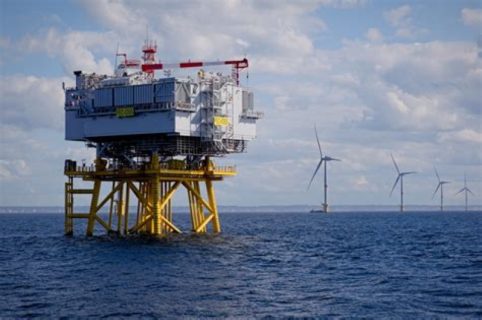
Updated October 29, 2025 – Baltic Power offshore wind project has successfully installed two offshore substations each weighing approximately 2,500 tons. The substations were built in Poland and have been installed about 20 km off the Polish coast near Choczewo. They will collect power from the farm’s 76 wind turbines each rated 15 MW and transmit it via subsea cables to the mainland. Baltic Power offshore wind project will generate 1.2 GW and generate up to 4 TWh of renewable energy annually. It will rank as one of Europes largest offshore wind farms.
How Far with the 1.2 GW Baltic Power Offshore Wind Farm
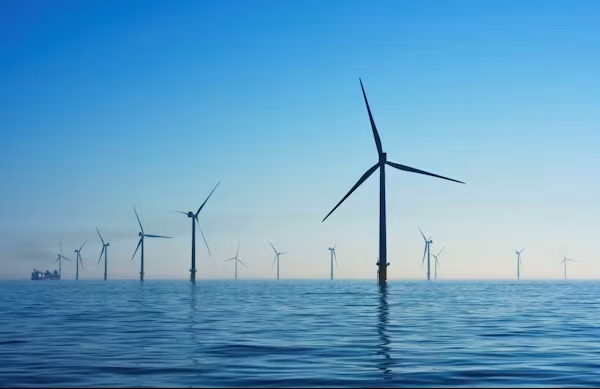
Reported October 15, 2025 – The 1.2 GW Baltic Power Offshore Wind Farm, developed jointly by Orlen and Northland Power, is under active construction off the coast of Poland, near Leba and Choczewo, in the Baltic Sea. The project has reached several milestones through 2025, including the installation of its first monopile foundations, commissioning of an operations and maintenance base in Leba, and deployment of its first 15 MW turbine in July 2025. Once completed, Baltic Power will be capable of supplying clean electricity to over one million Polish households.
Baltic Power continues to strengthen the country’s offshore wind capacity and its transition toward low-carbon energy independence in the Baltic region. Orlen also recently secured environmental permits for its Baltic East wind farm. This signals a progressive step in the project. Northland’s Hai Long offshore wind farm in Taiwan also continues its push for 2027-28 commissioning after awarding O&M contract to IOG Wind.
First Five Turbines Installed at the 1.2 GW Baltic Power Offshore Wind Farm
Reported August 9, 2025 – Baltic Power, a pioneering joint venture between Orlen and Northland Power, has marked a significant achievement in its 1.2 GW offshore wind farm project. Nearly half of the monopiles and transition pieces have now been installed in the Polish Baltic Sea. In addition, monopiles, the robust steel foundations for turbines, are being positioned by Van Oord’s heavy-lift vessel, Svanen, with monopiles supplied by Steelwind Nordenham and transition pieces (TPs) from Smulders. Earlier this spring, five TPs were successfully installed, making history as the first ever in Polish Baltic waters and demonstrating substantial progress toward the project’s ambitious goals.
Progress Below and Above the Waves
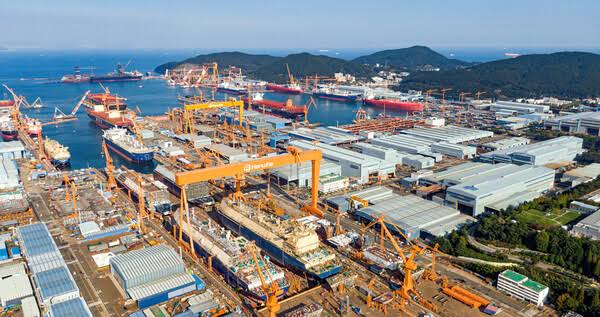
The next phases of work will focus on subsea infrastructure, starting with inter-array and export cable installation. This will be followed by the autumn installation of steel pylons for offshore substations, meticulously assembled at shipyards in Gdynia and Gdańsk. Key components such as turbine nacelles, subsea cables, and substation foundations are being produced in several Polish cities. These include Szczecin, Bydgoszcz, the Tri-City area, Żary, and Niemodlin. This widespread production footprinthighlights Baltic Power’s strong commitment to domestic industry involvement and local economic impact.
Also Read Poland to construct its longest single transport tunnel of any kind
Onshore Facilities and Grid Integration
Progress marked by Baltic Power is not limited to offshore activities. In May, the company opened its state-of-the-art operations and maintenance (O&M) base in Łeba. This facility will operate as the Marine Coordination Centre, managing the wind farm’s operations for the next three decades. Onshore construction in Choczewo is also advancing, with a new substation under development to connect the offshore wind farm to Poland’s national grid. Furthermore, this integrated approach ensures that offshore generation will be efficiently transmitted to meet national electricity needs.
Also Read Estonia Leads Rail Baltica Rollout with $1Bn Infrastructure Deal
Looking to the Future
Set for commissioning in 2026, the Baltic Power offshore wind farm will supply renewable energy to approximately 1.5 million Polish households, meeting about 3% of the country’s electricity demand. Orlen is already preparing for the next chapter, with plans for additional offshore wind projects totaling 5.5 GW of capacity. In addition, this includes the upcoming Baltic East project slated for Poland’s December auction. Notably, the Svanen vessel used in monopile installation was recently upgraded, extending its gantry crane by 25 meters and boosting its lifting capacity to 4,500 tonnes. Further, this makes it one of the most advanced installation vessels globally, ideally positioned for current and future offshore wind developments.

Leave a Reply