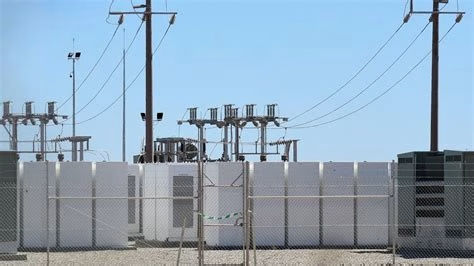
Project Factsheet for Uzbekistan’s Largest Standalone BESS: Zarafshan
DeveloperMasdar (Abu Dhabi Future Energy Company PJSC) in partnership with JSC Uzenergosotish.
LocationUzbekistan. To be connected at Murunau Substation.
Capacity for Phase 1300 MW power and 600 MWh storage.
Capacity for Phase 2 ExpansionAdditional 300 MW/600 MWh to the first phase.
Uzbekistan’s BESS Program TargetUp to 575 MW/1.15 GWh of battery energy storage capacity.
Commissioning for Phase 1Q3 2028
SignificanceSupports Uzbekistan’s target of generating 54% of its power from renewables by 2030. Also boosts grid flexibility and renewable integration in the country.
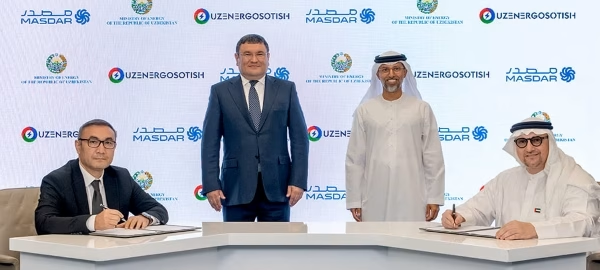
A Look at the Zarafshan BESS Project, Masdar and Uzbekistan
Uzbekistan’s largest standalone BESS project, Zarafshan also represents large scale grid firming storage independent of generation in the country, marking a co-location with solar and wind co-locations. For Masdar, this expands its international storage portfolio and aligns with its global ambition of 100 GW in renewables by 2030. Masdar’s partnership with state-owned JSC Uzenergosotish for the Zarafshan battery storage project also reflects of UAE-Uzbekistan energy cooperation.
Outlook on Uzbekistan’s Largest Standalone BESS Project
Once complete, the Zarafshan BESS will be among the largest standalone battery installations in the region. It is expected to significantly contribute in balancing renewable generation, peak-load shifting and grid resilience. The 300 MW/600 MWh phase 1 installation, followed by phase 2 and possible future additions could also potentially create a multi-GWh storage hub.
Execution over the next few years will also be critical for the project. Masdar and its Uzbek partner will need to navigate financing, technology procurement, permitting and related logistics. If timely, the facility could set pac for future storage project development in Uzbekistan and central Asia.

Leave a Reply