South Africa BESS procurement is set to expand with a planned 2,200 MW / 8,800 MWh battery energy storage tender under Bid Window 4 (BW4) of the Battery Energy Storage Independent Power Producer Procurement Programme (BESIPPPP).
The Independent Power Producer Office (IPPO) is preparing to launch the procurement in the fourth quarter of the 2027 financial year, according to a report published by Engineering News on November 25, 2026.
The proposed tender follows earlier procurement rounds that selected battery storage projects across several South African provinces. These developments are intended to strengthen electricity supply and support the integration of renewable energy into the national grid. Construction Review previously reported on the Oasis 1 battery energy storage projects, which reached financial close in November 2024 under the programme’s first bidding window.
The proposed 2,200 MW procurement represents a significant expansion of South Africa’s grid-scale storage pipeline. Its 8,800 MWh energy capacity equates to four hours of storage at the full 2,200 MW discharge rating. This means the battery fleet could theoretically supply 2,200 MW continuously for four hours when fully charged, subject to operating conditions, system efficiency and battery availability.
The procurement is part of a wider government effort to improve electricity-system flexibility. On October 7, 2026, Electricity and Energy Minister Dr Kgosientsho Ramokgopa announced a Section 34 determination prioritising 4,600 MW of battery energy storage systems and 5,000 MW of gas-to-power capacity.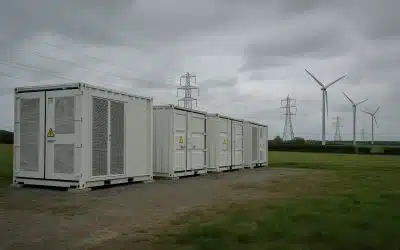
The determination provides the regulatory basis for new competitive procurement processes. The wider 4,600 MW allocation should not be confused with the 2,200 MW reported target for BW4. The government has not yet publicly allocated the entire storage capacity between individual bidding windows.
South Africa BESS Procurement to support grid flexibility and renewable integration
The proposed battery storage capacity is intended to help the electricity system manage fluctuations in supply and demand. South Africa has expanded its renewable energy generation, particularly solar and wind power. However, these sources produce electricity intermittently and do not always match periods of peak demand.
Battery systems can absorb surplus electricity when generation exceeds immediate demand and release it when the grid requires additional supply. This can help reduce renewable-energy curtailment, particularly where network constraints prevent available wind and solar power from reaching consumers.
Storage can also support the electricity system through rapid response services. The previous BESIPPPP rounds require projects to provide services including instantaneous reserves, regulating reserves, ten-minute reserves and supplemental reserves. These services help the system operator maintain grid stability and respond to changes in electricity supply.
The government’s October 2026 determination also identifies the need to coordinate new storage capacity with transmission expansion and electricity demand. Batteries can help manage some network constraints, but they do not replace the need for additional transmission infrastructure, substations and grid upgrades.
Previous bidding windows establish the procurement framework
The fourth bidding window follows three earlier rounds under the BESIPPPP. Bid Window 1 sought 513 MW, while Bid Window 2 procured 615 MW and Bid Window 3 targeted 616 MW. Together, the three rounds represent 1,744 MW of planned battery power capacity, although project progress differs between the windows.
Under Bid Window 1, five preferred bidders were selected for a combined 513 MW. The IPPPP quarterly report for the period ending December 2025 recorded all five projects in construction. The programme had attracted approximately R16.8 billion in investment from projects that reached financial close, with 190 construction job-years recorded. A job-year represents one full-time employment opportunity for one person over one year.
Bid Window 2 attracted 31 bids offering a combined 2,383 MW before eight preferred bidders were announced in December 2024. The selected projects cover locations in North West, Gauteng and the Free State. They include developments backed by EDF Renewables, AMEA Power and Mulilo. The projects were still progressing through commercial-close requirements in the latest quarterly report reviewed, with delays linked to bid qualification processes and land arrangements.
Bid Window 3 attracted 33 bids offering 4,067 MW. Five preferred bidders were announced in May 2025 for projects at specified substations in the Free State Supply Area. The selected developers included Scatec and Mulilo. The projects were working towards commercial close, with the programme’s longstop date revised to October 30, 2026.
These earlier rounds demonstrate market interest in battery storage, but they also highlight the time required to complete qualification, land, financing and contractual processes. BW4 will therefore need a procurement timetable that accounts for project readiness as well as the availability of suitable grid connections.
Four-hour battery systems and the infrastructure required
The proposed 2,200 MW / 8,800 MWh configuration indicates a four-hour storage duration. The final technical specifications will be determined by the BW4 procurement documents. These are expected to define performance, availability, safety, degradation and grid-service requirements.
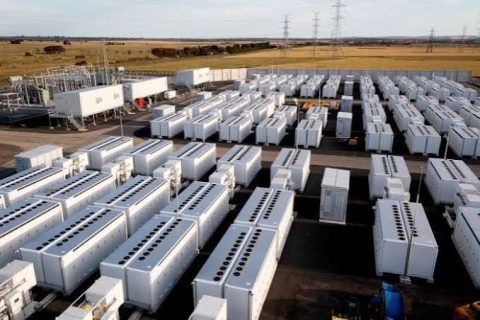
Utility-scale battery projects typically require battery modules, containerised enclosures, battery management systems, power conversion equipment, inverters, transformers and high-voltage switchgear. They also need control and monitoring systems, cooling equipment, fire detection and suppression systems, foundations, access roads and grid connection infrastructure.
Lithium-ion technology is widely used for grid-scale battery installations, with lithium iron phosphate among the established chemistries. However, the final battery chemistry and supplier requirements for BW4 have not been confirmed. No battery manufacturer, engineering contractor or project developer has yet been announced for this proposed bidding window.
The procurement will also depend on suitable connection points and available network capacity. The National Transmission Company South Africa (NTCSA) is an important stakeholder in grid integration, including the assessment of connection requirements and the ability of storage projects to deliver electricity where it is needed.
Investment, employment and procurement milestones remain to be confirmed
The total investment value of BW4 has not been disclosed. Construction employment, permanent jobs, local-content requirements, ownership targets and project locations also remain subject to the final tender documents. The previous bidding windows provide a precedent for local procurement, black economic empowerment, community participation and skills development commitments, but their exact requirements should not be assumed to apply unchanged to BW4.
The IPPO is responsible for administering the competitive procurement process. The office operates under a governance arrangement involving the Department of Electricity and Energy, National Treasury and the Development Bank of Southern Africa. The Department provides policy direction, while the IPPO manages procurement activities and the NTCSA has a central role in grid integration and electricity-system requirements.
The next important milestone is publication of the formal request for proposals. This should clarify the final capacity allocation, project eligibility, technical specifications, site requirements, bid submission deadline and contractual arrangements. Preferred-bidder appointments would follow the evaluation process, before selected developers proceed towards commercial close, financial close, construction and commissioning.
The reported fourth-quarter 2027 financial-year launch target is therefore a procurement milestone, not a construction-start or operational date. Until the IPPO publishes the tender documents, the final project configuration, investment value, developers and delivery schedule remain unconfirmed.

Leave a Reply