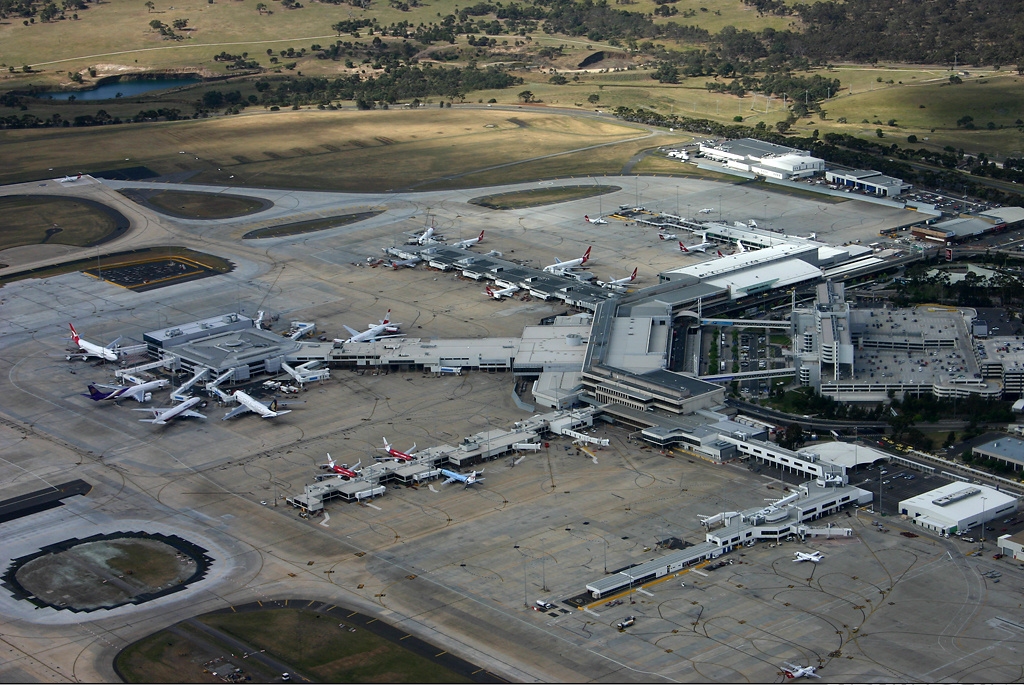
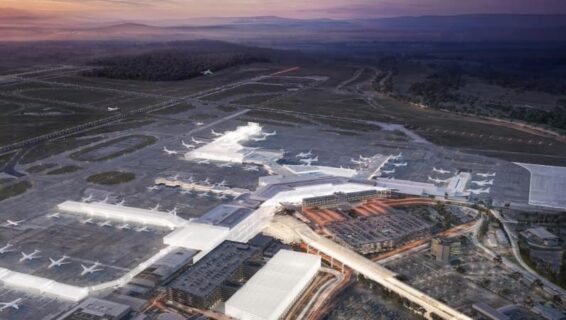
The Melbourne Airport expansion has secured the commercial anchor it needed, with the Qantas Group and airport operator Australia Pacific Airports Corporation agreeing key terms on a deal that underwrites a $4.5 billion overhaul of the international terminal at Tullamarine in Victoria. Announced on 27 July 2026, the agreement covers five additional widebody gates on the existing international pier, a rebuilt check in hall with common user automated bag drops, expanded baggage reclaim, and more floor space for Australian Border Force processing. Qantas is also designing a new International Business Lounge on a level built above Terminal 2, up to one third larger than the current facility, with construction and fit out targeted for completion in 2029. Just as importantly for the airfield, the airline group has signed a 15 year commitment supporting delivery of Melbourne Airport’s third runway, the 3,000 metre parallel strip due to open in 2031. The terminal program is privately funded and will be delivered in stages inside a live round the clock operation, which remains the single biggest constraint on the build. Preliminary works follow the September opening of the new elevated road network and T123 transport hub, freeing the forecourt so the terminal can extend its footprint. Airport chief executive Lorie Argus called the package the most significant upgrade in the airport’s history. Qantas Group chief financial officer Rob Marcolina said basing new Airbus A350 aircraft in Melbourne would open non stop routes that are not possible today. Final commercial documents are due to be executed over the coming months.
What the Melbourne Airport Expansion Cost Means for Australian Airport Construction
The Melbourne Airport expansion cost of $4.5 billion sits alongside roughly $3 billion for the third runway, which the airport is funding without Commonwealth money, giving Victoria one of the largest privately financed aviation construction pipelines in the country. Passenger volumes explain the appetite. Melbourne handled about 36 million travellers in FY25 and forecasts around 76 million by 2042, a trajectory its existing two runway system cannot absorb. The closest parallel sits in Western Australia, where Perth Airport is delivering a $5 billion program built around its own 3,000 metre parallel runway due to be operational in 2028, a doubling of Terminal 2 capacity, and new domestic terminal facilities for Qantas Group operations around 2031. That program was similarly unlocked by a long term airline agreement, and the pattern across Australian capital city airports is now consistent: carriers commit volume and term, and the airport company builds against it. Melbourne’s business aviation segment is moving the same way on a smaller scale. Textron Aviation opened a purpose built 35,000 square foot service centre at Essendon Fields Airport in May 2026, more than doubling its previous footprint, with a formal grand opening scheduled for August. Designed by Bruce Henderson Architects, the hangar consolidates operations onto the main airfield under the Essendon Fields master plan and supports more than 1,400 Cessna, Beechcraft and Hawker aircraft across the Asia Pacific. Read together, the two projects describe a Melbourne aviation market adding capacity at both the widebody and business jet ends of the market.
Melbourne Airport Third Runway Completion Date and Terminal Delivery Timeline
Main construction on the runway started in 2026 after early works began in 2025, following federal approval of the Major Development Plan in September 2024. Around five million cubic metres of material will be excavated and reused on site to form the runway platform, while selective clearing of roughly 79 hectares of the Grey Box Woodland was set down for June to September 2026, with about 83 hectares retained and permanently protected under an offset management plan. TBH was engaged to develop the master program and the detailed construction programme for the runway works. On the terminal side, detailed design, architects and tenancy partners are still being worked through and no main works contractor has been publicly named. Two open questions hang over the precinct. The first is surface access, because Melbourne Airport Rail is not expected to open before 2033 following a long dispute over station design, leaving road transport to absorb the passengers the new gates will generate. The second is noise, with a Noise Amelioration Plan required as a condition of approval for eligible homes and community facilities under the new flight paths. Melbourne Airport says the runway will support 51,000 jobs and add close to $6 billion a year to the Victorian economy once it is operating.

Leave a Reply