Following the commencement of domestic commercial operations in December 2025, Navi Mumbai International Airport (NMIA) has actively expanded its operational scope by rolling out international passenger and cargo services. The greenfield hub, developed by the Adani Group, marked a significant international milestone as carriers like Air India Express initiated direct overseas routes, beginning with short-haul Gulf destinations such as Abu Dhabi. Daily passenger traffic at the airport is expanding steadily toward a target of 50,000 travelers and roughly 380 daily aircraft movements by the end of the year. Beyond passenger traffic, the facility was also recognized internationally after being named to the Prix Versailles 2026 list of the World’s Most Beautiful Airports.
In parallel, NMIA is rapidly scaling into a major international logistics hub for Western India and India in general. Cargo operations have gathered significant momentum with major carriers, including IndiGo, AFCOM Holdings, Hong Kong Air Cargo, and National Airlines, establishing dedicated freighter flights connecting Navi Mumbai to key economic nodes like Dubai World Central and Frankfurt-Hahn. Heavy wide-body operations are accelerating, with major cargo operators like Qatar Cargo, Cathay Pacific, Lufthansa Cargo, and Emirates SkyCargo actively integrating or planning transitions to NMIA to bypass capacity constraints at Mumbai’s Chhatrapati Shivaji Maharaj International Airport (CSMIA). Regionally, the operational maturity of the airport, paired with arterial links like the Atal Setu sea bridge and local metro extensions, has triggered a significant real estate and economic surge across nearby corridors including Ulwe, Panvel, and Kharghar. Also, this airport alongside others such as the proposed Parandur Greenfield Airport will elevate India’s status as a leading global aviation hub.
June 12, 2024
The new proposed Navi Mumbai international airport is eagerly expected to be a landmark achievement in India’s aviation industry. This prospective project lies within the Panvel area of Navi Mumbai; designed to alleviate the congestion levels of the current Chhatrapati Shivaji Maharaj International Airport Mumbai(CSMIA) in Mumbai, it also has the potential to bring about the enhanced economic development of the region.
Project Overview
The NMIA is under construction with the assistance of the CIDCO and the partnering Adani Airports. Construction began in August of 2021, and the first phase of the facility is projected to be up and running by December 2024. This phase will initially entail handling of 10 million passengers annually, though the airport’s plan is to increase this capacity to 90 million passengers by the year 2032.
It constitutes of several components of pre-development interviewing including shifting of the Ulwe River, control of high voltage transmission lines, and the Ulwe Hill cutting. With an overall project cost of around 16,700 crore INR (USD 2.
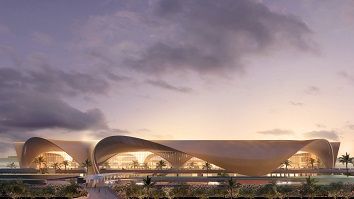
Zaha Hadid Architects designed NMIA with considerable focus on sophistication and functionality in terms of structure. The airport will have a terminal building with efficient daylight access with the provision of ample open area. Technological innovations shall be incorporated in to enhance passengers’ through put mechanisms such as Automatic Check-in, Biometric security measures and efficient and proper baggage handling systems.
The airport is also under an option of greenfield development hence it gives priority to the aspect of sustainability. It aspires to has high energy performance indicators and low environmental footprint in terms of utilization of renewable energy in buildings and environmental friendly construction.
Economic and Social Impact
A key potential impact of the development of NMIA is believed to arise in the form of bolstering economic growth in the region. It is foreseen that it will generate thousands of employment opportunities in both conducting phase and functioning phase, consequently would increase the employment rate in Navi Mumbai and nearby regions and would help in the progress of the economy. This is because increased connectivity has the potential to drive private investment, prop up tourism, and catalyse property development.
In addition, NMIA will increase Mumbai’s perceived connectivity to other international destinations creating a better passenger throughput and making Mumbai a more appealing proposition for global aviation connectivity. This Airport will be linked with CSMIA through an express metro line and will provide connectivity for the Mumbai-Hyderabad HSR corridor starting point, to further amalgamate regional transportation systems.
Challenges and Future Prospects
However, the NMIA project is not without some challenges such as acquisition of land for the construction, environmental sensitivity, and a great deal of capitalization. But authorities have dismissed such concerns stating that everything is well on course and that this airport will hopefully be complete by December 2024. Coming soon after, the necessary testing and trials will be conducted in order to have a glitch-free opening to the public.

Thus the Navi Mumbai International Airport is one of those major infrastructural projects that can bring the transformation in India. It is an image of the country’s desire for growth, unity, and progress and, in words it offers to raise the level of airports’ service in the country and facilitate the development of economy in the given region.
Project Factsheet
Official Name: DB Patil Navi Mumbai International Airport
Location: Ulwe / Panvel, Navi Mumbai, Maharashtra, India
Project Type: Greenfield Public-Private Partnership (PPP)
Developer / Operator: Navi Mumbai International Airport Limited (NMIAL) — Adani Airport Holdings (74%) & CIDCO (26%)
Total Land Footprint: 2,866 acres (1,160 hectares)
Total Estimated Cost: ₹19,650 Crore ($2.36 Billion USD)
Architectural Theme: Lotus-inspired multi-terminal design
Runways: 2 Parallel Runways (3,700 m / 12,100 ft each)
Initial Capacity (Phase 1): 20 Million Passengers / 0.8 Million Tonnes Cargo per year
Ultimate Capacity (2032): 90 Million Passengers / 2.5 Million Tonnes Cargo per year
Surface Connectivity: Atal Setu (MTHL), Mumbai-Pune Expressway, Metro Line 8, Ulwe Coastal Road |
Read also Navi Mumbai International Airport in India
Read also Mumbai Trans Harbour Link, the longest sea bridge in India, inaugurated