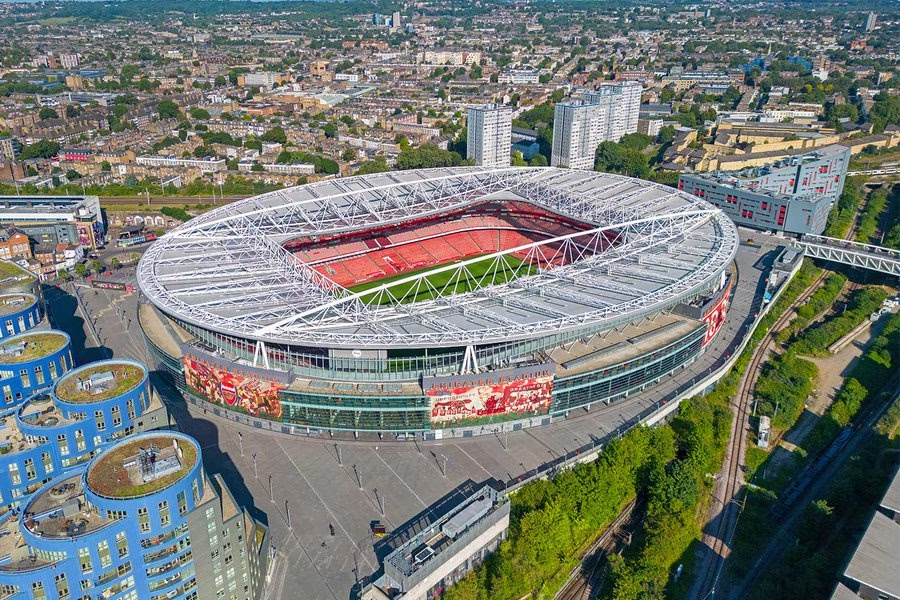
The Emirates Stadium expansion project remains under evaluation as Arsenal continues developing renovation and capacity enhancement plans for its North London home. The club is assessing options to increase the stadium’s current capacity of 60,704 seats while improving the match day experience and commercial performance of the venue. Although Arsenal has not yet submitted a formal planning application, club executives confirmed in 2026 that advisory teams are actively preparing renovation proposals.
Reported in October 2025, the original proposal envisioned increasing the stadium’s capacity to more than 70,000 seats through structural modifications and seating reconfiguration. The project emerged in response to growing demand, with Arsenal facing one of the largest season-ticket waiting lists in English football. At the time, reports suggested the club could temporarily relocate to Wembley Stadium if major construction works required a full redevelopment program.
Emirates Stadium Current Status Update (2026)
As of June 2026, Arsenal has not approved a final expansion design or construction timetable. However, co-chairman Josh Kroenke recently confirmed that the club is working with advisers to develop a renovation strategy for the Emirates Stadium. Arsenal CEO Richard Garlick is leading the process, while the club continues evaluating various options that range from incremental upgrades to a larger-scale redevelopment program.
Reports indicate that Arsenal is exploring solutions capable of raising capacity beyond 70,000 spectators. The club is also studying lessons from major sports venues within the Kroenke Sports & Entertainment portfolio, including SoFi Stadium in Los Angeles. Nevertheless, infrastructure constraints around the stadium and the complexity of construction in a dense urban environment remain significant considerations.
Recent comments from club executives further suggest that renovation remains the preferred route rather than constructing a completely new stadium. Arsenal is therefore focusing on preserving the Emirates Stadium’s identity while increasing capacity and improving fan facilities.
The Emirates Stadium project forms part of a broader trend among leading Premier League clubs investing heavily in stadium infrastructure. Similar ambitions are evident elsewhere in English football, including Manchester United’s proposed New Old Trafford Stadium development, which recently advanced after securing the majority of the land required for its planned 100,000-seat venue. Together, these projects demonstrate how clubs are increasingly using major construction programs to drive long-term growth, increase revenues and enhance supporter experiences.
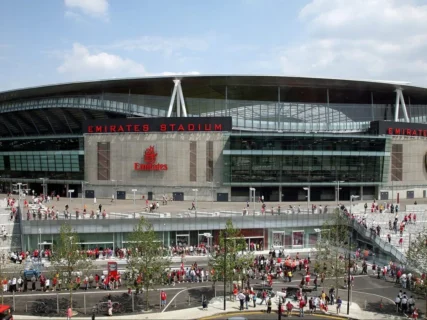
Emirates Stadium Project overview
Arsenal’s management is accelerating plans to expand the Emirates Stadium, reflecting the club’s ambition to meet the growing demand from its global fanbase. The redevelopment is expected to enhance comfort, capacity, and overall matchday experience.
According to reports, the expansion will mainly focus on internal works rather than altering the outer bowl. The design team plans to adjust the seating arrangement and change the gradient of stands to accommodate more fans. This method allows for an increase in capacity while preserving the stadium’s iconic look.
Expansion of the Emirates Stadium
To allow uninterrupted construction, Arsenal may relocate their home fixtures to Wembley Stadium. The national stadium is seen as the most practical option due to its proximity and seating capacity. Tottenham Hotspur used Wembley as a temporary venue during the construction of their £1.2 billion stadium, paying approximately £15 million in rent.
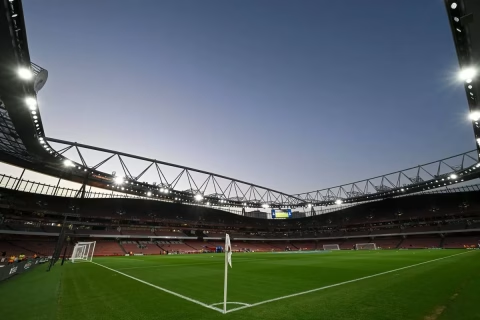
Arsenal have previous experience playing at Wembley, having hosted Champions League matches there in the late 1990s and enjoying several FA Cup triumphs between 2014 and 2020.
Economic and fan impact
The Emirates expansion project is expected to generate significant economic benefits for both Arsenal and the local community. Increasing capacity will help reduce the season ticket waiting list, which currently exceeds 100,000 fans.
Additionally, the upgraded stadium will boost matchday revenues and help the club comply with Profit and Sustainability (PSR) and Financial Fair Play (FFP) regulations. This financial improvement aligns with Arsenal’s long-term vision to remain competitive at both domestic and European levels.
Construction leadership and design influence
While the lead construction firm has not been announced, Arsenal’s owners, the Kroenke family, bring vast experience in stadium development. Their portfolio includes the $4.1 billion SoFi Stadium in Los Angeles, one of the most advanced sports facilities in the world.
Industry experts expect the Emirates project to follow similar design principles—focusing on sustainability, modern amenities, and an enhanced fan experience.
Next steps
The club has not yet applied for planning permission but remains mindful of regulatory requirements. Once approvals are granted, construction is expected to begin in phases to minimize disruption.
This expansion reflects a growing trend in modern sports architecture—balancing tradition, fan engagement, and commercial growth. If completed, the Emirates Stadium will stand as one of Europe’s most advanced and fan-friendly football arenas.
Europe is home to many of the world’s most ambitious and technically advanced sports arenas. From Spain’s Camp Nou to England’s Wembley and Germany’s Allianz Arena, these structures set global benchmarks in design, capacity, and construction innovation.
Arsenal’s planned Emirates Stadium expansion aims to follow in this tradition, combining architectural excellence, enhanced fan experience, and sustainable engineering. Once completed, it could stand proudly among Europe’s top largest and most modern stadiums.
Project Fact Sheet
Project name: Emirates Stadium Expansion Project
Location: Holloway, Islington, North London, United Kingdom
Client: Arsenal Football Club
Stadium type: Football stadium renovation and expansion
Existing capacity: 60,704 seats
Proposed capacity: More than 70,000 seats, with some studies assessing higher capacities
Estimated project cost: Approximately £500 million
Project objective: Increase stadium capacity, improve fan experience and boost matchday revenues
Development approach: Renovation and expansion of the existing stadium rather than a new-build facility
Current status: Feasibility studies, advisory reviews and planning development ongoing
Planning application status: Not yet submitted
Construction commencement: Not announced
Completion date: To be determined
Key challenge: Transport infrastructure limitations and construction within a constrained urban site
Expected benefits: Increased ticket availability, enhanced hospitality facilities and higher commercial revenues
Project Team
Project owner and developer: Arsenal Football Club
Sponsor: Kroenke Sports & Entertainment (KSE)
Executive project lead: Richard Garlick, Chief Executive Officer, Arsenal Football Club
Strategic project oversight: Josh Kroenke, Co-Chairman, Arsenal Football Club
Architectural adviser under consideration: Populous
Existing stadium architect: Populous (formerly HOK Sport)
Local planning authority: London Borough of Islington
Transport stakeholders: Transport for London (TfL) and local rail operators
Stadium operations stakeholder: Arsenal Football Club Operations Department
Commercial and hospitality stakeholders: Arsenal Football Club Commercial Division
Infrastructure advisers: To be confirmed
Engineering consultants: To be appointed
Main contractor: Not yet appointed
Funding source: Arsenal Football Club and Kroenke Sports & Entertainment
Community stakeholders: Local residents, supporter groups and businesses within the Emirates Stadium area

Leave a Reply